What is the source of power in poetry? What leads one to write it, or causes one to seek it? Some writers, like Harriet Beecher Stowe who wrote Uncle Tom's Cabin report that the writing was given to her by God; she merely wrote it down. Is there a divine source?
Federico Garcia Lorca has found it in the duende, a dark spirit that is neither angel or muse. Who has duende in American culture? Billie Holiday. Edward Hirsch, poet and essayist, writes of several poets and artists who have a dark and arresting intensity, whose work breathes life and death, and by whom we are transfixed.
Lorca said, "Seeking the duende, there is neither map nor discipline. We only know it burns the blood like powdered glass, that it exhausts, rejects all the sweet geometry we understand, that it shatters styles and makes Goya, master of the greys, silvers and pinks of the finest English art, paint with his knees and fists in terrible bitumen blacks, or strips Mossèn Cinto Verdaguer stark naked in the cold of the Pyrenees, or sends Jorge Manrique to wait for death in the wastes of Ocaña, or clothes Rimbaud’s delicate body in a saltimbanque’s costume, or gives the Comte de Lautréamont the eyes of a dead fish, at dawn, on the boulevard."
This is not a spirit who brings gifts; Lorca puts it in the terms of a battle:
" With idea, sound, gesture, the duende delights in struggling freely with the creator on the edge of the pit. Angel and Muse flee, with violin and compasses, and the duende wounds, and in trying to heal that wound that never heals, lies the strangeness, the inventiveness of a man’s work." To read his entire text, please click here:
http://www.poetryintranslation.com/PITBR/Spanish/LorcaDuende.htm
A wound that never heals appears in many mythic stories. Arthurian legend, Greek myth, Russian myth, Christian stories of stigmata, and many others seem to point to a universal story of suffering. Perhaps suffering and the writing that springs out of the attempt to heal it will evoke the duende. The duende, says Federico Garcia Lorca, is the battle pitched between you and death. It is a wound that won’t heal, a wind that blows over the dead, “a wind with the odour of a child’s saliva, crushed grass, and medusa’s veil, announcing the endless baptism of freshly created things.” From pain, violence or carnage, birth.
Lorca evoked the Duende whenever he did a reading; he called to the spirit for both him and the audience; often it held them with its terrible beauty.
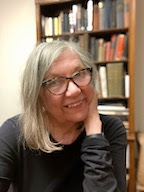
Sheila Packa Poetry Blog: A blog about poetry: figurative language, spirit, intertextual explorations, patterns, punctuation, forms, great writers, quotes, and journey notes. For updates, follow me on Bluesky https://bsky.app/profile/sheilapacka.com
June 17, 2011


June 16, 2011
The Task of the Poet

One of the best American essays is Adrienne Rich's "Women and Honor: Some Notes on Lying." In it, she writes "When a woman tells the truth she is creating the possibility for more truth around her." Let this be our task as poets.
I think the task of the poet is to remain true to one's own experience. The poem comes from the body; the body should be reflected in the poem. The poem comes out of a particular place in the world. The poet needs to be cognizant of the landscape and also her own position and perspective within it.
A good poet is aware of the underground of the subject and form of her work.This could be the history, context, connections, and language.
A good poet is open to surprise. Is intuitive. Sometimes in the writing of the poem, an accident of language, a juxtaposition of image, an error brings a startling insight. In the practice of poetry, one strives for a deliberating openness.
A collection of a poet's work reveals vision: a perspective, motivation, goal. A poet's work provides a landscape and a story, different for each poet, and a language that reaches beyond the individual toward the community or the divine or the one lone reader somewhere in the future, paging through a book, wanting the heart, or a piercing light into the center of life.
June 3, 2011
Why Poetry?
More than self-expression, poetry is a way of seeing. Robert Henri, in The Art Spirit, wrote:
Doreen Gildroy presented this quote in an interesting essay ("Poetry and Mysticism," American Poetry Review, May/ June 2011). A "greater existence" is an experience of dissolving boundaries, meaningfulness, or a sudden perception of connectedness; a mystical experience with poetry often comes unbidden, by accident or by grace. One can invite it, certainly. The state of flow that happens during creative work may be the state of being that Robert Henri describes. Writing is one way to enter a state of flow; in the state of flow, perceptions shift. Time goes by without notice. Focus is enhanced. The ability to see is increased.
The poem becomes a record of an experience; it is a dual experience. The first experience is the subject of the poem, and the second experience is the making of that particular poem. Each poem offers a new possibility, a new way of seeing, and it engages one in "a making." In the making of a poem, one finds images, sounds, and patterns that develop and come to fruition. The plying of the language leads one forward into new insight or image or story. I like this way of seeing; this is why I write.
"The object of painting a picture is not to make a picture--however unreasonable this may sound. The picture, if a picture results, is a by-product and may be useful, valuable, interesting as a sign of what has past. The object, which is back of every true work of art, is the attainment of a state of being, a state of high functioning, a more than ordinary moment of existence. In such moments activity is inevitable, and whether this activity is with a brush, pen, chisel or tongue, its result is but a by-product of the state, a trance, the footprint of the state.
These results, however crude, become dear to the artist who made them because they are records of states of being which he has enjoyed and which he would regain. They are likewise interesting to others because they are to some extent readable and reveal the possibilities of greater existence."
Doreen Gildroy presented this quote in an interesting essay ("Poetry and Mysticism," American Poetry Review, May/ June 2011). A "greater existence" is an experience of dissolving boundaries, meaningfulness, or a sudden perception of connectedness; a mystical experience with poetry often comes unbidden, by accident or by grace. One can invite it, certainly. The state of flow that happens during creative work may be the state of being that Robert Henri describes. Writing is one way to enter a state of flow; in the state of flow, perceptions shift. Time goes by without notice. Focus is enhanced. The ability to see is increased.
The poem becomes a record of an experience; it is a dual experience. The first experience is the subject of the poem, and the second experience is the making of that particular poem. Each poem offers a new possibility, a new way of seeing, and it engages one in "a making." In the making of a poem, one finds images, sounds, and patterns that develop and come to fruition. The plying of the language leads one forward into new insight or image or story. I like this way of seeing; this is why I write.
May 30, 2011
Community Arts Learning
Writing captures the voices, the history, the landscape into a piece of art; it serves to build and strengthen community. It is not true that only a select few are capable of making great artistic work. Great writing happens everywhere. In every class I teach, I hear new and arresting voices. Not all of the writers want to hone their skill or pursue publication, but if they did, they in all likelihood would achieve success.
Reading a good poem, story or essay enhances our life. Besides offering beauty, it fosters empathy and understanding. Writing a good poem, story or essay gives us the opportunity to use an image or a metaphor to enter complexity. For me, writing is a type of way-finding, a lamp in darkness. This is the experience with writing that I want to share with others.
With an Arts and Cultural Heritage Community Arts Learning grant through the Arrowhead Regional Arts Council and the willingness of some nonprofit organizations (The Women's Shelter, Family Justice Center and the Domestic Abuse Intervention Project in Duluth, MN) I began to teach writing for people in transition. Since I began the project in October 2010, I've logged 40 classroom hours of teaching “Writing for Transition.” I have worked with diverse levels of experience with writing. Many were moving through violence; many were moving through ordinary life changes.
The Depot - Community Arts Learning Group: monthly group Dec 2010-ongoing
Womenʼs Shelter: January 8-February 12, 2011 (weekly workshop for 6 weeks)
Family Justice Center: monthly group, January 31 - ongoing
Domestic Abuse Intervention Project: June 20
And the culmination of this effort will be a publication, Migrations: Poetry and Prose for Life's Transitions, pub date October 1, 2011 (Wildwood River Press).
In my role as Duluth Poet Laureate, 2010-2012, I've also focused on the same themes. I've taught a workshop "Change, Change, Rearrange: Writing for Transitions" on November 15, 2010. Also, in an attempt to reach out to an audience that is not necessarily an arts audience, I made a call for submissions of poems on the topic of transitions or that were blessings, and created four placemats that present the work of 35 area writers; these were given away at the Empty Bowl, a fundraiser for the Northern Lakes Food Bank. The Empty Bowl provides a hand-made bowl made by an area potter; the event sells about a thousand tickets and serves a thousand bowls of soup donated by local restaurants. The placemats fit into this setting very well; when diners sat down with the bowl of soup, they also had the opportunity to read the work of regional writers. These placemat poems also will be published in the forthcoming book.

Besides the Empty Bowl project, I've had the opportunity to present workshops to students and community people in the following settings:
Unity School (the alternative high school in Duluth, 10th grade) workshop: March 21, 2011
UWS Young Authorʼs Conference (7th and 8th grade): April 5, 2011. Two breakout sessions.

Fondulac Community College, Cloquet, MN: April 6, 2011 workshop and reading
Grand Rapids Library: April 12, 2011 a childrenʼs and an adult workshop about writer's voice.
It is my goal to share the experience of writing I've had with others, to help others create poems, stories or essays using the material that their own life provides. I'd like help others access their own way-finding, in order to be able to listen to the inner voice. It's the best guide through life. In my opinion, personal expression is therapeutic but there is another, more important goal: to access a larger vision that connects the self to the community, and then brings the community to other communities. This exchange happens in the social space, between reader and writer, between one person and another. What I want is not just one insisting voice, but a dialogue, a circle of conversation that invites other voices.
Creative work is essential. It doesn't matter where one begins; it does matter that one begins.
April 30, 2011
Poetry & Landscape
Poetry rises out of landscape. Of course. Landscape is inescapable; it is the ground beneath our feet, the air that we breathe, and it shapes us in profound ways. It is the enduring thing and yet it also changes.
The birds have vanished in the sky,
and now the last cloud drains away.
We sit together, the mountain and I
until only the mountain remains. --Li Po
April 8, 2011
Cloud Birds
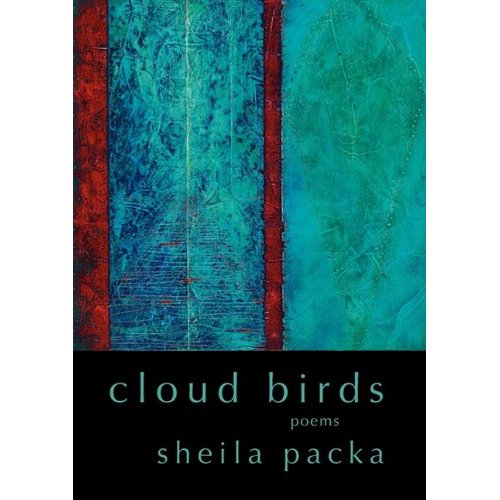
Cloud Birds
For me, this book of poems grapples with fear. I've arranged the poems into three sections: 'bear,' 'wing,' and 'cloud.' The poems in the first section are about encounters: fear of the wilderness, especially bears, fear of women, and fear of relationships. The pomegranate, the myth of Persephone, and the migration of Persephone between her husband in Hades and her mother enter into the book. Some of the poems in Cloud Birds are about women moving through violence; all of the poems are about moving through fear.
This is not about victimization, but about learning how to walk through violence and fear and get beyond it. My grandmother on my mother's side survived spousal abuse. I had a brief marriage, at age 20, to a man who, on our honeymoon, kicked me because the suitcase was not packed correctly. I have known so many who have suffered and even lost their lives to this violence.
The painting on the cover of the book by visual artist Cecilia Ramon is called "Refuge I/ Refugio I (in homage to Ana Mendieta). Cecilia Ramon, the visual artist, migrated from Buenos Aires, Argentina. When she was young, she witnessed violence on the streets. During that era, many people 'were disappeared.' The concept of refuge is apt. Ana Mendieta was an important visual artist. She was born in Havana, Cuba, and she came to the United States at the age of 12 without her parents. She became an environmental artist with striking work. Click for info about Ana Mendieta, visual artist. Her death was mysterious. She died from a fall from her apartment window in NYC. Her husband was charged with murder, but acquitted. Perhaps she did commit suicide. But that too is the extreme act of violence toward the self. I wrote the poem "Spilled" for her, for many others, who don't survive.
The section, Wing, is a migration through the Iron Range and the places in northern Minnesota where I grew up and lived. The Iron Range is a place of iron and taconite mines. It was a working class culture--sexist, racist, and homophobic. Drinking was a major preoccupation. But it is also a beautiful landscape with people, native and immigrant, of great resilience and strength. This section has stories about love and about my parents and immigrant grandparents. They never achieved English literacy; my grandmother and I weren't able to converse across the language divide. Some poems pay homage to my father; the first protector in my life and the first to threaten violence. He loved me fiercely. When one steps back from the family and looks into the landscape, one sees violence in nature, predators and prey in a relationship phrased as "the way life is." I mull over these things. In the section are poems about factory work and an underground mine, dangerous work with horrible health consequences. Recently, studying cosmology, I read that the creation of the universe was a simultaneous creation and destruction. It's everywhere. There is every reason to have fear and every reason to live one's life fully.
The last section, Cloud, is a sequence of poems about dissolved boundaries: between lovers, between walls that one puts up, between the immigrant past and the present, between the self and the landscape. In this section, the poem Persephone speaks of returning. When my mother was alive, I went home to her a few times. When relationships were difficult. Now that she is gone, I continue to revisit her origins.
In order to overcome my own fear of bears (because I had moved into the woods and shared the landscape with several), I decided to write twenty one love poems to bears. This is the origin of the manuscript--and its end--the decision to love what I had feared.
Cloud Birds is published by Wildwood River Press and is available at your local bookstore, or at Amazon.com
March 20, 2011
Poetry & Change: Journaling, Pablo Neruda, and the Past
Journal writing and memoir provide a starting point for poems. Journals especially are excellent places to generate poems and to grapple with changes that life brings. Poems are especially built for grappling, and the poem by Neruda, "Past," shows us how well it can be done.
Ira Progoff, author of At a Journal Workshop and founder of the Intensive Journal® process offers an in-depth and interesting method to explore life experience. His technique of a multi-sectioned journal that records steppingstones, intersections, dreams, daily writing, and dialogues (with body, self, others and even society concepts or norms) offers a helpful tool to navigate life. Not only does it increase awareness, it aids in decision-making. I like what he says about phases in life:
Progoff also refers to the writer and public statesman, Dag Hammarskjold. He kept a journal that was eventually published, titled Markings. The term 'marking' he borrowed from his habit of walking mountain trails. Marks upon the trail help us find our way and avoid difficult spots. The term is evocative; I like to use it when I teach writing. We are marked by different things, good and bad; those things shape us. These are places that we should go to when we sit down to write.
I would add that writing is an excellent way of coping. It is quiet and similar to meditation; it relaxes the body at the same time that it gives the mind a place for preoccupations and concerns. Not only that, it costs next to nothing. All that is needed is a notebook and pen. For people who don't have a safe place to keep a journal, the internet offers a password protected online storage of files (see http://www.google/docs and http://www.zoho.com). To anybody who wants to begin journaling, I suggest short writing exercises that focus on particular details: a pair of shoes, a hand tool, or a particular person. When journal exercises delve into such exact details of one's own particular life, over-generalization and sentimentality is nicely sidestepped.
Another way to approach journaling or writing exercises is to focus on images. An image, often the foundation of a poem, is vivid and powerful. It transcends languages and offers immediacy.
However, writing is more than a repository of memory or experience; it is also a tool of the mind and gives us a method to get past both memory and experience. It is not about "dumping." Even among friends, dumping all the negative experience can burden others. A journal offers the ability to contain difficult experience. Once written, we can stand back and observe our own experience. Writing allows writers to discover insights and shape the story, a profound and necessary step in taking control of one's life.
This brings me to consider the poem by Pablo Neruda, "Past." The poem begins:
"We have to discard the past" and this is followed by image after image of demolition and construction. It ends in this way:
"Now the heavy eyelid
covers the light of the eye
and what was once living
now no longer lives;
what we were, we are not.
And with words, although the letters
still have transparency and sound,
they change, and in the mouth changes;
the same mouth is now another mouth;
they change, lips, skin, circulation;
another being has occupied our skeleton;
what once was in us now is not.
It has gone, but if the call, we reply;
'I am here,' knowing that we are not,
that what once was, was and is lost,
is lost in the past, and now will not return."
(click here to read the entire text: http://www.poetry-chaikhana.com/N/NerudaPablo/Past.htm)
This poem captures the anguish and loss; it holds the contradiction of saying we must 'discard the past' and the impossibility of doing so. It is an example of the way that a poem, in very few words, goes right to the crux. It may have begun in a journal, I don't know. But out of the images he draws from, he pushes out into the deep heart of experience: it is always and forever changing.
Poetry is particularly an effective way to express this truth--any moment that we write about is a moment we can not hold. It slips away, becomes something else and so do we. By writing, we can bring it close, see it and feel it, even though it has changed and perhaps changed us. Poetry offers an intimacy that is hard to describe or experience anywhere else, it is a body experience but it happens in language.
What is it about the language of poetry that makes it so powerful?
More than any other type of writing, poetry is shaped. Memoir also is a shaped form. A memoir might capture a segment of someone's life, and it might select certain experiences. An artist's memoir, for example, might contain only the experiences that were formative to that person and his or her art.
Poetry focuses on image and provides patterns of sound and form that make it memorable. Neruda's poem relies on the construction and demolition. "We go on throwing down/ first, broken tiles,/then pompous doors." The word doors becomes not just wooden panels that allow entrance and exit in a building, but entrance and exit to other states of mind by use of the word "pompous." It conveys memory, image, story, but also casts many shadows, as Mary Oliver says. It offers multiple meanings and it does this with the choice of words and their placement. A line break is a way to nuance a sentence or phrase, to pause in a certain place and thereby add more meaning. Neruda repeats words within the poem: "There is nothing, there is always nothing" and "It was all alive,/ alive, alive, alive/ like a scarlet fish..." Repetition and variation within a poem also create meaning in a way similar to waves on a lake, a score of music, a cloud of birds.
Does poetry change the writer or reader? The reader most certainly can be changed by reading, the reader takes the poem inside of his or her breath, and can be in-spired, a profound exercise in empathy. I think it does change the writer; as the writer becomes more and more adept at craft and learns how to ply the language more skillfully, he or she is changed. As one writes, one begins to observe more, listen more, and consider more.
Success as a writer might or might not bring positive changes; but I do think writing itself brings the ability to find context and to connect to others.
Revision is a necessary part of writing. In revision, we develop an initial image or pattern to its fullest and strengthen the context and connections. Revision is also necessary in life; we may not be able to change the events or incidents that mark us, but we can change what they mean for ourselves and others.
Perhaps like Neruda, we would be able to hold the contradictions. F. Scott Fitzgerald, in his great essay, "The Crack Up," wrote, "the test of a first-rate intelligence is the ability to hold two opposed ideas in the mind at the same time, and still retain the ability to function." This is what writing and especially poetry offers.
Progoff, Ira. At a Journal Workshop. c1975. Dialogue House Library, New York, NY.
Ira Progoff, author of At a Journal Workshop and founder of the Intensive Journal® process offers an in-depth and interesting method to explore life experience. His technique of a multi-sectioned journal that records steppingstones, intersections, dreams, daily writing, and dialogues (with body, self, others and even society concepts or norms) offers a helpful tool to navigate life. Not only does it increase awareness, it aids in decision-making. I like what he says about phases in life:
"...many people are able to live through two or three distinct cycles of life. In each of these, there are a different person with different values and lifestyles. To be able to look forward to such successive developments opens a large potential not only for the later years of one's life but for the fullness of meaning in a human existence as a whole. The main difficulty lies in the period of transition between two major units in a person's life. When the old period has ended and a new period has not yet been substantially established, the emotional burdens of anxiety and self-doubt may be heavy to bear. That is the time when it is especially important to have a progressive and organic method for enabling the perspectives of one's life to reshape themselves." (p 115)
Progoff also refers to the writer and public statesman, Dag Hammarskjold. He kept a journal that was eventually published, titled Markings. The term 'marking' he borrowed from his habit of walking mountain trails. Marks upon the trail help us find our way and avoid difficult spots. The term is evocative; I like to use it when I teach writing. We are marked by different things, good and bad; those things shape us. These are places that we should go to when we sit down to write.
I would add that writing is an excellent way of coping. It is quiet and similar to meditation; it relaxes the body at the same time that it gives the mind a place for preoccupations and concerns. Not only that, it costs next to nothing. All that is needed is a notebook and pen. For people who don't have a safe place to keep a journal, the internet offers a password protected online storage of files (see http://www.google/docs and http://www.zoho.com). To anybody who wants to begin journaling, I suggest short writing exercises that focus on particular details: a pair of shoes, a hand tool, or a particular person. When journal exercises delve into such exact details of one's own particular life, over-generalization and sentimentality is nicely sidestepped.
Another way to approach journaling or writing exercises is to focus on images. An image, often the foundation of a poem, is vivid and powerful. It transcends languages and offers immediacy.
However, writing is more than a repository of memory or experience; it is also a tool of the mind and gives us a method to get past both memory and experience. It is not about "dumping." Even among friends, dumping all the negative experience can burden others. A journal offers the ability to contain difficult experience. Once written, we can stand back and observe our own experience. Writing allows writers to discover insights and shape the story, a profound and necessary step in taking control of one's life.
This brings me to consider the poem by Pablo Neruda, "Past." The poem begins:
"We have to discard the past" and this is followed by image after image of demolition and construction. It ends in this way:
"Now the heavy eyelid
covers the light of the eye
and what was once living
now no longer lives;
what we were, we are not.
And with words, although the letters
still have transparency and sound,
they change, and in the mouth changes;
the same mouth is now another mouth;
they change, lips, skin, circulation;
another being has occupied our skeleton;
what once was in us now is not.
It has gone, but if the call, we reply;
'I am here,' knowing that we are not,
that what once was, was and is lost,
is lost in the past, and now will not return."
(click here to read the entire text: http://www.poetry-chaikhana.com/N/NerudaPablo/Past.htm)
This poem captures the anguish and loss; it holds the contradiction of saying we must 'discard the past' and the impossibility of doing so. It is an example of the way that a poem, in very few words, goes right to the crux. It may have begun in a journal, I don't know. But out of the images he draws from, he pushes out into the deep heart of experience: it is always and forever changing.
Poetry is particularly an effective way to express this truth--any moment that we write about is a moment we can not hold. It slips away, becomes something else and so do we. By writing, we can bring it close, see it and feel it, even though it has changed and perhaps changed us. Poetry offers an intimacy that is hard to describe or experience anywhere else, it is a body experience but it happens in language.
What is it about the language of poetry that makes it so powerful?
More than any other type of writing, poetry is shaped. Memoir also is a shaped form. A memoir might capture a segment of someone's life, and it might select certain experiences. An artist's memoir, for example, might contain only the experiences that were formative to that person and his or her art.
Poetry focuses on image and provides patterns of sound and form that make it memorable. Neruda's poem relies on the construction and demolition. "We go on throwing down/ first, broken tiles,/then pompous doors." The word doors becomes not just wooden panels that allow entrance and exit in a building, but entrance and exit to other states of mind by use of the word "pompous." It conveys memory, image, story, but also casts many shadows, as Mary Oliver says. It offers multiple meanings and it does this with the choice of words and their placement. A line break is a way to nuance a sentence or phrase, to pause in a certain place and thereby add more meaning. Neruda repeats words within the poem: "There is nothing, there is always nothing" and "It was all alive,/ alive, alive, alive/ like a scarlet fish..." Repetition and variation within a poem also create meaning in a way similar to waves on a lake, a score of music, a cloud of birds.
Does poetry change the writer or reader? The reader most certainly can be changed by reading, the reader takes the poem inside of his or her breath, and can be in-spired, a profound exercise in empathy. I think it does change the writer; as the writer becomes more and more adept at craft and learns how to ply the language more skillfully, he or she is changed. As one writes, one begins to observe more, listen more, and consider more.
Success as a writer might or might not bring positive changes; but I do think writing itself brings the ability to find context and to connect to others.
Revision is a necessary part of writing. In revision, we develop an initial image or pattern to its fullest and strengthen the context and connections. Revision is also necessary in life; we may not be able to change the events or incidents that mark us, but we can change what they mean for ourselves and others.
Perhaps like Neruda, we would be able to hold the contradictions. F. Scott Fitzgerald, in his great essay, "The Crack Up," wrote, "the test of a first-rate intelligence is the ability to hold two opposed ideas in the mind at the same time, and still retain the ability to function." This is what writing and especially poetry offers.
Progoff, Ira. At a Journal Workshop. c1975. Dialogue House Library, New York, NY.
February 20, 2011
The Practice of Poetry: Emptiness
What does it take to write? I believe it takes emptiness. In 1928, Virginia Woolf said it took a room of one’s own and 500 pounds a year, the space and time to write. Helene Cixous, in Three Steps on the Ladder of Writing, says loss often triggers a writer to write. First loss, then emptiness occurs that only writing can ameliorate.
Writing is perhaps a compulsion, a solution to an ache. I’m not sure what brings it on. The cure is writing, but soon after having written, the ache or urge returns. Instead of a vicious, I’d call it a spacious cycle.
One makes time for writing by clearing a schedule and rearranging obligations to allow oneself a block of time. It doesn’t have to be a lot, even just an hour or two daily. One does the same to create space. A room of one’s own is wonderful, but for many years, I have worked in a quiet corner of shared bedroom or living room. Time and space are the prerequisites for a fruitful emptiness.
One becomes a good writer by being a good reader. They are two sides of the same coin of quietness. In order to write poetry, I read poetry. I believe that poetry is a language within a language, and that reading poetry opens a door for me to enter in.
More importantly, the emptiness or clearing must be interior. Empty the self by pouring regularly onto the page, and then share what you write with supportive others. Lewis Hyde talks about the concept of pot latch in his book, The Gift. This is a spiritual wisdom: by giving the gift away, one will keep receiving. Emptying helps clear space inside the mind that can then be filled with what the muse brings.
A writing teacher, Kate Green, recommended visualizing the muse. In a writing exercise, writing students were asked to give a persona to the muse, to describe physical characteristics and then to identify their muse’s wants and needs. Let yourself by guided by this useful exercise. If your muse wants an empty chair, give her an empty chair. If she wants an orange wall, then by all means, paint the wall orange. Find ways to please the source.
The material--what the writing is about--is given. One writes from the imagination. Writers write what we write, we write from our observations, obsessions, experiences, longings. Finding ways to tap the subconscious is useful: write from dreams or associations or intuition. Try aleotropic techniques. Chance. Play.
When I say that writing comes from emptiness, I don’t necessarily mean loneliness, a feeling of being left or abandoned. These can certainly be important sources of writing, but the emptiness can also be peaceful, an emptiness that is pure potential. One cultivates a receptivity. Without anxiety. One can learn to be present with peaceful non-expectation and gratefulness, aware of being. It is a state of listening.
Writing practice helps with this type of listening. It is not so different from Buddhist meditation practice that helps train the mind. The mind is fretful, afraid, preoccupied, distracted. Many internal obstacles must be overcome with patience and compassion toward self. In time, with intention and steady practice, this gives way to peaceful emptiness.
All of writing is process. First comes receptivity, openness, willingness. Next, vision and re-vision. One must be able to recognize potential in the material and develop and hone it. One must be able to write with an eye for image and an ear for sound. Revision is a form of letting go.
Poetry and process are actually the same. The practice is the discipline of regular writing. It doesn’t make sense to wait to be inspired, because it is usually in the process of writing that one receives the gift. One listens to the work and let’s oneself be guided by it in the process. For me, poetry springs from and feeds the spirit. (The Latin word spiritus means breath.) The breath of the poem is distilled, intense. For me, it is a beautiful sound meditation that achieves both emptiness and the presence of Being.
Writing is perhaps a compulsion, a solution to an ache. I’m not sure what brings it on. The cure is writing, but soon after having written, the ache or urge returns. Instead of a vicious, I’d call it a spacious cycle.
One makes time for writing by clearing a schedule and rearranging obligations to allow oneself a block of time. It doesn’t have to be a lot, even just an hour or two daily. One does the same to create space. A room of one’s own is wonderful, but for many years, I have worked in a quiet corner of shared bedroom or living room. Time and space are the prerequisites for a fruitful emptiness.
One becomes a good writer by being a good reader. They are two sides of the same coin of quietness. In order to write poetry, I read poetry. I believe that poetry is a language within a language, and that reading poetry opens a door for me to enter in.
More importantly, the emptiness or clearing must be interior. Empty the self by pouring regularly onto the page, and then share what you write with supportive others. Lewis Hyde talks about the concept of pot latch in his book, The Gift. This is a spiritual wisdom: by giving the gift away, one will keep receiving. Emptying helps clear space inside the mind that can then be filled with what the muse brings.
A writing teacher, Kate Green, recommended visualizing the muse. In a writing exercise, writing students were asked to give a persona to the muse, to describe physical characteristics and then to identify their muse’s wants and needs. Let yourself by guided by this useful exercise. If your muse wants an empty chair, give her an empty chair. If she wants an orange wall, then by all means, paint the wall orange. Find ways to please the source.
The material--what the writing is about--is given. One writes from the imagination. Writers write what we write, we write from our observations, obsessions, experiences, longings. Finding ways to tap the subconscious is useful: write from dreams or associations or intuition. Try aleotropic techniques. Chance. Play.
When I say that writing comes from emptiness, I don’t necessarily mean loneliness, a feeling of being left or abandoned. These can certainly be important sources of writing, but the emptiness can also be peaceful, an emptiness that is pure potential. One cultivates a receptivity. Without anxiety. One can learn to be present with peaceful non-expectation and gratefulness, aware of being. It is a state of listening.
Writing practice helps with this type of listening. It is not so different from Buddhist meditation practice that helps train the mind. The mind is fretful, afraid, preoccupied, distracted. Many internal obstacles must be overcome with patience and compassion toward self. In time, with intention and steady practice, this gives way to peaceful emptiness.
All of writing is process. First comes receptivity, openness, willingness. Next, vision and re-vision. One must be able to recognize potential in the material and develop and hone it. One must be able to write with an eye for image and an ear for sound. Revision is a form of letting go.
Poetry and process are actually the same. The practice is the discipline of regular writing. It doesn’t make sense to wait to be inspired, because it is usually in the process of writing that one receives the gift. One listens to the work and let’s oneself be guided by it in the process. For me, poetry springs from and feeds the spirit. (The Latin word spiritus means breath.) The breath of the poem is distilled, intense. For me, it is a beautiful sound meditation that achieves both emptiness and the presence of Being.
February 17, 2011
The Body of the Poem
It is productive to consider the form, or body, of individual poems. The body perceives with the senses, as does the poem. I consider the “eyes” of the poem--who is gazing and at what. I consider the breath. The poet has created a sound and rhythm that will recreate in the breath of the reader. In addition, the poem listens to something. As a reader, I listen to the world the poet has given me. Next, the poem employs touch in the textures of the poem. There may be a scent or a taste. The five senses are common elements to each poem. The form or pattern that manifests visually and aurally might be lyrical, narrative or dramatic. The form may call up ritual, or it may create its own pleasing combination of forces and frictions and conjure many associations. The variations are fascinating.
Consider this:
I Am the Great Sun
(from a Norman Crucifix of 1632)
by Charles Causley (from Union Street, 1957)
I am the great sun, but you do not see me,
I am your husband, but you turn away.
I am the captive, but you do not free me,
I am the captain you will not obey.
I am the truth, but you will not believe me,
I am the city where you will not stay,
I am your wife, your child, but you will leave me,
I am that God to whom you will not pray.
I am your counsel, but you do not hear me,
I am the lover who you will betray,
I am the victor, but you do not cheer me,
I am the holy dove who you will slay.
I am your life, but if you will not name me,
Seal up your soul with tears, and never blame me.
This poem has a deep and clear pattern. It is a sonnet and also a form called an anaphora (the lines begin with the same phrase). Each line has ten or eleven syllables. The words are short and plain. The rhyme is not just end words but in the second to last end words: see/free, believe/leave, hear/cheer, name/blame. The sonnet form has 14 lines, roughly iambic pentameter (the iamb is the basic unit of breath in English, an unaccented syllable, followed by an accented syllable) (pentameter is 10 syllables). The stanzas are quatrains, four lines in each with alternate lines that rhyme. They are consistent in size except for the last couplet. The anaphora form is used a lot in the Bible and in other poetic works (see Walt Whitman). It is an arresting and beautiful form.
One notices the sound: long vowel sounds (a, e) and short o sounds, and the v consonants in captive, leave, believe, lover, victor, dove, never.
This poem is also a persona poem. It seems to take the persona--it speaks from the Norman crucifix. Sometimes this method is called “a mask.” The poet puts on the mask and speaks as if from that object, person, or place. The body of this poem is very striking and powerful.
Consider this:
Why I Need the Birds
by Lisel Mueller
When I hear them call
in the morning, before
I am quite awake,
my bed is already traveling
the daily rainbow,
the arc toward evening;
and the birds, leading
their own discreet lives
of hunger and watchfulness,
are with me all the way,
always a little ahead of me
in the long-practiced manner
of unobtrusive guides.
By the time I arrive at evening,
they have just settled down to rest;
already invisible, they are turning
into the dreamwork of trees;
and all of us together —
myself and the purple finches,
the rusty blackbirds,
the ruby cardinals,
and the white-throated sparrows
with their liquid voices —
ride the dark curve of the earth
toward daylight, which they announce
from their high lookouts
before dawn has quite broken for me.
“Why I Need the Birds” by Lisel Mueller, from Alive Together: New and Selected Poems. © Louisiana State University Press.
This poem, in contrast to the “I Am the Great Sun,” is free verse. However, it still has form. It still has its own pattern. The lines are about 5 or 6 syllables each with a longer line coming at regular intervals. The sound element is well crafted, the ‘a’ vowel resounds with a long ‘i’ sound. There is a narrative arc to the poem that is circular. it begins in the morning, goes through the night and ends right before dawn. There are two stanzas, roughly the same length, one has 13 lines, the next 14. The design is pleasing. The figurative language, the bed traveling, and the precise details swiftly take our imagination. When we enter the body of this poem and perceive with its eyes and ears, we experience a breath-taking circuit around the earth.
Real bodies have a skeletal and muscular structure. They have hearts and minds. They have nervous systems and circulatory systems. In the same way, good poems have these. In fact, the shape of the poem has both external and internal dimensions. The form of “I Am The Great Sun” borrows from the crucifix opposing directions. In the poem, the poet has worked out sentences that include assertion and negation. The opposing forces or tensions around or within the work create a powerful dynamic. The circular form of “Why I Need the Birds” also pleases with its circle of day and night, circle around the earth, and circle of bird’s flight. The “eye” of the poem that sleeps appreciates the birds that serve as sentinels and guides.
When you write a poem, you also create a body for the poem. In revision, pay close attention to the five senses. Give precise details. Find your pattern and let the pattern connect to the larger pattern of which we are all a part. Let the body of the poem reinforce and even expand the meaning.
Consider this:
I Am the Great Sun
(from a Norman Crucifix of 1632)
by Charles Causley (from Union Street, 1957)
I am the great sun, but you do not see me,
I am your husband, but you turn away.
I am the captive, but you do not free me,
I am the captain you will not obey.
I am the truth, but you will not believe me,
I am the city where you will not stay,
I am your wife, your child, but you will leave me,
I am that God to whom you will not pray.
I am your counsel, but you do not hear me,
I am the lover who you will betray,
I am the victor, but you do not cheer me,
I am the holy dove who you will slay.
I am your life, but if you will not name me,
Seal up your soul with tears, and never blame me.
This poem has a deep and clear pattern. It is a sonnet and also a form called an anaphora (the lines begin with the same phrase). Each line has ten or eleven syllables. The words are short and plain. The rhyme is not just end words but in the second to last end words: see/free, believe/leave, hear/cheer, name/blame. The sonnet form has 14 lines, roughly iambic pentameter (the iamb is the basic unit of breath in English, an unaccented syllable, followed by an accented syllable) (pentameter is 10 syllables). The stanzas are quatrains, four lines in each with alternate lines that rhyme. They are consistent in size except for the last couplet. The anaphora form is used a lot in the Bible and in other poetic works (see Walt Whitman). It is an arresting and beautiful form.
One notices the sound: long vowel sounds (a, e) and short o sounds, and the v consonants in captive, leave, believe, lover, victor, dove, never.
This poem is also a persona poem. It seems to take the persona--it speaks from the Norman crucifix. Sometimes this method is called “a mask.” The poet puts on the mask and speaks as if from that object, person, or place. The body of this poem is very striking and powerful.
Consider this:
Why I Need the Birds
by Lisel Mueller
When I hear them call
in the morning, before
I am quite awake,
my bed is already traveling
the daily rainbow,
the arc toward evening;
and the birds, leading
their own discreet lives
of hunger and watchfulness,
are with me all the way,
always a little ahead of me
in the long-practiced manner
of unobtrusive guides.
By the time I arrive at evening,
they have just settled down to rest;
already invisible, they are turning
into the dreamwork of trees;
and all of us together —
myself and the purple finches,
the rusty blackbirds,
the ruby cardinals,
and the white-throated sparrows
with their liquid voices —
ride the dark curve of the earth
toward daylight, which they announce
from their high lookouts
before dawn has quite broken for me.
“Why I Need the Birds” by Lisel Mueller, from Alive Together: New and Selected Poems. © Louisiana State University Press.
This poem, in contrast to the “I Am the Great Sun,” is free verse. However, it still has form. It still has its own pattern. The lines are about 5 or 6 syllables each with a longer line coming at regular intervals. The sound element is well crafted, the ‘a’ vowel resounds with a long ‘i’ sound. There is a narrative arc to the poem that is circular. it begins in the morning, goes through the night and ends right before dawn. There are two stanzas, roughly the same length, one has 13 lines, the next 14. The design is pleasing. The figurative language, the bed traveling, and the precise details swiftly take our imagination. When we enter the body of this poem and perceive with its eyes and ears, we experience a breath-taking circuit around the earth.
Real bodies have a skeletal and muscular structure. They have hearts and minds. They have nervous systems and circulatory systems. In the same way, good poems have these. In fact, the shape of the poem has both external and internal dimensions. The form of “I Am The Great Sun” borrows from the crucifix opposing directions. In the poem, the poet has worked out sentences that include assertion and negation. The opposing forces or tensions around or within the work create a powerful dynamic. The circular form of “Why I Need the Birds” also pleases with its circle of day and night, circle around the earth, and circle of bird’s flight. The “eye” of the poem that sleeps appreciates the birds that serve as sentinels and guides.
When you write a poem, you also create a body for the poem. In revision, pay close attention to the five senses. Give precise details. Find your pattern and let the pattern connect to the larger pattern of which we are all a part. Let the body of the poem reinforce and even expand the meaning.
January 9, 2011
Writing is My Shelter
Writing has a way of transforming experience. There is evidence that keeping a journal improves one's health and immunity, and that it speeds recovery from illness. Writing is a tool of the mind, but I also think it is a tool of the soul. Through writing, we can explore life's events and changes. The page offers a place to put the things that are difficult to bear; once it's has been placed there, one can shift roles from victim or witness to one that is more active. Instead of being done onto, one is a doer. Psychologically, the change is profound.
The New Yorker magazine featured an article written by Joan Acocella about the Swedish mystery writer, Stieg Larsson. It's a peek behind the scenes, a look at the writer who seemed to have started writing recently, in his mid-forties. The article examines some questions around authorship and editorial changes of the three manuscripts, but I was also interested in the connection between his fiction and his real life. He founded a magazine, Expo, that is similar to the one, the Millenium, in his trilogy. The Expo office, like Millenium, was threatened and vandalized. As a young man, Larsson witnessed a gang rape of a young girl. He never forgot it. He insisted the first book of the trilogy be titled, Men Who Hate Women (as it was, in Sweden). Larsson was able to transform the act of violence that he witnessed into a story about a strong, female character who survives, even wins. Read the article.
This week, I facilitated a writing group at the women's shelter for women who have survived domestic abuse. I'm very glad to have the opportunity to create a time and place for writing for them; in my twenties, I experienced violence in my first marriage. Writing helped me. Not only did I have the opportunity to find and develop my voice, but my writing connected me with people who gave me strength and support. It changed my life for the better. I know it will do the same for these women.
We sat down and did three timed writing exercises in session. First I read a brief example, and then we begin the exercise. The first assignment, after Sandra Cisneros chapter called "Names" in her novel, The House on Mango Street, I asked the women to write about their name. I never demand that participants read their work aloud, but they all volunteered. Each one wrote a moving piece. The next assignment was to write an anaphora (a poem whose lines begin with the same word or phrase) based on the poem, "Where I'm From" by George Ella Lyon. The last exercise was after Lawrence Ferlinghetti's poem, "I Am Waiting." I was interested in exercises that could be either poem or memoir. Writing about identity helps to strengthen one's identity. Writing about place helps us to understood our roots. The last allows us to name our desires, not just for ourselves, but for the larger world. We spent about an hour and a half in session, and I left there feeling grateful to the women for sharing their stories, and to the art of writing for the gifts it brings.
I've asked my friends to donate extra journals and notebooks that I can offer women at the shelter and at the Family Justice Center. Many writers teach writing classes at homeless shelters, jails, women's shelters, and other places. To allow a place and time for writing is to honor the experiences and lives of others. I found a blog entry on Mira's List about her project, "My Words Are My Shelter." Read the article here
I've also made a call for submissions for writers in the Arrowhead region of Minnesota to send me poems or short pieces about transitions.* I want to publish the work on placemats that can be used at the Empty Bowl community dinner (a fundraiser for the local food bank) and at the Thanksgiving Dinner at the DECC (both events are in Duluth, MN). I will help the women at the shelter share their experiences in a small publication (published in October 2011) with other poems of transition. Changes in life are often difficult; it's heartening to hear about others who have gone through similar changes, or even more difficult ones. Writing is my shelter, and with others, we can make the world a better place.
*Blessings & Transitions
CALL FOR SUBMISSIONS: Invitation to writers in the Arrowhead Region of Minnesota to send poems, prose poems, flash fiction, or brief essays (500 words max) that illuminate life transitions and/or that are blessings. This is a project of the 2010-2012 Duluth Poet Laureate, Sheila Packa. These will be considered for a poster & placemats (to be created for April poetry month and for an anthology of work to be published by Wildwood River Press in the fall of 2011. Email submissions are okay. 5 page limit. Deadline March 31, 2011. Paste into an email to sheila@sheilapacka.com or mail up to 5 pages to Wildwood River, 1748 Wildwood Road, Duluth, MN 55804.
The New Yorker magazine featured an article written by Joan Acocella about the Swedish mystery writer, Stieg Larsson. It's a peek behind the scenes, a look at the writer who seemed to have started writing recently, in his mid-forties. The article examines some questions around authorship and editorial changes of the three manuscripts, but I was also interested in the connection between his fiction and his real life. He founded a magazine, Expo, that is similar to the one, the Millenium, in his trilogy. The Expo office, like Millenium, was threatened and vandalized. As a young man, Larsson witnessed a gang rape of a young girl. He never forgot it. He insisted the first book of the trilogy be titled, Men Who Hate Women (as it was, in Sweden). Larsson was able to transform the act of violence that he witnessed into a story about a strong, female character who survives, even wins. Read the article.
This week, I facilitated a writing group at the women's shelter for women who have survived domestic abuse. I'm very glad to have the opportunity to create a time and place for writing for them; in my twenties, I experienced violence in my first marriage. Writing helped me. Not only did I have the opportunity to find and develop my voice, but my writing connected me with people who gave me strength and support. It changed my life for the better. I know it will do the same for these women.
We sat down and did three timed writing exercises in session. First I read a brief example, and then we begin the exercise. The first assignment, after Sandra Cisneros chapter called "Names" in her novel, The House on Mango Street, I asked the women to write about their name. I never demand that participants read their work aloud, but they all volunteered. Each one wrote a moving piece. The next assignment was to write an anaphora (a poem whose lines begin with the same word or phrase) based on the poem, "Where I'm From" by George Ella Lyon. The last exercise was after Lawrence Ferlinghetti's poem, "I Am Waiting." I was interested in exercises that could be either poem or memoir. Writing about identity helps to strengthen one's identity. Writing about place helps us to understood our roots. The last allows us to name our desires, not just for ourselves, but for the larger world. We spent about an hour and a half in session, and I left there feeling grateful to the women for sharing their stories, and to the art of writing for the gifts it brings.
I've asked my friends to donate extra journals and notebooks that I can offer women at the shelter and at the Family Justice Center. Many writers teach writing classes at homeless shelters, jails, women's shelters, and other places. To allow a place and time for writing is to honor the experiences and lives of others. I found a blog entry on Mira's List about her project, "My Words Are My Shelter." Read the article here
I've also made a call for submissions for writers in the Arrowhead region of Minnesota to send me poems or short pieces about transitions.* I want to publish the work on placemats that can be used at the Empty Bowl community dinner (a fundraiser for the local food bank) and at the Thanksgiving Dinner at the DECC (both events are in Duluth, MN). I will help the women at the shelter share their experiences in a small publication (published in October 2011) with other poems of transition. Changes in life are often difficult; it's heartening to hear about others who have gone through similar changes, or even more difficult ones. Writing is my shelter, and with others, we can make the world a better place.
*Blessings & Transitions
CALL FOR SUBMISSIONS: Invitation to writers in the Arrowhead Region of Minnesota to send poems, prose poems, flash fiction, or brief essays (500 words max) that illuminate life transitions and/or that are blessings. This is a project of the 2010-2012 Duluth Poet Laureate, Sheila Packa. These will be considered for a poster & placemats (to be created for April poetry month and for an anthology of work to be published by Wildwood River Press in the fall of 2011. Email submissions are okay. 5 page limit. Deadline March 31, 2011. Paste into an email to sheila@sheilapacka.com or mail up to 5 pages to Wildwood River, 1748 Wildwood Road, Duluth, MN 55804.
Subscribe to:
Posts (Atom)