"Poetry is made up of nothing except beautiful details." --Voltaire
I wish our clever young poets would remember my homely definitions of prose and poetry; prose—words in their best order; poetry—the best words in their best order.
—Samuel Taylor Coleridge, Table Talk (July 12, 1827)
This is what you shall do: Love the earth and sun and the animals, despise riches, give alms to every one that asks, stand up for the stupid and crazy, devote your income and labor to others, hate tyrants, argue not concerning God, have patience and indulgence toward the people, take off your hat to nothing known or unknown or to any man or number of men, go freely with powerful uneducated persons and with the young and with the mothers of families, read these leaves in the open air every season of every year of your life, re-examine all you have been told at school or church or in any book, dismiss whatever insults your own soul; and your very flesh shall be a great poem and have the richest fluency not only in its words but in the silent lines of its lips and face and between the lashes of your eyes and in every motion and joint of your body…
-- Walt Whitman, from Preface to Leaves of Grass (1855)
If I read a book [and] it makes my whole body so cold no fire ever can warm me I know that is poetry. If I feel physically as if the top of my head were taken off, I know that is poetry. These are the only way I know it. Is there any other way. --Emily Dickinson
In poetry, the exchange is one of energy. Human energy is transferred, and from the poem it reaches the reader. Human energy, which is consciousness, the capacity to produce change in existing conditions. The only danger is in not going far enough. The usable truth here deals with change. But we are speaking of the human spirit. If we go deep enough, we reach the common life, the shared experience of man, the world of possibility. If we do not go deep, if we live and write half-way, there are the obscurity, vulgarity, the slang of fashion, and several kinds of death.
--Muriel Rukeyser in The Life of Poetry
Walking, like prose, has a definite aim....When the man who is walking has reached his goal...when he was reached the place, book, fruit, the object of his desire...this possession at once entirely annuls his whole act; the effect swallows up the cause, the end absorbs the means; and whatever the act, only the result remains. It is the same with utilitarian language: the language I use to express my design, my desire, my command, my opinion; this language, when it has served its purpose, evaporates almost as it is heard....The poem, on the other hand, does not die for having lived: it is expressly designed to be born again from its ashes and to become endlessly what it has just been. Poetry can be recognized by this property, that it tends to get itself reproduced in its own form: it stimulates us to reconstruct it identically.
-- Paul Valery, "Poetry and Abstract Thought," The Art of Poetry
The difference between the action of a poem and and of an ordinary narrative is physiological.
--Paul Valery, "Remarks on Poetry," The Art of Poetry
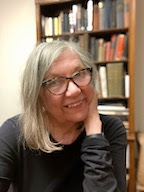
Sheila Packa Poetry Blog: A blog about poetry: figurative language, spirit, intertextual explorations, patterns, punctuation, forms, great writers, quotes, and journey notes. For updates, follow me on Bluesky https://bsky.app/profile/sheilapacka.com
Showing posts with label Valery. Show all posts
Showing posts with label Valery. Show all posts
January 23, 2012


July 25, 2010
Getting Inside Poetry
Poetry may seem difficult at first. Some readers feel frustrated or shut out by poems that seem obscure. It takes awhile to learn its dimensions. I think of poetry as a language within our language. It is figurative instead of literal. It uses metaphor and some devices in order to gain access to things that cannot be said.
I find it useful to describe poetry as "pattern language." This phrase from architecture describes common forms: entrances, transitional spaces, roofs, particular uses for rooms, etc. In fact, the word 'stanza' comes from the Italian and means 'room.' Poetry is built; it does have structure. This structure contains images, sounds, and creates meaning. When you start to understand these elements, a gate opens and poetry becomes essential. For me, poetry houses the spirit.
Poetry's history is in the oral tradition. It has been used in spiritual or religious ritual. Prayers are memorized and spoken. Blessings are given. Spells are cast. Traveling minstrels or storytellers instructed and entertained people. Poetry's patterns allowed for easier memorization.
"Voice" is key to understanding the poem. Who is speaking and to whom? Some poems are public and some very intimate. Three basic types of poems are 1) narrative, 2) dramatic, and 3) lyric. I consider the intention of the poet to determine the type of a poem. The narrative is essentially a story. A dramatic poem tends to sound like a speech delivered to many. It often engages with important figures and historical events; it might be epic. The lyric type is similar to song.
Some poems are 'formal,' meaning that they use a form with prescribed meter, syllables in a line, stanzas, and rhyme. Sonnets are forms, some are Shakespearean and some Petrarchan. Other forms are the sestina, villanelle, and pantoum. Individual poets adapt forms to suit their work. Then there are 'free verse' poems that do not follow a formula. These might have 'blank verse,' meaning iambic rhythm. The author of a free verse poem usually establishes his or her own pattern.
The purpose of the poem is also an interesting consideration. The poet Paul Valery said that prose language is meant to disappear once the meaning is conveyed, but poetry is different. The particular arrangement of words and rhythm physically affects the reader. It resists disappearing. The form itself is compelling and acts as a device that continues to create meaning each time we read it.
Helen Vendler, an astute literary critic, writes: "Both John Stuart Mill and T.S. Eliot...thought that the reader 'overhears' the speaker of the lyric, as the audience overhears the soliloquies of Hamlet. Others...have preferred, as I do myself, to see the reader as the true speaker of the lyric. In this view, the lyric is a script written for performance by the reader--who, as soon as he enters the lyric, is no longer a reader but rather an utterer, saying the words of the poem in propria persona, internally and with proprietary feeling. For poems that are overheard, I prefer to keep the name 'dramatic monologue'; in such a poem the reader is genuinely placed in the position of overhearing someone else, clearly not himself, speak aloud to yet another person. I reserve the name 'lyric' for poems that make their reader their solitary speaker." (from the Introduction of her book, The Given and the Made: Strategies of Poetic Redefinition)
Poetry does have a strong connection to the body, and the breath of the writer affects that of the reader. In this way, we breath in and out the images and language, the vision of the poets.
I find it useful to describe poetry as "pattern language." This phrase from architecture describes common forms: entrances, transitional spaces, roofs, particular uses for rooms, etc. In fact, the word 'stanza' comes from the Italian and means 'room.' Poetry is built; it does have structure. This structure contains images, sounds, and creates meaning. When you start to understand these elements, a gate opens and poetry becomes essential. For me, poetry houses the spirit.
Poetry's history is in the oral tradition. It has been used in spiritual or religious ritual. Prayers are memorized and spoken. Blessings are given. Spells are cast. Traveling minstrels or storytellers instructed and entertained people. Poetry's patterns allowed for easier memorization.
"Voice" is key to understanding the poem. Who is speaking and to whom? Some poems are public and some very intimate. Three basic types of poems are 1) narrative, 2) dramatic, and 3) lyric. I consider the intention of the poet to determine the type of a poem. The narrative is essentially a story. A dramatic poem tends to sound like a speech delivered to many. It often engages with important figures and historical events; it might be epic. The lyric type is similar to song.
Some poems are 'formal,' meaning that they use a form with prescribed meter, syllables in a line, stanzas, and rhyme. Sonnets are forms, some are Shakespearean and some Petrarchan. Other forms are the sestina, villanelle, and pantoum. Individual poets adapt forms to suit their work. Then there are 'free verse' poems that do not follow a formula. These might have 'blank verse,' meaning iambic rhythm. The author of a free verse poem usually establishes his or her own pattern.
The purpose of the poem is also an interesting consideration. The poet Paul Valery said that prose language is meant to disappear once the meaning is conveyed, but poetry is different. The particular arrangement of words and rhythm physically affects the reader. It resists disappearing. The form itself is compelling and acts as a device that continues to create meaning each time we read it.
Helen Vendler, an astute literary critic, writes: "Both John Stuart Mill and T.S. Eliot...thought that the reader 'overhears' the speaker of the lyric, as the audience overhears the soliloquies of Hamlet. Others...have preferred, as I do myself, to see the reader as the true speaker of the lyric. In this view, the lyric is a script written for performance by the reader--who, as soon as he enters the lyric, is no longer a reader but rather an utterer, saying the words of the poem in propria persona, internally and with proprietary feeling. For poems that are overheard, I prefer to keep the name 'dramatic monologue'; in such a poem the reader is genuinely placed in the position of overhearing someone else, clearly not himself, speak aloud to yet another person. I reserve the name 'lyric' for poems that make their reader their solitary speaker." (from the Introduction of her book, The Given and the Made: Strategies of Poetic Redefinition)
Poetry does have a strong connection to the body, and the breath of the writer affects that of the reader. In this way, we breath in and out the images and language, the vision of the poets.
Subscribe to:
Posts (Atom)