Showing posts with label collaboration. Show all posts

January 17, 2024

A Song Cycle: Surface Displacements

Poster

The Weber Music Hall stage
Composer Wendy Durrwachter created a song cycle for the title poem in my book, Surface Displacements. It premiered on Saturday January 13, 2024 at the Weber Music Hall on the University of Minnesota Duluth campus.  

The songs were performed by soprano Jennifer Lien while Ms Durrwachter played the piano, and the music reflected the landscape of Lake Superior and the waters and landscape of northern Minnesota.  


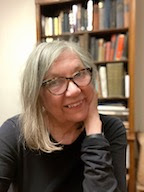
photo of the creators


February 20, 2020

Approaching the Border

https://vimeo.com/117233282

Poems by Sheila Packa (and voice)
Film, musical composition, and arrangement by Kathy McTavish
Honor song by Liz Jaakola and the Oshkii Giizhik Singers.

This is about trafficking and survival, migration, approaching the border, life, death and rebirth.

This video appeared in an installation "The Road to Williston"
Bakken Boom! Artists Respond to the North Dakota Oil Rush
@ Plains Art Museum January 29, 2015 - August 15, 2015 - Fargo Fred J. Donath Memorial and William and Anna Jane Schlossman Galleries, General Exhibition.

October 28, 2017

Migrations: A Cantata

This is a 2 minute preview of the cantata Migrations, composed by Olli Kortekangas with poems written by Sheila Packa.  This is the Lahti Symphony Orchestra in Finland, Oct 19, 2017.

February 6, 2016

Setting Poems to Music

"Migrations"-- Minnesota Orchestra Interview with Olli Kortekangas.  The musical composition, providing a setting to four of my poems about migration, was created to celebrate the 150th anniversary of Finnish - North American immigration and to serve as a prelude to Sibelius' Kullervo, a concert that also celebrates Sibelius' 150 years.  Watch the video to hear the introduction from Kortekangas:


February 4, 2016

Migrations @ the Minnesota Orchestra

The Minnesota Orchestra tunes up before the Thursday a.m. performance.   The Playbill included the poems from Cloud Birds and Echo and Lightning that the composer used in his music! The symphony performance evoked the sound of water and wind. The sound was strong and layered. The YL Male Choir and Lilli Paasikivi (Mezzo) sang the lyrics.  Great voices!

Scroll down to see the story of the text.


Here's a review: "lush, haunting cantata with painterly images from the poet..." https://www.minnpost.com/artscape/2016/02/six-reasons-hear-minnesota-orchestra-play-kullervo

Here's a review: http://www.twincities.com/2016/02/04/minnesota-orchestra-review-vanska-delights-with-animated-passion-during-masterpiece-by-finlands-sibelius/

Duluth News Tribune article: http://www.duluthnewstribune.com/ae/music/3939461-immigration-celebration-duluth-poets-work-accompany-finnish-composers-premiere


The Story of the Text: 

The poems existed first, and Olli Kortekangas created the music for them. We communicated regularly via email and since then we have met in person. He was very sensitive to the content and rhythms of the poems but it was necessary for some lines to be altered slightly and some lines to be omitted in the music. We consulted about these necessary changes and he sent me early sketches of his composition.

The poems are from my two books, Cloud Birds and Echo and Lightning.

The titles were changed on a few of the poems to enable the audience to understand the arc of this musical story: Two Worlds, Resurrection, The Man Who Lived in a Tree, and Music We Breathe.

"Two Worlds" (Cloud Birds) explores the two worlds of past and present, this world and the next world. An interesting connection was made. A line in the poem refers to a hymn I had sung in Kokkola, while visiting a second cousin, Mikko Himanka, a retired minister. Kortekangas asked me specifically which hymn, and I was able to identify it for him, and it happened to be a hymn he had sung in childhood. The sound of this hymn is echoed in the musical composition. Also the mirror image created in the poem also occurs in the music.

The next poem, "Resurrection," is the poem "Migrations" in Cloud Birds. In the book, the poem has an inscription, a quote by the poet HD, "In resurrection is confusion...." from her long poem, "The Flowering of the Rod," and the word resurrection better reflected the meaning of the poem.

The third poem is from Cloud Birds as well. "The Man Who Lived in a Tree," is a narrative poem about a Finnish immigrant to America who worked in an underground iron mine but contracted a lung disease and returned home to Kalajoki, Finland to die. While ill, he hoisted himself into the limbs of a tree and did not want to descend. This is a story I learned when I visited the graveyard in Kalajoki where some of my ancestors are buried. My relative Mikko Himanka told me the story.

The fourth poem, "The Music We Breathe," is titled "What Is Found" and it is from the third section of Echo and Lightning.

Migrations has long been a metaphor for me as a poet. All of my grandparents are from the western side of Finland, and I grew up immersed in the Finnish language and culture. I believe that immigration affects families deeply, particularly in relation to borders, language and landscape. Immigrants make massive transitions as they enter a new culture and language, and many believe that speaking a new language brings out different parts of the self. Some feel they are a different self in the new language. This is perhaps why my grandmother was reluctant to speak English; she wanted to preserve an important part of her self identity. She lived in Minnesota, but she rarely left Finnish language and culture. This was a border that she kept. Also I think that landscape exists also internally, in the psyche, and this influences us. Although I did not learn to speak Finnish very well, my English has picked up the Finnish rhythms. Because poems are physiological, their breath --the words, meters, rhythms and sounds --are re-created in the reader. To read my work is to experience the north landscape.

I myself am most comfortable on borders, and less so in the midst of things. As a poet/artist, I also perceive the permeability of borders. I can cross back and forth into Finnish and American culture. My work is always narrative, but it does cross the border of genres and perhaps exists in a state of "between."

October 6, 2015

Loose Narratives: The Art of ParkeHarrison

Today, I had the opportunity to listen to the two artists talk about their process. Robert and Shana ParkeHarrison collaborate to create haunting and magical realist images. Their work is narrative, and they explore the connections between humans, nature, and technology. Along with Bob's focus is on photography and performance art, Shana brings her experience with choreography and painting.  See this link to view images: http://parkeharrison.com/artistInfo/parkehar/biblio/2.pdf?1968 and https://fstoppers.com/portraits/amazing-surreal-work-robert-shana-parkeharrison-4009

As a writer, I was curious about how they created such deep narratives. Their approach is theatrical, and each image is like a still from a movie. Each series begins with a long period of research and planning. They bring props. They choreograph. They manipulate the photograph to add or subtract color, to blur or obscure elements, and highlight certain things.  This is a slow and painstaking process. Each year, they create about eleven individual works.
 reclamation from Catherine Edelman Gallery on Vimeo.

The protagonist, "Everyman," expresses valiant effort and ineffectual attempts to address environmental damage.  The character often has his back to the viewer, and in this way, brings the viewer toward the world inside the frame. There are many odd elements: a man wears a suit to do things nobody would wear a suit to do. He holds clouds on a string, or he sprouts seedlings from his body. There are machines or laboratory equipment used in curious ways. Veins become roots, and plants are spindly and reaching. Cones are prevalent as are clouds. He attempts to mend the crack in the landscape by stitching with an oversize needle. The narratives strongly connect to the body, and they are piercing.  There is foreboding and magic. All this--such rich narrative--exists in image, object, body, atmosphere.

More:
https://vimeo.com/15810566
Artist Talk with Robert & Shana ParkeHarrison (2010) Introduction from Catherine Edelman Gallery on Vimeo.


.

June 4, 2015

Northern Spark: Mill City Requiem - #nspk

Mill City Requiem for Solo Instrument and Distance is presented as part of Northern Spark 2015, produced by Northern Lights.mn
June 13, 2015, dusk till dawn, at the Mill City Ruins, Minneapolis, MN 

Sheila Packa, Kathy McTavish and cello
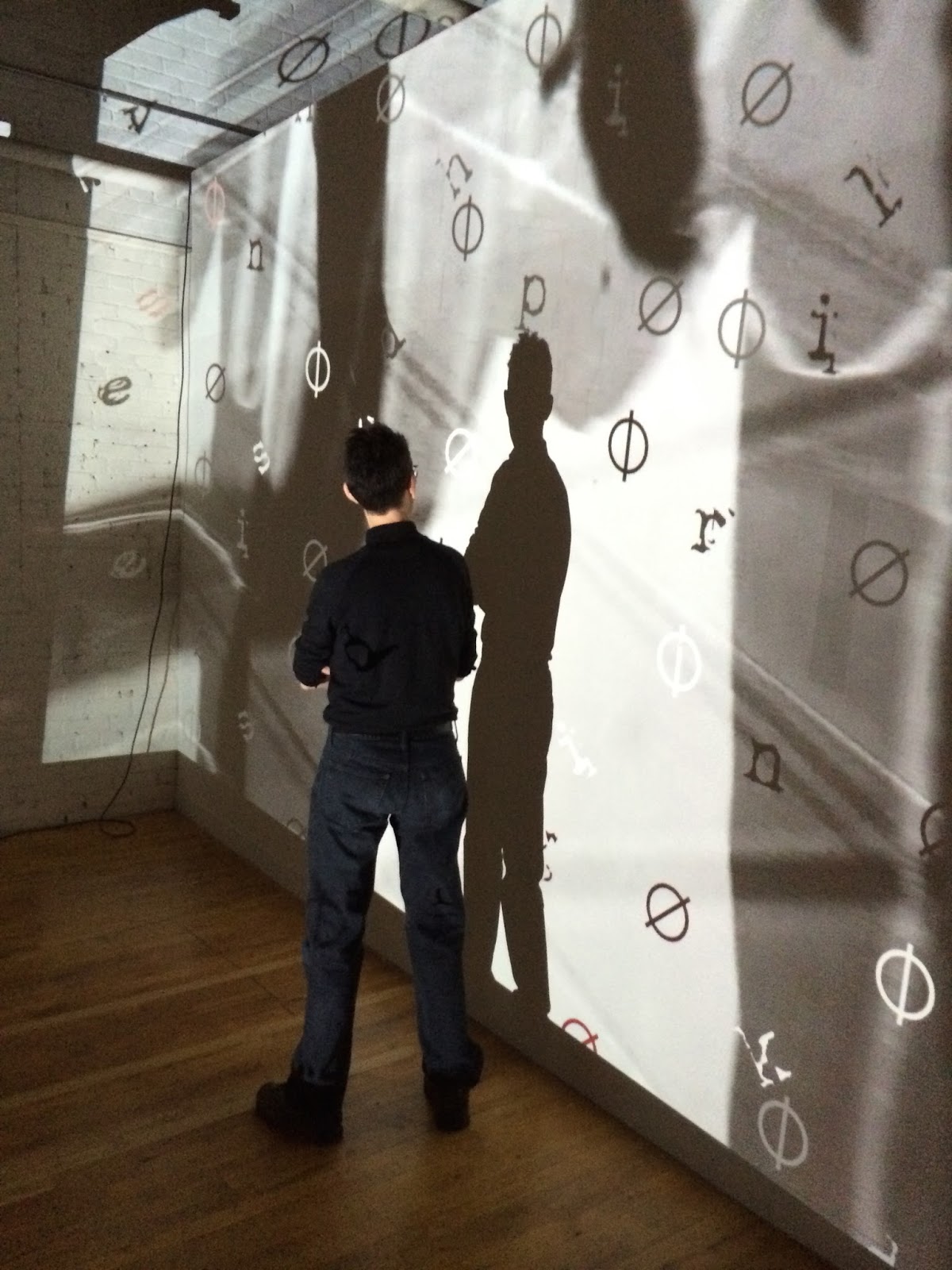
This is a live performance, a large video installation,  and an interactive, navigational mobile experience ::: The mobile device is a glass boat in a submerged storyworld. The user rubs Aladdin's lamp - touches the glass - an act of "reading" that will bring you into an underground storyworld.  At intervals, Kathy McTavish will perform live improv cello with the underwater soundscape and the projection. 


Projection, web design and code by Kathy McTavish.  "The River / Requiem" by Sheila Packa.  See the mobile first web design at http://millcity.io/  This is an image of the interactive web application.


Navigation: If you choose to share your location, millcity.io will assign an avatar and a client # to you and track your distance from the center @ Mill City Museum on the Mississippi River.  The website lists all clients currently on line.

Telegraph: This is an internal telegraph service that enables users to type in phrases and see the words scroll on the mobile screen.


Live, freestyle poetry: On the night of Northern Spark, Sheila Packa and Kathleen Roberts will be doing freestyle, improv poetry on their mobile devices.  You can watch on your own mobile device, and add your words to theirs.  Sheila Packa, Kathleen Roberts, and friends will be at the Northern Spark projection site to meet with you and show you how to participate in the freestyle writing. Beware! It's totally addicting! Your text will scroll down the screen and become part of the scene.

E-book: "The River" adapted from Undertow and Echo and Lightning poems by Sheila Packa in html5, javascript, css3 with symbol fonts and vector graphics drawn to the screen.  For more information about the books, see www.wildwoodriver.com

Music: Live and recorded music by Kathy McTavish / cello, found sound, and recorded voice by Sheila Packa

The aviary links you with twitter, an ongoing twitter-dialogue. Tweets in the millcity.io story are by Kathleen Roberts, Kathy McTavish, Sheila Packa, and readers like you who tweet to #millcityio

Kathleen Roberts of Prøve Gallery, Duluth
and here's a photo of mad Kathleen:


History of the Mill City Museum: Originally, this building was a Gold Medal flour mill.  Later the building was abandoned and fell into disrepair, and homeless people navigated through the treacherous floors (with openings that could drop you down several levels).  Graffiti over the doorway read "Hotel Victory."  A photo exhibit "Homeless in the Mill" by JobyLynn Sassily-James, 1997, documents the Hotel Victory. It is on display in the Mill City Museum.  

Northern Spark is an all-night arts festival that lights up the night on June 13, 2015. On the second Saturday of June, tens of thousands of people gather throughout Minneapolis to explore the city's great cultural institutions, play in temporary installations in the streets, and enjoy experimental performances in green spaces and under bridges. Northern Spark is presented by Northern Lights.mn, a nonprofit arts organization with the mission to transform our sense of what’s possible in public space.  On June 13, tune into social media for up-to-date happenings. 


October 16, 2011

Life and Work


Whatever gets in the way of your work becomes your work. Or maybe my creative work is an answer to my mother; often she told me as a child that life was hard. My grandparents were Finnish immigrants in far northern Minnesota with no grasp of the English language when they came. They lived in poverty. My grandfather's alcoholism and domestic violence only made things worse for my grandmother and their ten children. It was strength and resilience of the women that carried them through.

Migration from the old country was only the beginning, and it taught me things about moving from one culture to another. After that were other kinds of migrations: from a difficult marriage to coming out as a lesbian, from working in a taconite mine to a career in social work, from a love of hearing stories to establishing myself as a writer. One of the central obsessions in my life is the question why women (and men, for that matter) often deny their own needs, enter into or stay in dangerous situations, risk their children's safety, and deny or defy reality because of their dreams. From individual stories to myth to deep patterns in nature, I am engaged in the question about what propels us.

Echo and Lightning uses the metaphor of bird migration and myth to examine ways that women change and even relinquish the self. It is a spiritual exploration of fear, ecstasy and love through poems about Mary, Mary Magdalene, Lot's Wife, Eurydyce, Leda and The Swan, and the Gnostic book Thunder, Perfect Mind. 

Cloud Birds is about immigrants, bears, wilderness, bird migration, and the journey of women through hardship and violence, including the story of Persephone going back home to mother.  This book explores a Minnesota family history and has a sequence of love poems to bears. 

The third book, Migrations: Poetry and Prose for Life's Transitions, traces movement and change in the community. This book is an anthology of writers from the Lake Superior and Northern Minnesota region that came out of an Arts and Cultural Heritage Community Arts Learning grant and my work as Duluth's Poet Laureate, teaching writing as a tool for life's transitions in the community and at Safe Haven Women's Shelter, the Family Justice Center and the Domestic Abuse Intervention Project. 

In addition to the books, this creative work has moved into collaborations with my partner, composer and cellist Kathy McTavish.  As the name Wildwood River implies, our arts collaborative is a confluence of the arts. We live and work closely together in a wilderness area and in a creative process that draws from our own life histories and experience. The project continues in the form of musical compositions, abstract film, poetry videos, gallery installations, and live performances. 

Catherine Holm (author of My Heart Is a Mountain, Holy Cow! Press, 2010) wrote:  I read Echo and Lightning on my porch, after a night of queasiness, an upcoming demand later in the day, and the noise of traffic competing with the birds. I was instantly transported; material world forgotten. Packa's poems are passionate and they make me want to BE the narrator. Who hasn't "given themselves up" or left a part of life behind? What if we were the wind? What if we ARE the wind, in some or all aspects? These poems bring artistry, subtlety, and power to the world -- the world will benefit. I found myself want to, wishing to, write with this depth. This is the power of Sheila Packa's poetry.  Read this and be transported. Namaste, Sheila."

The Midwest Book Review says: "The changing of seasons, the changing of life seems to move so much faster in the north. Cloud Birds is a collection of poetry from Sheila Packa, a Finnish American woman who calls Minnesota home, viewing the changing of nature and life as she sees it and always moving. Cloud Birds is an excellent compilation of poetry driven by both humanity and the beauty and uncertainty of nature. "Cloud Birds": 'we live on both sides of the border/ in two countries/ in and outside each other/ bone and blood/ in disguise without intention or force/ without blandishments/ blown by wind/ silent like shadow crossing and crossing/ over the boundaries without end/ borne by moon or sun/burnished by wing.' "

The books are available at your local bookstore or at http://amzn.to/oVJRAD

http://www.superiortelegram.com/event/article/id/59581/publisher_ID/37/
Phantom Gallery: "Migrations" a multi-media exhibit at 1215 Tower Avenue, Superior, WI:  Poetry/video exhibit:  On view from October 20, 2011 to November 30, 2011
www.wildwoodriver.com/rooms/migrations

September 25, 2010

Synergy: Poems & Music & Film

"(immersion)

water resists
breaks without breaking
flows along invisible scores
courses between continuous
ends, begins

doesn't resist
touches, touches, turns
over the same skin...." 

Click on the link to view a sample of collaborative work. In this piece, I have written and read the poems and Kathy McTavish has composed and performed the music on cello.  The video images are selected collaboratively; Kathy has made the film. 

Immersion: poetry on video

In performance or in video, my poems are often joined to music and image.  Poems are often created in silence and solitude, and sometimes they are created while listening to music.  My poems have strong images, and they are a painting with words.  The poems reflect my landscape of northern Minnesota and the body.  I use memoir, myth, and the patterns in nature to tell a story of change.  Yet it is not 'nature poetry.'  I tend not to write wisdom poems.  Not that those are bad, but they aren't what I'm after artistically.  I seek to evoke multiple meaning and in the interest of that, pare down the language and have rapid "turns." In the patterns of nature, migration, erosion, flood, storm, I find meaning that lends itself well to human experience.    A good poem is vivid and immediate.   I like the poem to be an investigation that breaks open emotion. I have no ready answers nor do I trust that there are any.

When Kathy McTavish and I perform together, we do not seek to illustrate the other's work.  Poems are made of figurative language; we love the imagination.  We strive to 'push off from each other' and present a sound that has a creative tension and dialectical meaning.  We begin, but the sounds are like two people in conversation who are not necessarily talking about the same thing. This technique makes a much more interesting dialogue and story.  It is improvisational.

In hand, I have more poems than I will read that I've arranged into an arc.  The individual poems are pieces of mosaic that create a larger story.   My choices in performance are spontaneous and in relation to the sound of the cello.   The cello sound that Kathy has developed is done by a technique that we call "deep listening."   Deep listening demands a concentration and being in the moment.    In the moment, the changes of intonation and color are responded to immediately.  We do not erect rigid barriers but are open to the subtle and sometimes not so subtle changes in the environment, the instrument, the voice, and the setting.  We have learned that relying on intuition is best.  

The voice of the cello and my own voice are similar.  We are doing a duet.  It means that we can flex and alter and shift and build on each other.   The video work that we create also seeks an independent flow.  We have learned that interpreting the words of the poem literally in video image also does not work well for our purposes.   It must evoke meaning, and continue to be able to provide new meaning.  Therefore the still motion images create an abstract expressionist painting in motion.  The film has gestures and movement and color, and by itself is a shifting and beautiful story that invites the viewer to participate.  There are glimpses of character in shadow or mirror or other oblique means. The viewer interprets the meaning.  This is the same for the poems and music.   

The still motion images are created by the use of DSLR camera, a Canon EO5.   Kathy has been exploring Bokeh effects.  It is an artistic technique initially used by some Japanese photographers who enjoyed the aesthetics of blur.    She comes to this work by way of music; in fact the images are created in the same way that she creates music in her studio.  Her echo pedal and harmonics perhaps are a musical expression of blur.  She likes the 'infinite between.'   She began using images in her search for techniques of writing scores.   The images evoke meaning; to her, they create a synesthesia and seem to have their own sounds.  

The creative work that occurs simultaneously in performance will draw more shades of meaning and energy in proximity.  We seek to share this synergy with the audience and are pleased to talk with people about their own 'invisible procession' of images that arise in their imagination while they listen to our performance.

Poetry works well with other media.  See this website for the Zebra Poetry Film Festival in Berlin, Germany.
http://www.zebra-award.org/index.php?id=779&L=1

November 20, 2009

Fearful Journey

Fearful Journey is a collaboration with Kathy McTavish, cellist. We recorded this chapbook collection of poems with her experimental, ambient cello sound available on CD and as mp3 files on our websites. We have done several performances of this and other new work. A listener described our concert/reading of these love poems as “hauntingly beautiful.” An excerpt, from “Love Goes On:”

Love is this circle that we’re in,
outside, inside, unsayable, unspeakable,
creator and destroyer. Love, love, love
how grief rises
into dark stars.

It is hard to explain what comes first, the music or the poems. Our work emerges in a mutual solitude and yet music may trigger an invisible procession of images (as Cavafy said) that I make into poems and the poems sometimes trigger new compositions. We are not striving to illustrate either the poems or the music, but to create work that stands alone and in resonant proximity with the other.

Ranier Rilke said, “A togetherness of two human beings is an impossibility and, where it does seem to exist, a limitation, a mutual compromise which robs one side or both sides of their fullest freedom and development. But granted the consciousness that even between the closest people there persist infinite distances, a wonderful living side by side can arise for them, if they succeed in loving the expanse between them."

Sometimes we have a “word fast” which is a mutually agreed time without talking. As artists, we want to nurture each other’s work and allow enough time and space for creating or simply gazing, musing or meandering in the internal or external landscape.

Even when I work with other writers, I do like to be careful with how I give feedback. There is value in critique, of course. I prefer to make observations and talk about my response to the work instead of telling people how to fix things. It’s a subtle distinction. Advice of this kind may impose an aesthetic or style that is not helpful to developing an individual and unique voice. Solutions best come from inside, from careful deliberation, from the source of the work, from it’s own internal logic or pattern. Solutions come from deep engagement with the work, from disciplined effort, and the attempt to do the best work one has ever done.

Sources: for me, it’s migration. Fearful journey.