January 27, 2020

Invisible Procession: Writing and Reading, Reading and Writing


Words written in long hand arrive into the hands of a reader. It's a new encounter, like a letter found in a bottle. While reading, an intimate and silent dialogue occurs with the past or with another life experience. Here is part of an exquisite poem "The God Abandons Antony" by C.P. Cavafy that uses the phrase "an invisible procession"-- here is an excerpt:

When suddenly, at midnight, you hear
an invisible procession going by
with exquisite music, voices,
don’t mourn your luck that’s failing now,
work gone wrong, your plans
all proving deceptive—don’t mourn them uselessly.
As one long prepared, and graced with courage,
say goodbye to her, the Alexandria that is leaving.

Aside from the narrative of Antony, the leader losing his country, aside from underlining the need to face one's losses with courage, and other meanings, the poem identifies an individual's cascade of images, memories, and associations.

As the world changes, we might apply this metaphor to our experience.  In our imagination, an invisible procession occurs that can lead to our own creative work. I want to create new works that are evocative and have openings that invite the reader to make multiple meanings.Artists court change. Virginia Woolf said, "...we can read ... with another aim, not to throw light on literature ... but to refresh and exercise our own creative powers." Writers are good readers. Readers are open to enchantment and meditation. Readers are thinkers and dreamers. In the exchange, there is a potential transmission of energy and breath and intimacy that extends beyond one's own life.

Text has two sides, writing and reading. Reading opens doors. It triggers writing.  For me, it is a steady chase. Using an insisting image or something stirred by conversation, writing is an exploration, a way of discovery.  I begin with no expectation—because that is the best way—simply moving my hand across the page, writing the most mundane things and in this process from somewhere comes a word or a phrase that I follow. Getting lost is necessary, and so is way-finding.  I read a lot, and many things at the same time. It's a constellation of other's writings: contemporary and not contemporary essays, stories, poetry and newspapers. I watch movies. I record dreams. I record events and ideas.  I walk.  I bring up dreams, associations, experiments, and reveries. I find an image. This develops into a series of images.

In books, I find stillness and escape. The lamp on my desk shines books splayed downward and others fallen in stair-step patterns up and down. Books I’ve read are turned titles down, spines to the right, and books I plan to read have titles up, spines to the right. I love to read sitting by a window turning the thick pages fragrant with the scent of old libraries and women who wear glasses on gold or silver chains.

I arrived at e-books reluctantly. E-books are static—static as a print book (although this is changing)—but do not give the reader the sensation of a unique object that pleases the sense of touch and smell. The web provides new and different perspectives and languages: virtual reality, online gaming, multiple media and interactivity. A story that goes from print to film often contracts. The visual language and music will carry meaning as well as the words. If that same story is used in interactive gaming, it will expand. Digital media offer new artistic opportunities to make the invisible processions visible. 

With an increasing range and breadth of communication and networks, we select and arrange multiple things, people, places, and experience. We see memes, and we like to participate. We like our videos to go viral. Curation is a system of collecting, organizing and presenting. Patterns have become more apparent and necessary.

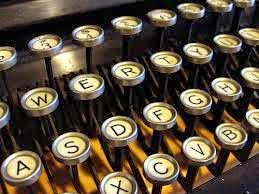
As a poet writing on paper and an artist presenting in digital online environments, I consider the reading and writing exchange. I can best describe the web films I've worked on as innovative ways of reading. The projects arrive, and they depart in code. They are mobiles of text, sound, and image. I call them choreotextographies.

I look for metaphors of movement: flows of rivers, wind, and water, bird and animal migrations, human travel and migrations. Also I’m drawn to transformations—metamorphosis, organic growth and decay, alchemy.

Creative work can demand this same process. People change residences, relationships, and/or activities in order to complete an artistic work. Even the choices of words convey how radical the process can be: one executes a piece of art or music.  In current slang, if one is mastering or superbly performing, one is "killing it.'   The old way of doing dies, and a new one arrives. We become part of the artistic piece at the same time as separating from it. Every creative work is an exchange and an act of change.


January 19, 2020

Runeberg Day: In Honor of the Poet Johan Ludvig Runeberg

Poetry Reading: Runeberg Day 
Feb 5, 2020 at 7:00 pm, Zenith Bookstore, 318 N. Central Ave, Duluth, MN 55807: 

Join the Finlandia Foundation Northland Chapter for a celebration of Runeberg Day, the Finnish holiday celebrating the poet Johan Ludvig Runeberg. Free admission, donations accepted. Special treat: Taste the famous Runeberg Torte (Runebergintorttu) made by Beatrice Ojakangas.  


Poets:
Gary Boelhower
Daniel and Sandra Oyinloye
Jim Johnson (read by Marlene Wisuri)
Sheila Packa
Steve Leppälä
The work of Johan Runeberg (read by Hanna Erpestad)


Johan Ludvig Runeberg became the national poet of Finland. One of his poems became the national anthem. It's titled "Maamme" (Finnish: [ˈmɑːmːe]) or "Vårt land" (Finland Swedish: [ˈvoːrt ˈlɑnːd]; both meaning "Our Land").  


Excerpts:


Our country, Finland, land of ours
sing its golden word!
No valley, no hill,
no water, shore more dear
than this northern homeland,
the dear land of our fathers

Our land is poor, and so shall be
To him who gold will crave.
The strangers proudly pass, but we
Shall ever love this land, we see,
In moor, and fell, and isle and wave,
A golden land, so brave.
…

Thy blossom, hidden now from sight,
Shall burst its bud ere long.
Lo! from our love, shall rise aright,
Thy sun, thy hope, thy joy, thy light,
And higher, once, more full and strong,
Shall ring Our Country’s song.

(Trans. from Swedish by Anna Krook, except the first two lines, which I have translated)

More information about Maamme: https://en.wikipedia.org/wiki/Maamme

Listen to the Finnish national anthem: https://www.youtube.com/watch?v=E5mTKv40Svg

For a recipe for Runeberg Torte: https://www.scandikitchen.co.uk/runeberg-cakes/

December 29, 2019

Creativity and Aging


Creativity does not diminish with age. In fact, creativity can actually enhance health and build resilience.  In 2019, I attended a creative aging teaching artist training (sponsored by the Aroha Foundation and Minnesota State Arts Board) and in 2020, I aim to teach writing classes with and for elders. Email me at sheila@sheilapacka.com if you as an individual are interested in attending or if you are part of an organization that is interested sponsoring a class.


December 17, 2019

False Starts

Einstein said, "No deep problem is ever resolved on the plane of its original conception."  Here's a great video from Granta featuring George Saunders talking about false starts.  The amateur reaction to false starts is to give up, says Saunders. The artistic reaction is to keep working.
We have all received this advice: Don't Give Up. Keep Trying. Success is 1% Inspiration and 99% Perspiration. How many false starts have you had? How many rejections? The next important question is: What did you do with those?

December 3, 2019

Image & Metaphor

Charles Simic

I think image is at the base of a poem. Metaphor is the poem.

Natalie Diaz has written about the use of image in her poetry. In "Building The Emotional Image"
https://tinhouse.com/author/natalie-diaz/
If you want to convey fact, this can only ever be done through a form of distortion. You must distort to transform what is called appearance into image. 
The mystery lies in the irrationality by which you make appearance - if it is not irrational, you make illustration.  
Great art is deeply ordered. Even if within the order there may be enormously instinctive and accidental things, nevertheless they come out of a desire for ordering and for returning fact onto the nervous system in a more violent way.
Rebuild the image each time that you use it in order to make it new.  Take it apart.
What is it? What is it not?  Here is an example from Diaz: http://www.thethepoetry.com/2013/03/poem-of-the-week-natalie-diaz/   Diaz's comment about irrationality intrigues me. Another person might have said "imagination."  Her term suggests a greater leap of some sort against logic. It is a willingness to go out of bounds. A subversion but in a good way.

For an amusing and in-depth consideration of the function of image and metaphor read "The Narrative of the Image: A Correspondence by Charles Simic":
https://www.poets.org/poetsorg/text/narrative-image-correspondence

In this examination of the narrative related to these two terms, Simic writes: "I kind of fancy "Image is the crucifixion, metaphor is the ascension," " and "Don't you think that reading most contemporary poets one would have to conclude that they have never been to the movies? I know for a fact that they have never heard a country fiddle or a banjo playing!"  He argues for being grounded and for the ability to dance.
Natalie Diaz


An Arts Initiative Grant from the Minnesota State Arts Board and upcoming publications


News from my writing desk

I was thrilled and grateful to get the news that I'll receive an Artist Initiative Grant for 2020 in support of my poetry.  To get information on the grants that are available in Minnesota and a link to the application instructions and forms, go to: http://www.arts.state.mn.us/grants/
"Sheila Packa will develop poems for a new manuscript "Surface Displacements" and present 4 readings & workshops focused on individual stories that reflect on local history and current tensions in the landscape."   
Publication news:

My short story, “Everlasting Life” will be in the December issue of Valparaiso Fiction Review. https://scholar.valpo.edu/vfr/vol9/iss1/4/ A set of five prose poems (a runner up for the chapbook contest by this press) forthcoming in The Laurel Review Issue 52.2.  The poem "My Geology" will be reprinted in Stone Gathering's special edition coming out in spring 2020: The Relevance of the Rural: What's Lost, What's Left, What Lasts.  The poem "Crossing Guard" will be in the forthcoming anthology Rocked by the Waters: Poems of Motherhood (Nodin Press). 
-->

October 13, 2019

Poetry Readings Coming Up


Oct 26, 2019
noon - 3 pm at Fair Trade Books in Red Wing, 2526, 320 Bush St, Red Wing, MN 55066, USA
featuring Poets Laureate: James Armstrong, Rob Hardy, Ken McCullough, Sheila Packa

November 3, 2019
at 1 pm at The Bookstore at Fitger’s, Duluth, MN with the Sami Cultural Center of North America, featuring
--Ellie Schoenfeld, Duluth Poet Laureate 2016-2018
--Sheila Packa, Duluth Poet Laureate 2010-2012
--Ron Riekki, co-editor of Undocumented: Great Lakes Poets Laureate on Social Justice and My Ancestors are Reindeer Herders and I Am Melting in Extinction


November 8, 2019
at 7 pm - All Souls Day Poetry at the Underground Theater, Duluth Depot, Michigan Street, Duluth, MN 55802. 
Musical accompaniment by Richie Townsend with featured readers: Zomi Bloom, Brady Kamphenkel, Sheila Packa, Ellie Schoenfeld, Rocky Makes Room and Gary Boelhower (10 minutes each). There will be an additional hour of open mic (3 minutes each). Sign up with Duluth Poet Laureate, Gary Boelhower.

September 11, 2019

Book Review: Ada Limón: The Gathering

Ada Limón has a new book, The Gathering (Milkweed Press), that has gained a lot of attention. She was at the Northwoods Writers Conference in Bemidji in June 2019, and did an engaging reading and craft talk.

The Question

In the Guernica interview, Ada Limón asks: "how do we live in the world? How do we live? Because with the amount of loss and suffering that is all around us all the time—our own inevitable demise, the inevitable loss of loved ones, the damage to the planet—how do we live in that reality, yet still do the daily work of praise and presence and gratitude, without driving ourselves mad?"

The Liminal

In an interview in the art-related Bomb magazine, Limón says about poetry: "What it does is live in the liminal spaces. It’s not interested in showing off wounds for coins, it’s interested in living, day to day, breathing moment by moment and staring out into the sea and noticing the small thing and saying the real thing and because of that, I believe it’s the most human type of art form. It is messy and complex and real and doesn’t have any answers for us, for that reason, I think it’s something we can trust."

The Music

Ada Limón had once been part of a band (named after her previous book, Lucky Wreck) in NYC. The music in Limón's poetry comes through alliteration. Content is primary, it seems. Her form follows content.

The Gathering is a book with heart.

August 18, 2019

Tony Hoagland Thinking about Poetry

Tony Hoagland's poetic voice was distinctive. He once said, "I discovered that identity was composed of a lot of other things besides familial trauma; it included race and money and being American and technology and historical currents." His topics were exquisitely presented with titles like Donkey Gospel, What Narcissism Means to Me, and Unincorporated Persons in the Late Honda Dynasty. He's a poet that touches the funny bone, but also he makes you think.  The Art of the Voice provides much insight into his technique and the craft of poetry. I recommend it. It contains his teacherly thoughts about voice in poetry as well as several writing prompts to help a student develop an interesting poetic voice. 

Also, I've found some wonderful essays online, definitely worth a read!
http://gulfcoastmag.org/journal/27.1/things-i-know-about-the-life-of-poetry/

https://www.poetryfoundation.org/poetrymagazine/articles/68489/fear-of-narrative-and-the-skittery-poem-of-our-moment

https://www.thesunmagazine.org/issues/513/the-cure-for-racism-is-cancer

Interview:
https://www.pbs.org/newshour/arts/conversation-tony-hoagland-on-poems-that-could-save-america

Biography & Critique:
https://www.pshares.org/issues/winter-2009-10/about-tony-hoagland


August 14, 2019

Joy Harjo: Carrying Over a Thousand Names

For years, the poetry of Joy Harjo has always been arresting for its beautiful imagery and figurative language, its connection to the body and the earth, and its music.  She Had Some Horses, In Mad Love and War, The Woman Who Fell From the Sky, and A Map to the Next World are among my favorite books of poetry, ever.

In this new collection, Conflict Resolution for Holy Beings, she extends her reach to provide a poetic engagement with the problems in the world. She a master poet, and she is teaching the readers her spiritual wisdom.  In previous work, she began this work. I'm thinking of an earlier poem, "Insomnia and the Seven Steps to Grace." I would not call her impulse didactic. It is a deeper knowledge that she shares.

This is a wide ranging journey from Oklahoma to Paris to New York City to Alaska to Hawaii. Part One: How It Came to Be addresses the reader directly. It is a singing of creation stories, contemporary stories, and music.  The poetry does not ignore or exist outside of contemporary politics, but it meets it head on. "The politics of politics makes a tricky beast. It destroys either side with equal hand. It has a hunger that never seems to end."  It is politically engaged, but in a spiritual way.  It is spiritual without being preachy. "Nez found God then forgot where she had left him." It is speaks to cultural genocide and murder, to name it, and at the same time, goes forward and brings all of us into the same fold.  "Let us not shame our eyes for seeing. Instead, thank them for their bravery."

The rabbit is an important figure in many tribal stories. He is fearful, impulsive, and does not consider the consequences. This is perhaps offset by his speed and ability to leap so far that his tracks are not easily found.  In "Rabbit Is Up to Tricks," Harjo writes:

And once that clay man started he could not stop.
Once he took that chicken he wanted all the chickens.
And once we took that corn he wanted all the corn.
And once he took that wife, he wanted all the wives.
...

Locating human behavior in a story of rabbit is a profoundly wise thing to do.  Considering another character, we can see the problem as well as empathize. It's also the same for us; we have insight. Empathy is an important quality, as it prevents the cycle of blame and othering. It is a key to conflict resolution.  Harjo speaks from her own tradition of Muskogee knowledge, and she weaves in other Native stories and Biblical stories. She speaks to all people, whether of not they have her heritage.

Part Two: The Wanderer and Part Three: Visions and Monsters speaks to all the ways that humans have become lost in violence, greed, and forgetfulness. In "The First Day Without a Mother," the color blue is significant. It is more than the eye can see. It is more than blue; it is a spiritual color, the color of sky, and the color of a raging fire. It is the blues music. "I keep looking back."

This book offers a formula for conflict resolution in the title poem, and it calls us back to listen to others and our own spirits. Throughout the book, she uses the metaphor of jazz as a symbol of how to survive the insurmountable obstacles. The horn, the song, and the dance are sacred ways to remember.  They renew us as well as teach us how to improvise, to continue, and to make something beautiful.  Harjo writes,"You cannot legislate music to lockstep...."  and "We will wind up back at the blues standing on the edge of the flatted fifth about to jump into a fierce understanding together."  This is a wise metaphor for survival. 

Part Four: The World begins with the poem, "You Can Change the Story...," reminds us how our expectations can shift the outcomes.  By taking control of one's own thoughts, fears, and actions and by allying ourselves others in love and tenderness, we can experience the power that we do have. There is a story of a walrus hunter who murders a woman; the poet slips into the murdered woman and speaks. The poet returns from death and speaks the story to the community. A well told story rings with the truth; all people can understand it.  In this story, the murderer is brought to justice. The articulation and shaping of our narratives are the reasons we must have art, music, stories, and poetry.

In the terminal of stopped time I went unsteady to the beat,
Driven by a hungry spirit who is drunk with words and songs.
What can I do?
I have to take care of it.
The famished spirit eats fire, poetry, and pain; it only wants love.

The famished spirit who only wants love is an endearing being. The aim is noble. Her failures are forgivable.  This book at first appears fragmented, however the inscriptions, section headings and "proems" are as necessary as the poems. This is a heartening piece of work, a ceremony, a dance, a deep gift from Joy Harjo. It has done in beauty.


Book Review:
https://www.kenyonreview.org/reviews/conflict-resolution-for-holy-beings-by-on-joy-harjo-738439/