Today, I was interviewed by Cathy Wurzer on Minnesota Public Radio. She asked me what poem made me want to become a poet. This is an interesting angle! My answer surprised me!

Sheila Packa Poetry Blog: A blog about poetry: figurative language, spirit, intertextual explorations, patterns, punctuation, forms, great writers, quotes, and journey notes. For updates, follow me on Bluesky https://bsky.app/profile/sheilapacka.com
Today, I was interviewed by Cathy Wurzer on Minnesota Public Radio. She asked me what poem made me want to become a poet. This is an interesting angle! My answer surprised me!
There are poets writing history and writing poems drawn from history. Eavan Boland once said that a poem will revivify an event. She cautioned against revivifying trauma, because it will make that event re-traumatize. Boland is a political poet. In Ireland, where she was born, writing about the land is a political act. Paul Valery, a French poet, said that a poem is like a small engine that recreates meaning each time it is read. Therefore, a poem that celebrates the strength, resilience, ingenuity and power of a survivor and changemaker will inspire us. Here are two examples:
Spark Catchers by Lemn Sissay
Tide twists on the Thames and lifts the Lea to the brim of Bow
Where shoals of sirens work by way of the waves.
At the fire factory the fortress of flames
In tidal shifts East London Lampades made
Millions of matches that lit candles for the well-to-do
And the ne’er-do-well to do alike. Strike.
The greatest threat to their lives was
The sulferuous spite filled spit of diablo
The molten madness of a spark
They became spark catchers and on the word “strike”
a parched arched woman would dive
With hand outstretched to catch the light.
And Land like a crouching tiger with fist high
Holding the malevolent flare tight
‘til it became an ash dot in the palm. Strike.
The women applauded the magnificent grace
The skill it took, the pirouette in mid air
The precision, perfection and the peace.
Beneath stars by the bending bridge of Bow
In the silver sheen of a phosphorous moon
They practised Spark Catching.
“The fist the earth the spark it’s core
The fist the body the spark it’s heart”
The Matchmakers march. Strike.
Lampades The Torch bearers
The Catchers of light.
Sparks fly Matchmakers strike.
In another poem by Lemn Sessay, "Making a Difference," again he demonstrates how effective poetry is to create social change. A composer, Hannah Kendall, read this poem and used it as the basis for a musical composition for orchestra.
In the rhythms of Lemn Sissay, an accomplished poet of London, I heard a similar beat and internal rhyme here in the United States by the poet Amanda Gorman. She too is a spark-catcher -- one who by speaking out calls for change, creates change. This poem, "The Hill We Climb" was performed by Gorman at the inauguration of President Joe Biden. The poem is also in Amanda Gorman's book of the same title.
Compare the two, and be inspired to write a poem about a historic event.
…what counts in literature is detail,
atmosphere, and the right balance between the two.
The exact detail, which makes things visible,
and an evocative, overall atmosphere,
without which the details would be a disjointed inventory.
Atmosphere
allows the author to work with forces
freed of function, and with movements
in a space that is independent of location, a space
that finally abolishes the difference
between the writer and the written:
the great manifold tunnel in broad daylight ...
Atmosphere is the three-dimensional
condition of regionalism, and the medium of music.
The line breaks allowed me to slow down my reading of it and appreciate what he is saying. So often while teaching poetry, we focus on "details, details, details." This passage takes a larger perspective. Details create something larger, which Aira calls the atmosphere. I think of this as "the world of the story." Many writers and readers might not like Cesar Aira's style nor the music of Cecil Taylor, however, both offer original insights into the process of composing and both honor and amplify their own unique voice, and that's a lesson worth learning.


One never knows what question an interviewer might pose. On March 2 at 8:20 am Luke Moravic interviewed me on radio for The North 103.3 for Minnesota Reads.
What did he ask? How did you end up writing poetry? What does the title of your book mean? What advice do you have for other writers? You can listen to the recording here: https://www.thenorth1033.org/arts-culture/2023-03-02/mn-reads-surface-displacements-by-sheila-packa
Many thanks to the Friends of the Saint Paul Public Library who run the Minnesota Book Awards and The North, 103.3. Because of these organizations, because my book is a finalist, I have new opportunities!

Register here:


Minnesota Book Awards 35th Annual Ceremony
Tuesday, May 2 | Ordway Center for Performing Arts
Tickets will go on sale January 30, 2023
I'm pleased to join northern Minnesota writers Linda LeGarde Grover, Ellie Schoenfeld, and Nick Trelstad leading workshops for students. The keynote is poet Michael Bazzett.
Join us for a free, day-long celebration of English literature for Northland teachers and students, with our special guest speaker, the renowned Minnesota poet, Michael Bazzett.
https://css.edu/2023rosewarnerreadingseries/home?authuser=0

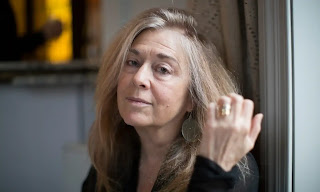
In the interview in the New Yorker magazine January 8, 2023,
Jorie Graham Takes the Long View, Katie Waldman the interviewer asks this question:
You write so sharply about the way the mind, and your mind, moves. I’m
curious about that poetic mind. Is it the same mind you bring to the breakfast
table or the garden?
JG: The mind is a current—let’s take a river as an example. It not only carries
whatever it picks up by what it traverses (breakfast table, garden), but it is also
changed in its course by what it traverses.Its weight changes, its speed, the
direction in which it was going. Being taken by surprise is one of the fundamental
experiences for any poet writing any poem. You know you are in the grip of a
poem when it—the subject, the terrain you are entering, traversing—reorients you
and puts you before a question that you did not know existed. You are irrevocably
changed. One writes to be so changed. The silence you break to enter the poem is
never the same silence closing over again when the voice reënters the silence.The
poem is an action you have taken and an experience you’ve undergone. You’re not
the same person you were when you undertook that poem.That sensation of
transformation is addictive—spiritually and emotionally.Why else would anyone
attempt this insanely difficult—practically impossible—practice day after day for a
lifetime? One is in it for the conversion experiences.What are the ideals of form
for except to get us into legitimate danger that we may be legitimately rescued,
Frost asks. The key term in this brilliant formulation is “legitimate.”
Graham's poetry with its philosophical questions examines life, human life in an increasingly alarming
world beset by violent storms, floods, wildfire, and rising seas. We know what is happening, and she
describes this as a runaway system, yet we cannot stop. Her consciousness is sharp and clear, and her
voice is powerful.
https://www.coppercanyonpress.org/books/to-the-last-be-human-by-jorie-graham/
The Kalevala, a series of poems originally performed in the oral tradition, inspired Akseli Gallen-Kallela.


