March 3, 2023

Minnesota Reads: The North, 103.3 FM

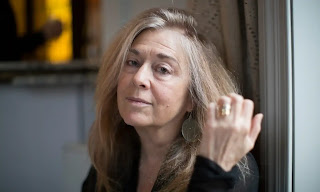
One never knows what question an interviewer might pose. On March 2 at 8:20 am Luke Moravic interviewed me on radio for The North 103.3 for Minnesota Reads. 

What did he ask?  How did you end up writing poetry? What does the title of your book mean? What advice do you have for other writers?   You can listen to the recording here: https://www.thenorth1033.org/arts-culture/2023-03-02/mn-reads-surface-displacements-by-sheila-packa

Many thanks to the Friends of the Saint Paul Public Library who run the Minnesota Book Awards and The North, 103.3.  Because of these organizations, because my book is a finalist, I have new opportunities!  

February 13, 2023

A Different Engine

A Different Engine: How to Power Your Writing

March 6, 13, 20, 27 on Zoom
Come join my writing workshop and explore techniques that power your own writing.  I'd love to see you! It's happening on Zoom: four sessions, Monday evenings in March, starting at 7:15 pm. In this workshop, you can work in your favorite genre (poetry, fiction, or creative nonfiction). We will focus on techniques to make writing vivid, intense, and alive. Register here at Lake Superior Writers. $60.

Register here:

https://lakesuperiorwriters.org/a-different-engine-ways-to-power-your-writing/?fbclid=IwAR0Bd9ekgNxofJZN67xbR5qO2wgL6uoZ7Zt5Wiog5qRWsG-eypUav9EU_-A

January 31, 2023

Bringing Joy


In celebration of Joy Harjo's appearance at the Fond Du Lac Tribal and Community College, the editors of this fine collection asked writers to send work that was inspired by the writing of Joy Harjo.  It is a wonderful collection of writings, and I'm proud to have some poems in it. 

First it was an e-book, and now, since it received a 2022 MN Author Project Award in the Communities Create category, it has become a physical book.  

The lead editor, Darci Schummer, has done a fantastic job gathering and putting together this noteworthy collection.  

A reading and book celebration will be on February 7, 2023. 6:30 reception and 7:00 pm reading on the beautiful campus of Fond Du Lac Tribal and Community College!  

January 28, 2023

Surface Displacements, a Finalist in Poetry at the Minnesota Book Awards


I'm thrilled to be among the poetry finalists for the Minnesota Book Award!  Here's a list of all the finalists in all categories: https://thefriends.org/minnesota-book-awards/minnesota-book-awards-winners/

Celebrate the state's best books at the annual Minnesota Book Awards Ceremony. Readers, writers, and book-lovers from all over the state gather together for one incredible evening to honor stories of Minnesotans that connect us all. Awards are presented to winners in nine book categories and to the recipient of the Kay Sexton award, with special guests. 

Minnesota Book Awards 35th Annual Ceremony
Tuesday, May 2 | Ordway Center for Performing Arts
Tickets will go on sale January 30, 2023

College of St. Scholastica Rose Warner Reading Series

 I'm pleased to join northern Minnesota writers Linda LeGarde Grover, Ellie Schoenfeld, and Nick Trelstad leading workshops for students.  The keynote is poet Michael Bazzett.  

2023 Rose Warner Reading Series

February 3, 2023 | 9:30 AM – 1:45 PM

Join us for a free, day-long celebration of English literature for Northland teachers and students, with our special guest speaker, the renowned Minnesota poet, Michael Bazzett.


https://css.edu/2023rosewarnerreadingseries/home?authuser=0

January 18, 2023

Jorie Graham: The Question


In the interview in the New Yorker magazine January 8, 2023, 

Jorie Graham Takes the Long View, Katie Waldman the interviewer asks this question: 

You write so sharply about the way the mind, and your mind, moves. I’m

curious about that poetic mind. Is it the same mind you bring to the breakfast

table or the garden?


JG: The mind is a current—let’s take a river as an example. It not only carries

whatever it picks up by what it traverses (breakfast table, garden), but it is also

changed in its course by what it traverses.Its weight changes, its speed, the

direction in which it was going. Being taken by surprise is one of the fundamental

experiences for any poet writing any poem. You know you are in the grip of a

poem when it—the subject, the terrain you are entering, traversing—reorients you

and puts you before a question that you did not know existed. You are irrevocably

changed. One writes to be so changed. The silence you break to enter the poem is

never the same silence closing over again when the voice reënters the silence.The

poem is an action you have taken and an experience you’ve undergone. You’re not

the same person you were when you undertook that poem.That sensation of

transformation is addictive—spiritually and emotionally.Why else would anyone

attempt this insanely difficult—practically impossible—practice day after day for a

lifetime? One is in it for the conversion experiences.What are the ideals of form

for except to get us into legitimate danger that we may be legitimately rescued,

Frost asks. The key term in this brilliant formulation is “legitimate.”

Graham's poetry with its philosophical questions examines life, human life in an increasingly alarming

world beset by violent storms, floods, wildfire, and rising seas. We know what is happening, and she 

describes this as a runaway system, yet we cannot stop. Her consciousness is sharp and clear, and her

 voice is powerful.


https://www.coppercanyonpress.org/books/to-the-last-be-human-by-jorie-graham/

November 10, 2022

Ekphrasis: Poems in the Art Community

 The Kalevala, a series of poems originally performed in the oral tradition, inspired Akseli Gallen-Kallela.  


The story of Lemminkainen is part of the Finnish epic poem, the Kalevala. Originally oral storytelling, 12,000+ verses were recorded in writing and published by Elias Lönnröt in 1845.  These creation stories, adventures, and magic charms have been famously illustrated by the Finnish visual artist, Akseli Gallen-Kallela.  

This painting focuses on the Kalevala's character Lemminkäinen,  a great warrior and womanizer, who dies following his attempt to kill the Swan of Tuonela in the realm of the dead. His mother drags the black river for the dismembered pieces of her son and puts him back together.  For Lemminkainen's mother, it works. He lives again, and unfortunately, he has not learned his lesson.  

As often as visual artists illustrate and enhance stories, poets will describe and amplify visual art work. This type of poetry is called ekphrasis. It's a Greek word that means description. A famous example of an ekphrastic poem is "Archaic Torso of Apollo" by Ranier Maria Rilke. You can read it here: https://poets.org/poem/archaic-torso-apollo

In my book, Surface Displacements, the poem, "Kalevala Viidetoista Runo/ Poem 15," is an ekphrastic poem in response to the Gallen-Kallela image.  Any mother who has lost a child can relate to the impulse to bring the child back to life.  In my poem, I speak from the perspective of the mother.  Here's an excerpt:

I take him back not into my body
that conceived, received, and raised this one
but back to his own. To the sun
...

with a needle, I pierce the broken ends
and pull my thread.
I turn the edges, commend to God.
Say, remember him.

Take this cold back to the reaching ice
seize this body with new breath.
I shake the heart to make it start ticking
and drop it into place

put back the ribs and pull up the skin.
On the stones, he gasps.
Where I have wept and pounded
on the shore where I have assembled him.  

Within the arts community, writers, composers, musicians and visual artists inspire each other. Composer Olli Kortekangas borrowed four poems from my books Cloud Birds and Echo & Lightning to create "Migrations," a cantata premiered by the Minnesota Orchestra in 2016.  This year, composer Wendy Durrwachter is creating a musical composition for the title poem of Surface Displacements. I am honored by their artistic work and enriched by the additional interpretation and beautiful music that they create.  


October 18, 2022

Finnish Poet Risto Rasa and an American Documentary Film by Matt Carlson


Finnish poet Risto Rasa


I discovered a poem by Risto Rasa during the writing of Surface Displacements. This poem, written in Finnish and published in his book Tuhat Purjetta (trans.: A Thousand Sails) inspired me.  

Niin kuin aalto uittaa aallon 

yli valtameren, 

niin selviydymme mekin toinen toisiamme tukien.

It has been translated like this:  Just as one wave carries another / across the ocean / so we too survive, one supporting another.  In the translation, the use of the English verb 'carry' is an excellent choice that conveys the intention of the poet.  

Rasa used the verb uittaa which means 'to float.' It comes from the verb uida, to swim. It could be said this way:  "just as a wave floats another wave over the ocean....  so we too will survive by supporting each other."  

It is interesting to me, as a learner of the Finnish language, that 'to carry' in the Finnish language is "kaantaa" and 'to translate' is "kääntää." It is spelled nearly the same, but the vowel changes from a to ä. 

Risto Rasa has said that in translation, no poem is exactly the same. Something will be lost. This might be true. It is impossible to carry the definition of a Finnish word into the English language without dropping some of historic or cultural associations. 

A filmmaker Matt Carlson created a touching documentary of Risto Rasa: Sielumaisema: The Risto Rasa Project.  He has not lost very much about this poet and his work, even though he relied on a translator to interview Rasa.  The film has deepened my appreciation of this poet. One realizes how important it is to reveal the poet's landscape and his voice. I recommend that you watch this wonderful film:   https://vimeo.com/372123395

October 13, 2022

Poet Laureate Reading featuring Sheila Packa & Ellie Schoenfeld and new poets

Come join this celebration of Duluth Poets Laureate on October 19, 2022, 6 pm at the University of Minnesota Duluth library, 4th floor!  

Poets Laureate Sheila Packa & Ellie Schoefeld will read along with notable poets Dani Pieratos & Tina Wiggins Wussow. 

Organized by David Beard, professor of rhetoric at UMD, Department of English, Linguistic and Writing Studies, this is the third of reading that featured poet laureates of Duluth.  In addition, each poet laureate has invited a young poet to join the reading.  The mission of the poet laureate program is to promote poetry and expand the reading audience.