
Sheila Packa Poetry Blog: A blog about poetry: figurative language, spirit, intertextual explorations, patterns, punctuation, forms, great writers, quotes, and journey notes. For updates, follow me on Bluesky https://bsky.app/profile/sheilapacka.com
February 22, 2013
Finnish Women Poets


January 28, 2013
Blind Pig: Distilling the Language
Lorine Niedecker called making poems "condensery."
It's true; poems must be distilled. The language is compressed, and poets use line breaks and enjambment in order to create ambiguity and add meaning. My mother was born right before
Prohibition. Many people built their own
stills, called Blind Pigs, and distilled their own liquor. It was illegal, and the results uneven, but it happened. The image of a still comes to mind when I think about the process of turning language into poems. One must take lessons in compression.
January 23, 2013
Dancing with the Past
Wonderful poets draw from their own personal history as well as their community or nation's history: Pablo Neruda, Cesar Vallejo, Wislawa Szymborska, Yannis Ritsos, Rita Dove, Natasha Trethewey, Li-Young Lee, Joy Harjo.

All writers have these wells of experience. For many writers who attend writing workshops, the question emerges about how to develop raw material -- a writing exercise, journal entry, or a memory -- into an art. How do you take a memory and turn it into a poem or a story?

Things, people, places are the basic building blocks of all writing. These quickly focus the writer; a story emerges; the subject arrives. As a teacher, I ask students who are starting a new piece of writing to start from a person, place or thing.
January 9, 2013
Develop Your Sources
Where do you get material? Each person, no matter what, has rich sources in the surroundings: the places, people and things. I encourage poets to spend time developing their sources by researching personal history, the history of the place you grew up and live, and the connected events and people. The web offers some useful (and free) tools like Scoop It or Storify. These allow you to collect your links, youtube videos, images, and articles in one place. Here is the collection of materials I've found for my new manuscript. Some of the material directly inspires creative work. I have written poems based on photographs or letters. I've used techniques like persona poems, lists, prayers, songs, stories with this material. It provides me with background and understanding for the work.
http://www.scoop.it/t/vermilion-trail
This serves as a map to places and people. I also use other more personal sources, letters and photographs in the family archive, but this widens my material and enriches the personal stories.
Make your own map and develop your own historical archive. It will reward you with images.
http://www.scoop.it/t/vermilion-trail
This serves as a map to places and people. I also use other more personal sources, letters and photographs in the family archive, but this widens my material and enriches the personal stories.
Make your own map and develop your own historical archive. It will reward you with images.
January 8, 2013
Learn to Use Figurative Language
Work with Images
The Discovery of Poetry by Frances Mayes can be a valuable text for poets. I’ve gathered some insights from this excellent resource and present them here:
Examples:
Simile - a comparison that uses the word as or like
Silken Tent
by Robert Frost
She is as in a field a silken tent
At midday when the sunny summer breeze
Has dried the dew and all its ropes relent,
So that in guys it gently sways at ease,
And its supporting central cedar pole,
That is its pinnacle to heavenward
And signifies the sureness of the soul,
Seems to owe naught to any single cord,
But strictly held by none, is loosely bound
By countless silken ties of love and thought
To everything on earth the compass round,
And only by one's going slightly taut
In the capriciousness of summer air
Is of the slightest bondage made aware.
Metaphor - “this is that” -- it transfers the meaning of one thing to another thing
754/ My Life had stood -- a Loaded Gun --
Emily Dickinson
My Life had stood -- a Loaded Gun --
In Corners -- till a Day
The Owner passed -- identified --
And carried Me away --
And now We roam in Sovereign Woods --
And now We hunt the Doe --
And every time I speak for Him --
The Mountains straight reply --
And do I smile, such cordial light
Upon the Valley glow --
It is as a Vesuvian face
Had let its pleasure through --
And when at Night -- Our good Day done --
I guard My Master's Head --
'Tis better than the Eider-Duck's
Deep Pillow -- to have shared --
To foe of His -- I'm deadly foe --
None stir the second time --
On whom I lay a Yellow Eye --
Or an emphatic Thumb --
Though I than He -- may longer live
He longer must -- than I --
For I have but the power to kill,
Without -- the power to die --
Besides simile and metaphor, a poet can employ other tropes or techniques:
Synesthesia : one sense expressed in the terms of another
A crinkled paper makes a brilliant sound (Wallace Stevens)
And the Sabbath rang slowly/ In the pebbles of the holy streams (Dylan Thomas)
I stayed overnight at a motel by the E3./In my room a smell I'd felt before (Tomas Tranströmer)
Use of associations
Personification- gives human qualities to a thing or to something not human
Figurative language greatly enhances the power of a poem.
The Discovery of Poetry by Frances Mayes can be a valuable text for poets. I’ve gathered some insights from this excellent resource and present them here:
The painter Degas said he had many ideas for poems but couldn’t manage to say what he wanted. His friend, Mallarme, replied, “My dear Degas, one does not make poetry with ideas but with words.”
There are two kinds of writing: literal and figurative. A literal image remakes something in words; it works as a photograph. A figurative image (also called a trope) will:
- expand the sensory perception beyond the literal meaning
- give pleasure or surprise to the imagination
- impart vigor by the inclusion of another active sensory detail
- intensify the deeper intention in the poem by adding the new dimension of the figurative image
Examples:
Simile - a comparison that uses the word as or like
Silken Tent
by Robert Frost
She is as in a field a silken tent
At midday when the sunny summer breeze
Has dried the dew and all its ropes relent,
So that in guys it gently sways at ease,
And its supporting central cedar pole,
That is its pinnacle to heavenward
And signifies the sureness of the soul,
Seems to owe naught to any single cord,
But strictly held by none, is loosely bound
By countless silken ties of love and thought
To everything on earth the compass round,
And only by one's going slightly taut
In the capriciousness of summer air
Is of the slightest bondage made aware.
Metaphor - “this is that” -- it transfers the meaning of one thing to another thing
754/ My Life had stood -- a Loaded Gun --
Emily Dickinson
My Life had stood -- a Loaded Gun --
In Corners -- till a Day
The Owner passed -- identified --
And carried Me away --
And now We roam in Sovereign Woods --
And now We hunt the Doe --
And every time I speak for Him --
The Mountains straight reply --
And do I smile, such cordial light
Upon the Valley glow --
It is as a Vesuvian face
Had let its pleasure through --
And when at Night -- Our good Day done --
I guard My Master's Head --
'Tis better than the Eider-Duck's
Deep Pillow -- to have shared --
To foe of His -- I'm deadly foe --
None stir the second time --
On whom I lay a Yellow Eye --
Or an emphatic Thumb --
Though I than He -- may longer live
He longer must -- than I --
For I have but the power to kill,
Without -- the power to die --
Besides simile and metaphor, a poet can employ other tropes or techniques:
Synesthesia : one sense expressed in the terms of another
A crinkled paper makes a brilliant sound (Wallace Stevens)
And the Sabbath rang slowly/ In the pebbles of the holy streams (Dylan Thomas)
I stayed overnight at a motel by the E3./In my room a smell I'd felt before (Tomas Tranströmer)
Use of associations
- Metonymy: an identifying emblem is substituted for the whole name, ex: a red, for communist; old salt, for sailor;
- Synecdoche: a piece of part of the whole represents the whole (keeps to itself for the representing image) ex: redneck
Personification- gives human qualities to a thing or to something not human
Figurative language greatly enhances the power of a poem.
Source:
Mayes, Frances. The Discovery of Poetry: A Field Guide to Reading and Writing Poetry. c2001. Harcourt Books. Florida.
Buy this book at your local bookstore or from Amazon.com -- http://amzn.to/UGYkZ5
January 2, 2013
In Poetry: Migrations Reading at the MAC Gallery in Grand Rapids
In Poetry
Sheila Packa
to write is an act of
courage
to overcome
doubt, teasing,
distraction
to claim solitude
to be awake
and give your body to
both the past and the
present
to see, to hear, to touch
to taste, to smell
to write is to become
empty
cross the threshold
of the simultaneous
giving birth and dying
to write is to know the
imperfect
as beautiful
to find yourself
when all else is lost
to trust
amid a sea of noise
your own voice
unlike any other
and know that is a gift
copyright 2012
December 1, 2012
Poems that Connect

Some poets write poems that are isolated, solipsistic. It's true there is a way to write so personally that it becomes universal. I search for the crossings between public and private, between history and one life, between many and one. I search for the edge, the shoreline, the stones. Footsteps have been washed away by waves and wind, but sometimes, in a spot protected from the elements, one appears. I measure it with my own foot. I fit it into my own steps and inside walks the ghost.
All of us walk in many worlds, the world of the past, the worlds of others, and the world of our own imagining. There is the energy of the poem. The path is difficult to find, sometimes it is broad and other times precipitous. We climb to the place where we can gaze the greatest distance.
November 12, 2012
The Use of Opposites: Some Thoughts on Writing
Natalia Ginzburg, the Italian essayist (1916-1991) had a writer's voice so intimate and true, it felt she was inside:
When I write stories I am like someone who is in her own country, walking along streets that she has known since she was a child, between walls and trees that are hers.
As I read her essay "He and I," I also walked along her streets as if they were my own. Her marriage struck a balance between opposites. In contradiction, she loved; in cross moods, impassioned fights, broken plates, she had tenderness. She is so familiar. Her writing voice ignites images of the domestic. She had a tendency to write in comparison and contrast, like she did in this essay, "Worn Out Shoes" in her book The Little Virtues:
My shoes are worn-out, and the friend I live with for the moment also has worn-out shoes. When we are together we often talk about shoes. If I talk about the time when I shall be an old, famous writer, she immediately asks me “What shoes will you wear?” Then I say I shall have shoes of green suede with a big gold buckle on one side.
The voice of Ginzburg is so personal and affectionate, yet it flexes with remarkable power. She is able to hold the most diverse and opposing thoughts within each sentence:
As soon as we see our dreams betrayed we realize that the intensest joys of our life have nothing to do with reality, and we are consumed with regret for the time when they glowed within us. And in this succession of hopes and regrets our life slips by.
And even as she wrote about herself, these opposing forces come in:
When I write something I usually think it is very important and that I am a very fine writer. I think this happens to everyone. But there is one corner of my mind in which I know very well what I am, which is a small, a very small writer. I swear I know it. But that doesn't matter much to me. Only, I don't want to think about names: I can see that if I am asked "a small writer like who?" it would sadden me to think of the names of other small writers. I prefer to think that no one has ever been like me, however small, however much a mosquito or a flea of a writer I may be. The important thing is to be convinced that this really is your vocation, your profession, something you will do all your life.In actuality, Ginzburg was a very big writer whose work continues to shine.
The other writer, Lawrence Ferlinghetti, is not an essayist but a poet. The Coney Island of the Mind and 29 other books of his have influenced American culture. He is one of the Beat Poets. He is both a writer and a publisher, and he owns City Lights Bookstore in San Francisco. His poem "I Am Waiting" is widely anthologized. Through this good poem, the use of opposites reveals his social and political consciousness:
Two Scavengers in a Truck, Two Beautiful People in a Mercedes
At the stoplight waiting for the light
nine a.m. downtown San Francisco
a bright yellow garbage truck
with two garbage men in red plastic blazers
standing on the back stoop
one on each side hanging on
and looking down into
an elegant open Mercedes
with an elegant couple in it
The man
in a hip three-piece linen suit
with shoulder-length blond hair and sunglassed
The young blond woman so casually coifed
with short skirt and coloured stockings
on the way to his architect's office
And the two scavengers up since four a.m.
grungy from their route
on the way home
The older of the two with grey iron hair
and hunched back
looking down like some
gargoyle Quasimodo
And the younger of the two
also with sunglasses and long hair
about the same age as the Mercedes driver
And both scavengers gazing down
as from a great distance
at the cool couple
as if they were watching some odourless TV ad
in which everything is always possible
And the very red light for an instant
holding all four close together
as if anything at all were possible
between them
across that small gulf
in the high sea
of this democracy.
These two writers were very powerful, and they provide us with beautiful work structured by opposites.
Sources:
Ferlinghetti, Lawrence. For more info, see http://www.poetryfoundation.org/bio/lawrence-ferlinghetti#about and http://www.poets.org/poet.php/prmPID/367
Ginzburg, Natalia. The Little Virtues. c1962 Guilio Eunadi, edi s.p.a. and translation c1989 by Dick Davis. Arcade Publishing, New York.
October 16, 2012
Writer's Emptiness
The term writer's block calls to mind the cement road blocks set up to stop traffic. They are heavy and non-descript. Lately, I've decided to rename and reframe this concept. It time to refresh the language. "Writer's block" is a cliché. Likewise, we make comparisons between being unable to write and a well going dry. It's overdone. The trouble with clichés is that they don't awaken us the way that fresh images and metaphor can.
Instead, I reach for other images. The farmer's fields yield more if there are seasons when they lie fallow. The writer might allow his or her fields to rest and replenish. The concept of emptiness would then be understood as cyclical. Fields are empty during winter. After seeds are planted, they only seem empty before the seedlings emerge. After harvest, the ground is turned over. We irrigate and fertilize. We seed and re-seed. We make and mend fences. Do you do this for the fields of your mind?
After the intense flows of words, it's only natural to hold silence. Writer's emptiness is to be embraced, as in the Tao:
Tao Te Ching: Chapter 11
translation by Yasuhiko Genku Kimura (2004)
Thirty spokes share a hub;
The usefulness of the cart
lies in the space where there is nothing.
Clay is kneaded into a vessel;
The usefulness of the vessel
lies in the space where there is nothing.
A room is created by cutting out doors and windows;
The usefulness of the room
lies in the space where there is nothing.
Therefore,
The benefit of things lies in the usefulness of nothing.
In other words, trust that you also are the hub of a wheel, the vessel, or the room. Be glad for the usefulness of silence. Practice solitude, mindfulness, and acceptance. Protect emptiness -- it is the place where new creative work begins.
more translations of this and other Taoist thoughts at
http://www.earlywomenmasters.net/tao/ch_11.html
October 3, 2012
The Craft that Defies Craftsmanship
Narrative Poetry
Recently, I've compared narrative techniques across genres, from poetry to fiction to essay. What are the basic elements? A character, an action, a voice. In a poem, the images and sounds flash and beckon. In a story the energy, spark and flint, comes from the interaction between two characters. In essays, narration is freed from plot and can enter free-falls of association. Action frames the essay, but the action occurs on more than one level. Maybe poetry and essay are more closely related, or maybe the demarcations of all three genres are completely artificial.
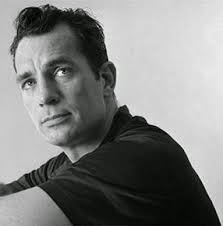
Advice about writing abounds, and yet hardly any formula serves me at my desk. Don't get me wrong, I love to read the rules. These are the first five from Jack Kerouac's Rules for Spontaneous Prose:
In these lines are the thrill of driving lines far into the night, accelerating, inebriated, exhausted. Poets also might nod agreement. And here are five from Kurt Vonnegut:

 Zadie Smith said, "...writing is the craft that defies craftsmanship." Style, she says, derives from personal necessity. It is how the writer tells the truth.
Kerouac's rules worked for Kerouac, Vonnegut's for Vonnegut. The rules that work for you will be discovered in the midst of your writing, and may change the next time you sit down to write a new work.
Writers are better without formulas. And yet I will venture my rules:
1. Images visit and insist. Pay attention.
2. A rhythm comes. So does the landscape. Wait.
3. Bring it as far as you can, then push further.
4. Wild distraction may not be irrelevant.
5. Go back, go deeper, connect. Find context.
6. Mine: in the sense of test-drill and excavate.
I like the advice of Zadie Smith. Seek a "refinement of consciousness," like Aristotle's concept of the education of the emotions.
What rules are yours?
_________________
Find Kerouac and Vonnegut's advice, along with several other writers, at this website:
http://www.brainpickings.org/index.php/tag/creativity/
Smith, Zadie. "Fail Better." The Guardian. January 13, 2007. c2007. London, UK. Accessed October
3, 2011. http://faculty.sunydutchess.edu/oneill/failbetter.htm
Recently, I've compared narrative techniques across genres, from poetry to fiction to essay. What are the basic elements? A character, an action, a voice. In a poem, the images and sounds flash and beckon. In a story the energy, spark and flint, comes from the interaction between two characters. In essays, narration is freed from plot and can enter free-falls of association. Action frames the essay, but the action occurs on more than one level. Maybe poetry and essay are more closely related, or maybe the demarcations of all three genres are completely artificial.
Advice about writing abounds, and yet hardly any formula serves me at my desk. Don't get me wrong, I love to read the rules. These are the first five from Jack Kerouac's Rules for Spontaneous Prose:
1. Scribbled secret notebooks, and wild typewritten pages, for yr own joy2. Submissive to everything, open, listening3. Try never get drunk outside yr own house4. Be in love with yr life5. Something that you feel will find its own form
In these lines are the thrill of driving lines far into the night, accelerating, inebriated, exhausted. Poets also might nod agreement. And here are five from Kurt Vonnegut:
1. Use the time of a total stranger in such a way that he or she will not feel the time was wasted.
Empathy and desire, essential. We can all agree on the sensible nature of this advice. All writers should follow it, but these rules may not work.2. Give the reader at least one character he or she can root for.3. Every character should want something, even if it is only a glass of water.4. Every sentence must do one of two things — reveal character or advance the action.5. Start as close to the end as possible.
Kerouac's rules worked for Kerouac, Vonnegut's for Vonnegut. The rules that work for you will be discovered in the midst of your writing, and may change the next time you sit down to write a new work.
Writers are better without formulas. And yet I will venture my rules:
1. Images visit and insist. Pay attention.
2. A rhythm comes. So does the landscape. Wait.
3. Bring it as far as you can, then push further.
4. Wild distraction may not be irrelevant.
5. Go back, go deeper, connect. Find context.
6. Mine: in the sense of test-drill and excavate.
I like the advice of Zadie Smith. Seek a "refinement of consciousness," like Aristotle's concept of the education of the emotions.
What rules are yours?
_________________
Find Kerouac and Vonnegut's advice, along with several other writers, at this website:
http://www.brainpickings.org/index.php/tag/creativity/
Smith, Zadie. "Fail Better." The Guardian. January 13, 2007. c2007. London, UK. Accessed October
3, 2011. http://faculty.sunydutchess.edu/oneill/failbetter.htm
Subscribe to:
Posts (Atom)