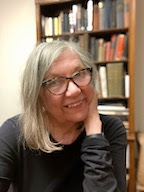
Sheila Packa Poetry Blog: A blog about poetry: figurative language, spirit, intertextual explorations, patterns, punctuation, forms, great writers, quotes, and journey notes. For updates, follow me on Bluesky https://bsky.app/profile/sheilapacka.com
October 16, 2011
Life and Work
Whatever gets in the way of your work becomes your work. Or maybe my creative work is an answer to my mother; often she told me as a child that life was hard. My grandparents were Finnish immigrants in far northern Minnesota with no grasp of the English language when they came. They lived in poverty. My grandfather's alcoholism and domestic violence only made things worse for my grandmother and their ten children. It was strength and resilience of the women that carried them through.
Migration from the old country was only the beginning, and it taught me things about moving from one culture to another. After that were other kinds of migrations: from a difficult marriage to coming out as a lesbian, from working in a taconite mine to a career in social work, from a love of hearing stories to establishing myself as a writer. One of the central obsessions in my life is the question why women (and men, for that matter) often deny their own needs, enter into or stay in dangerous situations, risk their children's safety, and deny or defy reality because of their dreams. From individual stories to myth to deep patterns in nature, I am engaged in the question about what propels us.
Echo and Lightning uses the metaphor of bird migration and myth to examine ways that women change and even relinquish the self. It is a spiritual exploration of fear, ecstasy and love through poems about Mary, Mary Magdalene, Lot's Wife, Eurydyce, Leda and The Swan, and the Gnostic book Thunder, Perfect Mind.
Cloud Birds is about immigrants, bears, wilderness, bird migration, and the journey of women through hardship and violence, including the story of Persephone going back home to mother. This book explores a Minnesota family history and has a sequence of love poems to bears.
The third book, Migrations: Poetry and Prose for Life's Transitions, traces movement and change in the community. This book is an anthology of writers from the Lake Superior and Northern Minnesota region that came out of an Arts and Cultural Heritage Community Arts Learning grant and my work as Duluth's Poet Laureate, teaching writing as a tool for life's transitions in the community and at Safe Haven Women's Shelter, the Family Justice Center and the Domestic Abuse Intervention Project.
In addition to the books, this creative work has moved into collaborations with my partner, composer and cellist Kathy McTavish. As the name Wildwood River implies, our arts collaborative is a confluence of the arts. We live and work closely together in a wilderness area and in a creative process that draws from our own life histories and experience. The project continues in the form of musical compositions, abstract film, poetry videos, gallery installations, and live performances.
Catherine Holm (author of My Heart Is a Mountain, Holy Cow! Press, 2010) wrote: I read Echo and Lightning on my porch, after a night of queasiness, an upcoming demand later in the day, and the noise of traffic competing with the birds. I was instantly transported; material world forgotten. Packa's poems are passionate and they make me want to BE the narrator. Who hasn't "given themselves up" or left a part of life behind? What if we were the wind? What if we ARE the wind, in some or all aspects? These poems bring artistry, subtlety, and power to the world -- the world will benefit. I found myself want to, wishing to, write with this depth. This is the power of Sheila Packa's poetry. Read this and be transported. Namaste, Sheila."
The Midwest Book Review says: "The changing of seasons, the changing of life seems to move so much faster in the north. Cloud Birds is a collection of poetry from Sheila Packa, a Finnish American woman who calls Minnesota home, viewing the changing of nature and life as she sees it and always moving. Cloud Birds is an excellent compilation of poetry driven by both humanity and the beauty and uncertainty of nature. "Cloud Birds": 'we live on both sides of the border/ in two countries/ in and outside each other/ bone and blood/ in disguise without intention or force/ without blandishments/ blown by wind/ silent like shadow crossing and crossing/ over the boundaries without end/ borne by moon or sun/burnished by wing.' "
The books are available at your local bookstore or at http://amzn.to/oVJRAD
http://www.superiortelegram.com/event/article/id/59581/publisher_ID/37/
Phantom Gallery: "Migrations" a multi-media exhibit at 1215 Tower Avenue, Superior, WI: Poetry/video exhibit: On view from October 20, 2011 to November 30, 2011
www.wildwoodriver.com/rooms/migrations


October 15, 2011
Starting to Write
I begin with procrastination. Seriously, I think all writing begins this way. Instead of being discouraged, I consider this a useful tension, a gestation period. It's a time of silence and darkness, very fertile. On a subconscious level, what is going on is auditioning of images, sounds or phrases. The resistance of procrastination builds pressure, and pressure helps create the compression needed in a poem.
I walk. I avoid talking about what I'll be writing because it would dissipate the energy. I do laundry or yard work. The sound of running water is particularly conducive to writing. I shower, wash dishes, throw a load of clothes in the washing machine. Get my hands busy but keep my mind free. Writing is like becoming a river; I do things to start flowing. Read poetry. Do yoga.
I write in my journal everyday. At some point, I decide to give myself a half hour to do a rough draft of a poem. I try a writing exercise, finding one on-line or in a book.
Or, I invent ways to use the random. For example, yesterday I decided to make a word list. I chose four favorite authors and from pages of their books, using only page numbers divisible by 3, I count down 7 lines and choose a noun or verb from that line. I make a list of words. This looks like a word cloud in my journal. Then, I make a poem using most of those words. Next I make a second poem with the words used differently.
These exercises are all arbitrary, something for my conscious mind to become occupied with so my subconscious mind can emerge. I invent new rules all the time. When I find a poem of somebody else's that I love, I create a parallel poem with the same structure or with a something that is similar. I let my poem develop on its own so even I don't recognize the initial resemblance.
I give myself permission to be a beginner. Each new work will have its own set of rules that you learn as you go. Assume nothing. Listen intently. Be willing to take risks. No matter how many works you have completed, you will be surprised at what doesn't work and what does.
In my journal I write down images that resonate. It's a painterly thing to do. I focus on images and find them memorable. Sometimes I sketch. I write down stories that I tell more than once. I record my dreams. I describe places. I search my memories. I write about what I'm reading. I write listening to instrumental music, and give words to the experience.
I avoid expectations and work at being attentive, in the moment.
I create constellations of influences for each manuscript. I assemble certain books, quotes, photographs, paintings, visual images, phrases, music. These are the stars in that particular universe.
Once I have words on a page I begin playing making patterns. I add, delete, rearrange, juxtapose, use opposites. I look for contrast and tension. I listen to the sounds of vowels and consonants. I make sets and sequences. A few sequences become a manuscript. I begin looking at the larger shape of it, and it becomes part of my dream life and I dream solutions. I read sacred books. I read philosophy and study art and listen to music. These all inform my work in some way.
I have learned that letting go is necessary. I have left places and people when I could no longer feel comfortable, have given away many belongings, abandoned things, left my job. This has caused me grief. I escape gatherings, ceremonies, meetings, parties without notice. I flee. I avoid committees. It is necessary, solitude and loneliness and longing.
I believe in the hidden, emerging, invisible, and mystical. I believe in the musicality of language, believe that at some point a door will open and I will cross a threshold.
I believe in a muse and offer gratitude and praise for the poems I've received. I have an altar that is a small table that I keep empty, because the muse likes to have an emptiness to fill.
I walk. I avoid talking about what I'll be writing because it would dissipate the energy. I do laundry or yard work. The sound of running water is particularly conducive to writing. I shower, wash dishes, throw a load of clothes in the washing machine. Get my hands busy but keep my mind free. Writing is like becoming a river; I do things to start flowing. Read poetry. Do yoga.
I write in my journal everyday. At some point, I decide to give myself a half hour to do a rough draft of a poem. I try a writing exercise, finding one on-line or in a book.
Or, I invent ways to use the random. For example, yesterday I decided to make a word list. I chose four favorite authors and from pages of their books, using only page numbers divisible by 3, I count down 7 lines and choose a noun or verb from that line. I make a list of words. This looks like a word cloud in my journal. Then, I make a poem using most of those words. Next I make a second poem with the words used differently.
These exercises are all arbitrary, something for my conscious mind to become occupied with so my subconscious mind can emerge. I invent new rules all the time. When I find a poem of somebody else's that I love, I create a parallel poem with the same structure or with a something that is similar. I let my poem develop on its own so even I don't recognize the initial resemblance.
I give myself permission to be a beginner. Each new work will have its own set of rules that you learn as you go. Assume nothing. Listen intently. Be willing to take risks. No matter how many works you have completed, you will be surprised at what doesn't work and what does.
In my journal I write down images that resonate. It's a painterly thing to do. I focus on images and find them memorable. Sometimes I sketch. I write down stories that I tell more than once. I record my dreams. I describe places. I search my memories. I write about what I'm reading. I write listening to instrumental music, and give words to the experience.
I avoid expectations and work at being attentive, in the moment.
I create constellations of influences for each manuscript. I assemble certain books, quotes, photographs, paintings, visual images, phrases, music. These are the stars in that particular universe.
Once I have words on a page I begin playing making patterns. I add, delete, rearrange, juxtapose, use opposites. I look for contrast and tension. I listen to the sounds of vowels and consonants. I make sets and sequences. A few sequences become a manuscript. I begin looking at the larger shape of it, and it becomes part of my dream life and I dream solutions. I read sacred books. I read philosophy and study art and listen to music. These all inform my work in some way.
I have learned that letting go is necessary. I have left places and people when I could no longer feel comfortable, have given away many belongings, abandoned things, left my job. This has caused me grief. I escape gatherings, ceremonies, meetings, parties without notice. I flee. I avoid committees. It is necessary, solitude and loneliness and longing.
I believe in the hidden, emerging, invisible, and mystical. I believe in the musicality of language, believe that at some point a door will open and I will cross a threshold.
I believe in a muse and offer gratitude and praise for the poems I've received. I have an altar that is a small table that I keep empty, because the muse likes to have an emptiness to fill.
October 14, 2011
Migrations Events
Performances and Readings:
Teatro Zuccone, Duluth, Sunday, Oct 2, at 3:00 pm (poetry, film, cello)
http://www.wdse.org/shows/playlist/watch/sheila-packa-migrations
Two Harbors Library, Thursday, Oct 20, 6:30 pm
Fond Du Lac Tribal and Community College, Thursday, Nov 3, 7 pm
(poetry, film, cello) in Room 195, otherwise known as the little auditorium/theatre
Linda Johnson, Jan Chronister, Laura Krueger-Kochmann, Moriah Erickson, Rocky Kuikanpi, Liz Minette, Lynn Fena, Janet Riegle, Julie Gard, Michelle Matthees, Maggie Kazel, Bev Berntson, Ryan Keller, Felicia Schneiderhan, Gary Boelhower, Rocky Kuikanpi
Lyric Theater in Virginia, Minnesota, Monday, Nov 7, 6:30 pm
Margaret Veeder, Jeanne C. Maki, Kathleen McQuillan, Jane Barrick, Kat Mandeville, Lynn Fena, Leah Rogne, Liz Minette
Superior Phantom Gallery, 1112 Tower Avenue, Superior, Wisconsin on Saturday,
Nov 12, at 3 pm (poetry, film, cello).
Featured writers are Jan Chronister, Peggy Trojan, Jasmine Baumgarten, Jill Hinners, Kat Mandeville, Linda LeGarde Grover, Tina Higgins, Lisa Poje Angelos, Karen Keenan, Laura Kruegman-Kochman, Yvonne Rutford, Gary Boelhower, Michelle Matthees, Julie Gard, Maggie Kazel, and Sheila Packa.
Macrostie Art Center, Grand Rapids, Thursday, Nov 17 at 7 pm (poetry, film, cello)
Teatro Zuccone, Duluth, Sunday, Oct 2, at 3:00 pm (poetry, film, cello)
http://www.wdse.org/shows/playlist/watch/sheila-packa-migrations
Two Harbors Library, Thursday, Oct 20, 6:30 pm
Fond Du Lac Tribal and Community College, Thursday, Nov 3, 7 pm
(poetry, film, cello) in Room 195, otherwise known as the little auditorium/theatre
Linda Johnson, Jan Chronister, Laura Krueger-Kochmann, Moriah Erickson, Rocky Kuikanpi, Liz Minette, Lynn Fena, Janet Riegle, Julie Gard, Michelle Matthees, Maggie Kazel, Bev Berntson, Ryan Keller, Felicia Schneiderhan, Gary Boelhower, Rocky Kuikanpi
Lyric Theater in Virginia, Minnesota, Monday, Nov 7, 6:30 pm
Margaret Veeder, Jeanne C. Maki, Kathleen McQuillan, Jane Barrick, Kat Mandeville, Lynn Fena, Leah Rogne, Liz Minette
Superior Phantom Gallery, 1112 Tower Avenue, Superior, Wisconsin on Saturday,
Nov 12, at 3 pm (poetry, film, cello).
Featured writers are Jan Chronister, Peggy Trojan, Jasmine Baumgarten, Jill Hinners, Kat Mandeville, Linda LeGarde Grover, Tina Higgins, Lisa Poje Angelos, Karen Keenan, Laura Kruegman-Kochman, Yvonne Rutford, Gary Boelhower, Michelle Matthees, Julie Gard, Maggie Kazel, and Sheila Packa.
Macrostie Art Center, Grand Rapids, Thursday, Nov 17 at 7 pm (poetry, film, cello)
October 4, 2011
Video Poems
Video poems are a great way to present your work. For the "best of the web" and a wide range of the work that's being done today, see the website http://movingpoems.com/
spoken word:
"Was It I?" http://vimeo.com/30031642
(poem from Cloud Birds)
spoken word/ sequence of poems
"Immersion" http://vimeo.com/19985791
(excerpt from Echo and Lightning)
Written word:
"Black Iris" : http://vimeo.com/29698643
The abstract visual images and sound are by Kathy McTavish.
Video poems are similar to music videos -- they are very engaging. Some are animations, some are documentary, some are an intriguing amalgamation of visual images, photography, drawing, and what-have-you. Poetry is able to come off the page and into a visually interesting and musical environment that can enhance the work.
The ones that work the least well, it seems, are the ones whose images provide a literal illustration of the words of the poem. As a result, it causes the evocative quality of both the poem and the film to dissipate. The film should work as a narrative or imagistic flow on its own; the poem can be spoken, written on the film frames, or occur like text on a foreign film. I think the best video poems form interesting interstices and gaps between poem and film that allow the reader to enter into the making of meaning.
spoken word:
"Was It I?" http://vimeo.com/30031642
(poem from Cloud Birds)
spoken word/ sequence of poems
"Immersion" http://vimeo.com/19985791
(excerpt from Echo and Lightning)
Written word:
"Black Iris" : http://vimeo.com/29698643
The abstract visual images and sound are by Kathy McTavish.
Video poems are similar to music videos -- they are very engaging. Some are animations, some are documentary, some are an intriguing amalgamation of visual images, photography, drawing, and what-have-you. Poetry is able to come off the page and into a visually interesting and musical environment that can enhance the work.
The ones that work the least well, it seems, are the ones whose images provide a literal illustration of the words of the poem. As a result, it causes the evocative quality of both the poem and the film to dissipate. The film should work as a narrative or imagistic flow on its own; the poem can be spoken, written on the film frames, or occur like text on a foreign film. I think the best video poems form interesting interstices and gaps between poem and film that allow the reader to enter into the making of meaning.
October 1, 2011
The Migrations Project
About the Book: http://www.duluthnewstribune.com/event/article/id/210797/
Migrations: Poetry and Prose for Life's Transitions just came out and I've been asked about where the project started and how it developed. Maybe it started with a recent trip to Finland to visit some relatives; my grandparents immigrated to the United States. They had to start from scratch and do so in a new language. They came out of hope for a better life and more possibility, and the change caused great hardship. Maybe the project started with my own changes in relationships and home. Or maybe it was a background in social work and writing; they were two separate careers, but I began to see that engaging in the arts was an effective way to deal with problems. And my own capacity to pay attention as a social worker was improved by my writing.
For me, writing is not about self expression. That is like saying gardening is a physical activity. It's true, but it leaves out the fact that it's an act of faith, an investment and act of stewardship -- the attention to soil, irrigation, and plants results in growth. It creates beauty and sustenance.
My mother's cousin in Finland, Mikko Himanko, was a war orphan. His father died before he was born, and he was raised by his mother and step-father. Now, a retired minister, Mikko spends his time interviewing and writing the stories of many war orphans. I think that's important work.
Writing is a quest to find an image, a metaphor, a pattern that is beyond the self. Like many arts, writing teaches us to pay attention. This is one of the great values of arts education, it increases skills of observation. It teaches us to listen. Writing gives one a greater capacity maybe not to solve the unanswerable questions but to hold them. It solves the question of where to put the hard stuff. To write about the obstacles or the barriers in life is to bring creative skills to the task at hand.
Migration, the annual cyclical pattern of birds in nature, happens to people. So does erosion, storm, and melting of glaciers We are not separate from the landscape; the natural patterns express themselves in human lives. Earthquake, wildfire, drenching rain. Lake turnover. These are very interesting patterns that offer metaphors.
Migrations is a theme of my work, certainly. And because of a Community Arts Learning grant I was teaching writing to people in transition. I'm enthusiastic. Because of being in the role of Duluth Poet Laureate, I developed a community writing project of placemats printed with area writers poetry and given to diners at the Empty Bowl fundraiser for the Northern Lake Food Bank. Because it is my job to promote poetry and increase the audience, the project fell into place.

My project started small and got bigger as I read the beautiful work that people sent to me. Others refer to this as "scope creep." It has certainly expanded my own skills at editing and helped me examine my theme through the words of many contributors. I've learned more project management skills.
I couldn't have done it without help from my partner Kathy McTavish and Wildwood River, our creative collaborative. Art making is at the center of our life, it's our business. She is a composer, cellist and media artist. I am a writer. We inspire and support each other.
It's satisfying to bring the work of a community of writers together into a book. It's like introducing your friends to each other. It shows the community the depth and breadth of the writing here. It offered the opportunity for me to bring together my two careers at the point where I leave social work to write full time. The book creates an opportunity for readers to reflect and to pay attention to the changes going on in their own life.
Migrations: Poetry and Prose for Life's Transitions just came out and I've been asked about where the project started and how it developed. Maybe it started with a recent trip to Finland to visit some relatives; my grandparents immigrated to the United States. They had to start from scratch and do so in a new language. They came out of hope for a better life and more possibility, and the change caused great hardship. Maybe the project started with my own changes in relationships and home. Or maybe it was a background in social work and writing; they were two separate careers, but I began to see that engaging in the arts was an effective way to deal with problems. And my own capacity to pay attention as a social worker was improved by my writing.
For me, writing is not about self expression. That is like saying gardening is a physical activity. It's true, but it leaves out the fact that it's an act of faith, an investment and act of stewardship -- the attention to soil, irrigation, and plants results in growth. It creates beauty and sustenance.
My mother's cousin in Finland, Mikko Himanko, was a war orphan. His father died before he was born, and he was raised by his mother and step-father. Now, a retired minister, Mikko spends his time interviewing and writing the stories of many war orphans. I think that's important work.
Writing is a quest to find an image, a metaphor, a pattern that is beyond the self. Like many arts, writing teaches us to pay attention. This is one of the great values of arts education, it increases skills of observation. It teaches us to listen. Writing gives one a greater capacity maybe not to solve the unanswerable questions but to hold them. It solves the question of where to put the hard stuff. To write about the obstacles or the barriers in life is to bring creative skills to the task at hand.
Migration, the annual cyclical pattern of birds in nature, happens to people. So does erosion, storm, and melting of glaciers We are not separate from the landscape; the natural patterns express themselves in human lives. Earthquake, wildfire, drenching rain. Lake turnover. These are very interesting patterns that offer metaphors.
Migrations is a theme of my work, certainly. And because of a Community Arts Learning grant I was teaching writing to people in transition. I'm enthusiastic. Because of being in the role of Duluth Poet Laureate, I developed a community writing project of placemats printed with area writers poetry and given to diners at the Empty Bowl fundraiser for the Northern Lake Food Bank. Because it is my job to promote poetry and increase the audience, the project fell into place.
My project started small and got bigger as I read the beautiful work that people sent to me. Others refer to this as "scope creep." It has certainly expanded my own skills at editing and helped me examine my theme through the words of many contributors. I've learned more project management skills.
I couldn't have done it without help from my partner Kathy McTavish and Wildwood River, our creative collaborative. Art making is at the center of our life, it's our business. She is a composer, cellist and media artist. I am a writer. We inspire and support each other.
It's satisfying to bring the work of a community of writers together into a book. It's like introducing your friends to each other. It shows the community the depth and breadth of the writing here. It offered the opportunity for me to bring together my two careers at the point where I leave social work to write full time. The book creates an opportunity for readers to reflect and to pay attention to the changes going on in their own life.
September 20, 2011
Making a Book of Poems
Sequences and Consequences
I'm fascinated by stories about books and how they come together. I wanted to share my own experience; maybe it might help other writers articulate their own process. My main goal at the beginning of a new book is to not be controlling, but to let individual poems emerge and then stack them for later review. I share them with a few friends to get feedback, revise, and return them to the stack.
Nine months into this process, I took out my notebook and looked for poems that were related by image or theme and arranged them into a sequence or set as if I were going to present them at a reading or performance. This chapbook size (chapbooks are about 20-30 pages) sequence is the building block of a full size manuscript (a poetry manuscript is about 60-100 pages in length).
There are some guides available about assembling a poetry manuscript. Ordering the Storm by Susan Grimm offers several essays from various writers about their methods. Of course, what works for one writer will not work for another. The best guide for the form of your book is careful examination of the poems inside -- you must listen to the work.
After developing a sequence of poems, I notice repeated words and images. Revising begins. I consider poems' relation to each other. I find a good opening poem. Like the first sentence or paragraph of any book, the opening should be interesting and have a hook. It introduces the reader to your themes or preoccupations. The last poem should be satisfying. In between, if it's a narrative, a rising and falling arc. The work needs an overall title.
While in this stage of the process, I maintain the daily writing practice. In addition to the journal, I start writing about the process of assembling the new manuscript. Writing is not merely a process of recording thoughts; it is a path of discovery. New things will occur to you while writing that would not occur otherwise.
In addition, I collect my current favorite poems and poets, fiction, nonfiction, visual art, music, and objects. If I find a book I love, I keep it. I read and reread it, examining how it is assembled: as if it were a garment, I consider the fabric, the cut, the seams, the finishing. I will do this with individual poems. I will read the poems aloud often and hand copy them in order to run them through my hand, in order to personally experience the words, the line breaks, the stanzas, everything.
These collected works form a constellation of influences over my own new work. I look for patterns and stories in the constellation. This is the time when I write ekphrastic poems (poems in response to visual art). My book Echo and Lightning was somewhat influenced by a painting by Emily Carr that hung in my studio. I work on poems that respond to the other works, that create a dialogue, pay homage or explore a form or an image. This might be called research and development.
One of the ways I further develop a manuscript is to explore memory, myth, and music. Memory both personal and communal, historical. This is a consideration of roots. By writing in this direction, I deepen the work and find ways to connect it to family and historical events. Next, I consider cultural or mythic stories to find resonating patterns. This is the opposite of roots. It's a reaching outward. Religious stories and archetypal patterns are powerful forms; if you connect to them, your work will extend farther. Christianity, Greek myth, Nordic myth, the Kalevala (epic poem of Finland), and archetypes explored by Carl Jung and others might be part of your consciousness. I consider runes, the I-Ching, and Tarot cards for their archetypal images. Often times I write poems that connect with these larger patterns.
The work I do in this process might end up in the manuscript or it might not. There can never be any expectations of new work; it must find its own direction and form. My job is keep experimenting, playing, feeding the work, enriching the ground and the environment.
Preoccupations arrive. For instance, during the making of the last book, Cloud Birds, bears began to visit. In one summer, I encountered no less than seven bears. Because of a childhood terror of bears, I was faced with managing my anxiety. In order to overcome my fear, I decided to write twenty one love poems to bears (I was inspired by Pablo Neruda's Twenty Love Poems and One Poem of Despair). As it turned out, the bears helped me identify that one of the themes of Cloud Birds was fear. It's important to pay attention to your life and what is going on; it feeds the creative work. Be receptive.
"Whatever gets in the way of your work becomes your work," said Carolyn Forche to me years ago at a poetry workshop. This meant that things you might think of as distractions, interferences, or obstacles might very well be the heart of your book. Write about it. Pay attention!
Music is a very important element of poetry and revision. The sound and rhythm of the sequence is a point of consideration. Are these breathless or fast-paced? Are these contemplative? What are the textures? How do the individual lines and stanzas best convey the rhythm and sound?
Other considerations in revision: point and counterpoint. Good art has interesting contrast. This is true of a book of poetry. Design principles used in visual art or architecture are useful. Consider your unique mark, perspective, composition, imagery. Is it collage or painterly? If it were a physical space, what would be its entrances, exits, transitional spaces?
I am interested in creating a world. Some writers might focus primarily on the story. But there are story telling techniques or narrative strategies that can enhance or emphasize certain aspects. For example, the rule of 3 occurs in fairy tales, the character gets 3 wishes. There is the "onion," or "once in a blue moon," or "journey" template. Consider the techniques used by the earliest narratives: Chaucer's Tales, Beowulf, stories of Camelot. It's wise to trust your instinct, and then in revision understand how the choice works for the manuscript.
A book takes a lot of writing and a lot of time. After I have sixty or so poems, I began to consider the overall shape of the manuscript. Everything needs to be deliberate, even if serendipity and accident put it together initially.
I make decisions about sections, as in, how many sections (if there are sections)? what is each section about? what order do I put the sections in? The first sequence I have in Echo and Lightning is about migration and ascension; the middle section is about descent. In the Kalevala, the beginning creation story is about a women swimming in the ocean. There was yet no land, she swims and swims. It seemed logical, and it was the shape of a wave, which made sense for the overall form, a collection of poems strongly connected to water and sky.
Also very valuable: good readers. If you have good readers to give you feedback, you will be a better writer. If you hear the same suggestion from two or more friends, pay attention. These are my thoughts about my process; your process might be different. I suggest you write about it.
I'm fascinated by stories about books and how they come together. I wanted to share my own experience; maybe it might help other writers articulate their own process. My main goal at the beginning of a new book is to not be controlling, but to let individual poems emerge and then stack them for later review. I share them with a few friends to get feedback, revise, and return them to the stack.
Nine months into this process, I took out my notebook and looked for poems that were related by image or theme and arranged them into a sequence or set as if I were going to present them at a reading or performance. This chapbook size (chapbooks are about 20-30 pages) sequence is the building block of a full size manuscript (a poetry manuscript is about 60-100 pages in length).
There are some guides available about assembling a poetry manuscript. Ordering the Storm by Susan Grimm offers several essays from various writers about their methods. Of course, what works for one writer will not work for another. The best guide for the form of your book is careful examination of the poems inside -- you must listen to the work.
After developing a sequence of poems, I notice repeated words and images. Revising begins. I consider poems' relation to each other. I find a good opening poem. Like the first sentence or paragraph of any book, the opening should be interesting and have a hook. It introduces the reader to your themes or preoccupations. The last poem should be satisfying. In between, if it's a narrative, a rising and falling arc. The work needs an overall title.
While in this stage of the process, I maintain the daily writing practice. In addition to the journal, I start writing about the process of assembling the new manuscript. Writing is not merely a process of recording thoughts; it is a path of discovery. New things will occur to you while writing that would not occur otherwise.
In addition, I collect my current favorite poems and poets, fiction, nonfiction, visual art, music, and objects. If I find a book I love, I keep it. I read and reread it, examining how it is assembled: as if it were a garment, I consider the fabric, the cut, the seams, the finishing. I will do this with individual poems. I will read the poems aloud often and hand copy them in order to run them through my hand, in order to personally experience the words, the line breaks, the stanzas, everything.
These collected works form a constellation of influences over my own new work. I look for patterns and stories in the constellation. This is the time when I write ekphrastic poems (poems in response to visual art). My book Echo and Lightning was somewhat influenced by a painting by Emily Carr that hung in my studio. I work on poems that respond to the other works, that create a dialogue, pay homage or explore a form or an image. This might be called research and development.
One of the ways I further develop a manuscript is to explore memory, myth, and music. Memory both personal and communal, historical. This is a consideration of roots. By writing in this direction, I deepen the work and find ways to connect it to family and historical events. Next, I consider cultural or mythic stories to find resonating patterns. This is the opposite of roots. It's a reaching outward. Religious stories and archetypal patterns are powerful forms; if you connect to them, your work will extend farther. Christianity, Greek myth, Nordic myth, the Kalevala (epic poem of Finland), and archetypes explored by Carl Jung and others might be part of your consciousness. I consider runes, the I-Ching, and Tarot cards for their archetypal images. Often times I write poems that connect with these larger patterns.
The work I do in this process might end up in the manuscript or it might not. There can never be any expectations of new work; it must find its own direction and form. My job is keep experimenting, playing, feeding the work, enriching the ground and the environment.
Preoccupations arrive. For instance, during the making of the last book, Cloud Birds, bears began to visit. In one summer, I encountered no less than seven bears. Because of a childhood terror of bears, I was faced with managing my anxiety. In order to overcome my fear, I decided to write twenty one love poems to bears (I was inspired by Pablo Neruda's Twenty Love Poems and One Poem of Despair). As it turned out, the bears helped me identify that one of the themes of Cloud Birds was fear. It's important to pay attention to your life and what is going on; it feeds the creative work. Be receptive.
"Whatever gets in the way of your work becomes your work," said Carolyn Forche to me years ago at a poetry workshop. This meant that things you might think of as distractions, interferences, or obstacles might very well be the heart of your book. Write about it. Pay attention!
Music is a very important element of poetry and revision. The sound and rhythm of the sequence is a point of consideration. Are these breathless or fast-paced? Are these contemplative? What are the textures? How do the individual lines and stanzas best convey the rhythm and sound?
Other considerations in revision: point and counterpoint. Good art has interesting contrast. This is true of a book of poetry. Design principles used in visual art or architecture are useful. Consider your unique mark, perspective, composition, imagery. Is it collage or painterly? If it were a physical space, what would be its entrances, exits, transitional spaces?
I am interested in creating a world. Some writers might focus primarily on the story. But there are story telling techniques or narrative strategies that can enhance or emphasize certain aspects. For example, the rule of 3 occurs in fairy tales, the character gets 3 wishes. There is the "onion," or "once in a blue moon," or "journey" template. Consider the techniques used by the earliest narratives: Chaucer's Tales, Beowulf, stories of Camelot. It's wise to trust your instinct, and then in revision understand how the choice works for the manuscript.
A book takes a lot of writing and a lot of time. After I have sixty or so poems, I began to consider the overall shape of the manuscript. Everything needs to be deliberate, even if serendipity and accident put it together initially.
I make decisions about sections, as in, how many sections (if there are sections)? what is each section about? what order do I put the sections in? The first sequence I have in Echo and Lightning is about migration and ascension; the middle section is about descent. In the Kalevala, the beginning creation story is about a women swimming in the ocean. There was yet no land, she swims and swims. It seemed logical, and it was the shape of a wave, which made sense for the overall form, a collection of poems strongly connected to water and sky.
Also very valuable: good readers. If you have good readers to give you feedback, you will be a better writer. If you hear the same suggestion from two or more friends, pay attention. These are my thoughts about my process; your process might be different. I suggest you write about it.
September 11, 2011
Migrations: Poetry & Prose for Life's Transitions

Performances and Readings:
1. Teatro Zuccone, Duluth, Sunday, Oct 2, at 3:00 pm (poetry, film, cello)
2. Esko - Moosebrew Coffeehouse - Oct 18, 6:30 pm
3. Two Harbors Library, Thursday, Oct 20, 6:30 pm
4. Fond Du Lac Tribal and Community College, Thursday, Nov 3, 7 pm
(poetry, film, cello)
5. Lyric Theater in Virginia, Minnesota, Monday, Nov 7, 6:30 pm
6. Superior Phantom Gallery, Saturday, Nov 12, 3 pm (poetry, film, cello)
7. Macrostie Art Center, Grand Rapids, Thursday, Nov 17 at 7 pm (poetry, film, cello)
The Community Arts Learning Project has developed into this anthology about changes. You will want to read it! Here are some reviews:
"The Lake Superior area has either bred or attracted an amazing community of poets, and the best are featured in this diverse collection edited by Sheila Packa. While the title Migrations implied any number of processes to me, I was struck by how many delightfully (or darkly) unexpected topics Ms. Packa had included. Love, childbearing, opening, the creative process, Christmas, aging, divorce, the seasons, Paul Wellstone’s death, all and many more are examined in these luminous poems. Open to any page for the gift of a glimpse into the poet’s mind and heart!
Carol Orban, retired teacher, Ely, Minnesota
Sheila Packa's Migrations is the product of a born writer’s craft nourished and shaped by immigrant work ethic and iron will, Finnish music, burning taconite pellets, long northern Minnesota winters, seeing deep patterns in nature and community and literature. With this potent collection of poems and prose she helps us connect with ourselves and one another as a community in the midst of change, movement and radical growth.
Ann Wallin Harrington
Family Justice Center Facilitator
Migrations is a marvelous collection of wide-ranging, in-depth reflections in poetry and prose on major existential transitions and reinventions. It conjures up colorful images of weather, flight, birds, water, air, associated with transformations triggered by experiences such as being trapped, going away, bewilderment, violence, aging, loss, death, trauma, emigration, and departures.
Tineke Ritmeester, PhD, Associate Professor of Women's Studies at the University of Minnesota-Duluth. She is a Dutch immigrant in transition.
In your hands, you hold a unique collection of high quality poetry and prose by favorite & by newer Lake Superior area writers. Don't set it down! Turn the book over to examine the cover and lift it to smell this ink-and-paper presentation of singular ideas. And know that Migrations follows the primary rule of poetry, reframing details of your world in ways that jolt your consciousness.
Cal Benson, author of Dakota Boy
From the Introduction:
Each fall, along the western shore of Lake Superior, hundreds of thousands of migrating birds ride the thermal currents above the dark conifers and bright reds and golds of autumn leaves. They follow the shoreline. Under their outstretched wings, I reach for the language of flight as I gather and arrange this collection of poems and prose.
This book is about migrations in life that all of us make: the embarking, the long journey, the returning — beginnings and endings, irrevocable. We are like birds in migration, traveling between memory and new beginnings. The stories and poems capture the voices of many writers and the landscape of the North and of Lake Superior.
...
In every workshop, I hear new and arresting voices. I've included poems of blessing and transition, polished and unpolished, that capture an image, a turning point, and a unique voice. Each was like a bird inside a larger flock and as such, wide-ranging.
...
Years ago, in the Split Rock Arts Program, I talked with poet Carolyn Forché about the difficulty of finding time to write. It seemed I was always in transition, juggling many responsibilities, and found it challenging to set aside enough time to write.
"Whatever keeps you from your work becomes your work," she said, meaning that I should write about what I was currently grappling with. Along with her husband, freelance photographer, Harry Mattison, she had facilitated the Iron Range Documentation Project. As a social activist and witness to atrocity, Carolyn Forché's own voice became the vehicle of many, and she wrote to reveal the pain and suffering in Nicaragua and other places. Later, she edited an anthology, Against Forgetting: Twentieth Century Poetry of Witness (WW Norton, 1993).
Poetry can be many things: song, story, memoir, philosophy, image. Poetry can use many narrative strategies: journey, list, prayer, blessing, letter, or quest. Poetry can witness; it can be an agent of change. It can preserve a moment with vivid immediacy. It can awaken. Its purpose is diverse, but it always illuminates.
I followed Forché's advice, and now give that same advice to a lot of writers. If something is an obstacle, write about it. If something is getting in the way of your writing, then you should be writing about that. If you are preoccupied, let your thoughts go into ink on a page.
It is important to create a time and place for writing. There is evidence that keeping a journal improves one's health and immunity, and that it speeds recovery from illness. Writing is a tool of the mind, but I also think it is a tool of the soul. The poet Linda Hogan once said, "Whatever you write will make it stronger." Writing helps one find and use a voice. Writing strengthens identity and allows it to develop and change. Writing about place helps us understand our roots and name our desires, not just for ourselves but for the larger world.
A community that honors and celebrates the arts becomes a community of openness and exchange. Unique voices rise that bring images and stories that stir us. The arts foster diversity not uniformity. The community that invests in the activity of art making is preserving its culture and promoting creativity. We are all strengthened.
These poems, stories and essays form a conversation; I invite the reader to participate. At this moment, something is changing in your life. Find an image or a metaphor to enter the complexity. For me, writing is a type of way-finding, a lamp in darkness.
September 2, 2011
Poet's Work: Condensery
My grandmother worked with wool. She raised sheep, and spun their fleece into yarn. She knitted the yarn, and then boiled the knit to shrink and thicken the wool into felt. Felted wool slippers and hats are phenomenally warm, protecting the wearer from piercing northern winters. As a writer, I am more of a wool gatherer, but my process with language is similar to her process with wool.
There is a difference in the language of poetry and prose that can be described by using the word compression. Paul Valery said the language of prose is meant to fall away once meaning is delivered, but this is not so with poetry whose language is meant to recreate the breath, and make the poem new each reading. Reading poetry gives the reader an ear for this, and I recommend reading poetry extensively. There are techniques that poets use to compress the language.
Poet's Work
by Lorine Niedecker
Grandfather
advised me:
Learn a trade
I learned
to sit at desk
and condense
No layoff
from this
condensery
Condensery is an apt term. The poet must condense the language; in the condensing, the language begins to have more substance. My grandmother had her copper laundry boiler, a wood stove, and wooden paddles as tools to condense her knitted garments into felt. The poets' tools also allow one to put the language through a process. Figurative language allows a writer to compress language. Metaphor is effective; the writer talks about two things at the same time. Consider this line from the poem, "Questions of Travel" by Elizabeth Bishop.
"And have we room/ for more folded sunsets, still quite warm?"
One word will makes the difference. If the poet had used the word 'blankets' instead of 'sunsets,' then the effect would have been prosaic. Bishop's decision to use sunsets makes the sentence take on more wonder. One can imagine the sunset's colors folded and put away like blankets. Can one take a sunset along, in a suitcase? The sunset suddenly becomes intimate as the blanket on a bed, it has a tactile sense. She did not say blanket, but she has created a physical sense of touch by suggestion. A single word choice made the meaning both intimate and expansive. The compression the poet achieves here suddenly vaults the reader into another space.
Poetry often evokes more than one meaning; Mary Oliver says poetry is language that casts more than one shadow. If it casts a shadow, then it must have solidity and heft. This solidity and heft comes from the five senses, the perceptions of the body. If it casts a shadow, it could be a thing or a being, like cart or a horse. Interesting possibilities, this intensity of poetry. Each word has a history and a host of associations; the poet considers this. Sometimes words come out on paper perfectly, but many times revisions help the poet find just the right language.
Here is another example:
Question
by May Swenson:
Body my house
my horse my hound
what will I do
when you are fallen
Where will I sleep
How will I ride
What will I hunt
Where can I go
without my mount
all eager and quick
How will I know
in thicket ahead
is danger or treasure
when Body my good
bright dog is dead
How will it be
to lie in the sky
without roof or door
and wind for an eye
With cloud for shift
how will I hide?
This poem is physically palpable. The form is created by a parallel questioning. The words lend their history and associations to the task; the words are tightly bound together like wool beat into felt. My house, my horse, my hound. The series of words illuminate the body as place first followed by images of horse and hound. Speed, beauty, animality. Hound also invites associations with hunting and baying. Metaphor again. In this spare poem, Swenson also uses sound elements and patterns to compress the poem. The rhymes are tight: ride and hide, I and sky and lie. Almost rhymes: quick and thicket. hound and mount and cloud. Alliteration (same consonant sounds) and assonance (same vowel sounds) occur; everything intense.
The form of a poem lends the poet a tool for condensery. Repetition and variation are built in to some forms like the villanelle, pantoum, or sestina. Other forms have strict limits like the haiku, seventeen syllables, or the sonnet, fourteen lines in a certain rhyme scheme. One must compress and cut the language to fit. In addition, poets add tension. Suspense or the use of opposites add tension. Twists. Line breaks and choices about form can also increase the compression.
Robert Lowell, in interviews, said poems must be high tensile objects. He talked about setting up tension in or between the poem's metrics and in the form or content of the poem. For example, a sonnet form sets up an expectation of rhyme. The poem might use blank verse (iambic meter) and instead of rhyme on the end lines place it elsewhere, internally.
Condensing is perhaps also a process of reduction. One takes away words and phrases, a process Virginia Woolf referred to as ellision. In the taking away, the poet can heighten the effect and create an ambiguity that evokes more meaning. Spareness is often powerful.The stronger the focus, the stronger the poem. Using precise and concrete images adds weight. Staying in metaphor adds focus.
Sometimes I think the form of the poem is a dialectic between language and white space, silence. Dialectics, or the use of opposites, compress. Allusion to other literary work adds weight and meaning.
Add heat. Keep refining. Words are like wool; they have fibers that pull on other fibers. About wool, my grandmother knew about boiling, then ice. She knew how to take fiber into strand into knit into felt.
Poetry is distilled. From language, the poet makes a tincture or an essence. A poet learns to create a distillery to turn grain into whiskey or potatoes into vodka.
Perhaps condensery is akin to the ancient science of alchemy and its quest of turning metal into gold.
Of course, some writers do this is in fiction and essays as well. The writer, Clarice Lispector, created visceral, existential consciousness for the reader via the use of character and setting. Her language is compressed like poetry, compressed to a point of great intensity as if she were at a work bench, cranking the words with a vise. I read her work for its lessons in compressed language as well as for her vision.
This sentence in her book Stream of Life conveys in just nine words her unique voice.
"I am before, I am almost, I am never."
This poetic language uses parallel structure, repetition, variation, and sound in a tight form that conveys psychological truth. It embraces opposites. None of the phrases are subordinated; all are equal. It is tensile and brilliantly evocative.
Niedecker's poem "Poet's Work" expresses the poet's endless search, the quest for the right words and the right arrangement. It is work that is never done.
Sources:
Bishop, Elizabeth. The Complete Poems: 1927-1979. Farrar, Straus and Giroux. c1984.
Lispector, Clarice. The Stream of Life. University of Minnesota Press. c1989.
Alexrod, Steven and Helen Deese, editors. Robert Lowell: Essays on the Poetry. Cambridge University Press, c1989.
Oliver, Mary. A Poetry Handbook. Mariner Books. c1994.
Niedecker, Lorine. Collected Works. University of California Press. c2002.
Swenson, May http://www.poetryfoundation.org/poem/177225
Valery, Paul. Selected Writings of Paul Valery. New Directions Press. c1964.
There is a difference in the language of poetry and prose that can be described by using the word compression. Paul Valery said the language of prose is meant to fall away once meaning is delivered, but this is not so with poetry whose language is meant to recreate the breath, and make the poem new each reading. Reading poetry gives the reader an ear for this, and I recommend reading poetry extensively. There are techniques that poets use to compress the language.
Poet's Work
by Lorine Niedecker
Grandfather
advised me:
Learn a trade
I learned
to sit at desk
and condense
No layoff
from this
condensery
Condensery is an apt term. The poet must condense the language; in the condensing, the language begins to have more substance. My grandmother had her copper laundry boiler, a wood stove, and wooden paddles as tools to condense her knitted garments into felt. The poets' tools also allow one to put the language through a process. Figurative language allows a writer to compress language. Metaphor is effective; the writer talks about two things at the same time. Consider this line from the poem, "Questions of Travel" by Elizabeth Bishop.
"And have we room/ for more folded sunsets, still quite warm?"
One word will makes the difference. If the poet had used the word 'blankets' instead of 'sunsets,' then the effect would have been prosaic. Bishop's decision to use sunsets makes the sentence take on more wonder. One can imagine the sunset's colors folded and put away like blankets. Can one take a sunset along, in a suitcase? The sunset suddenly becomes intimate as the blanket on a bed, it has a tactile sense. She did not say blanket, but she has created a physical sense of touch by suggestion. A single word choice made the meaning both intimate and expansive. The compression the poet achieves here suddenly vaults the reader into another space.
Poetry often evokes more than one meaning; Mary Oliver says poetry is language that casts more than one shadow. If it casts a shadow, then it must have solidity and heft. This solidity and heft comes from the five senses, the perceptions of the body. If it casts a shadow, it could be a thing or a being, like cart or a horse. Interesting possibilities, this intensity of poetry. Each word has a history and a host of associations; the poet considers this. Sometimes words come out on paper perfectly, but many times revisions help the poet find just the right language.
Here is another example:
Question
by May Swenson:
Body my house
my horse my hound
what will I do
when you are fallen
Where will I sleep
How will I ride
What will I hunt
Where can I go
without my mount
all eager and quick
How will I know
in thicket ahead
is danger or treasure
when Body my good
bright dog is dead
How will it be
to lie in the sky
without roof or door
and wind for an eye
With cloud for shift
how will I hide?
This poem is physically palpable. The form is created by a parallel questioning. The words lend their history and associations to the task; the words are tightly bound together like wool beat into felt. My house, my horse, my hound. The series of words illuminate the body as place first followed by images of horse and hound. Speed, beauty, animality. Hound also invites associations with hunting and baying. Metaphor again. In this spare poem, Swenson also uses sound elements and patterns to compress the poem. The rhymes are tight: ride and hide, I and sky and lie. Almost rhymes: quick and thicket. hound and mount and cloud. Alliteration (same consonant sounds) and assonance (same vowel sounds) occur; everything intense.
The form of a poem lends the poet a tool for condensery. Repetition and variation are built in to some forms like the villanelle, pantoum, or sestina. Other forms have strict limits like the haiku, seventeen syllables, or the sonnet, fourteen lines in a certain rhyme scheme. One must compress and cut the language to fit. In addition, poets add tension. Suspense or the use of opposites add tension. Twists. Line breaks and choices about form can also increase the compression.
Robert Lowell, in interviews, said poems must be high tensile objects. He talked about setting up tension in or between the poem's metrics and in the form or content of the poem. For example, a sonnet form sets up an expectation of rhyme. The poem might use blank verse (iambic meter) and instead of rhyme on the end lines place it elsewhere, internally.
Condensing is perhaps also a process of reduction. One takes away words and phrases, a process Virginia Woolf referred to as ellision. In the taking away, the poet can heighten the effect and create an ambiguity that evokes more meaning. Spareness is often powerful.The stronger the focus, the stronger the poem. Using precise and concrete images adds weight. Staying in metaphor adds focus.
Sometimes I think the form of the poem is a dialectic between language and white space, silence. Dialectics, or the use of opposites, compress. Allusion to other literary work adds weight and meaning.
Add heat. Keep refining. Words are like wool; they have fibers that pull on other fibers. About wool, my grandmother knew about boiling, then ice. She knew how to take fiber into strand into knit into felt.
Poetry is distilled. From language, the poet makes a tincture or an essence. A poet learns to create a distillery to turn grain into whiskey or potatoes into vodka.
Perhaps condensery is akin to the ancient science of alchemy and its quest of turning metal into gold.
Of course, some writers do this is in fiction and essays as well. The writer, Clarice Lispector, created visceral, existential consciousness for the reader via the use of character and setting. Her language is compressed like poetry, compressed to a point of great intensity as if she were at a work bench, cranking the words with a vise. I read her work for its lessons in compressed language as well as for her vision.
This sentence in her book Stream of Life conveys in just nine words her unique voice.
"I am before, I am almost, I am never."
This poetic language uses parallel structure, repetition, variation, and sound in a tight form that conveys psychological truth. It embraces opposites. None of the phrases are subordinated; all are equal. It is tensile and brilliantly evocative.
Niedecker's poem "Poet's Work" expresses the poet's endless search, the quest for the right words and the right arrangement. It is work that is never done.
Sources:
Bishop, Elizabeth. The Complete Poems: 1927-1979. Farrar, Straus and Giroux. c1984.
Lispector, Clarice. The Stream of Life. University of Minnesota Press. c1989.
Alexrod, Steven and Helen Deese, editors. Robert Lowell: Essays on the Poetry. Cambridge University Press, c1989.
Oliver, Mary. A Poetry Handbook. Mariner Books. c1994.
Niedecker, Lorine. Collected Works. University of California Press. c2002.
Swenson, May http://www.poetryfoundation.org/poem/177225
Valery, Paul. Selected Writings of Paul Valery. New Directions Press. c1964.
August 12, 2011
The Architecture of Poetry
The Architecture of Poetry
The Gallery by Tomas Tranströmer
Miniature by Yannis Ritsos
I'm fascinated by architecture and its link with poetry. Architecture offers to poetry the principles of design. One of my favorite poems is "The Gallery" by Tomas Tranströmer. He was a Norwegian poet of great skill. This poem combines a deep interior world with a wide exterior. It is one of the best examples of poetry and architecture that I have seen. The poem is not about architecture; rather the design of the poem uses the architecture of its location as a foundation. Also the poem "Miniature" by Yannis Ritsos is framed by a room where two people are having tea. Likewise, this poem uses the pattern language of a tea room, the ritual of making tea, to express an inexpressible good-bye.
I've found wonderful books about architecture that I believe have deep links to poetry: Christopher Alexander, Vol I: The Timeless Way and Volume II: A Pattern Language. Alexander focuses on living patterns as a way to think about design; he names these patterns with basic, almost archetypal, images: 'the gate', 'the way,' 'entrances & exits,' and 'spirit places.' He examines the features of various buildings: the honeymoon cottage, teenager's cottage, and the like. Recognizing the human needs of various phases of life, he identifies ways that buildings can help people. Therefore, a teenager's cottage needs to be close by, but have more privacy. A bench near the front entrance of a building will provide the elderly a place to rest and watch others in the community. It's architecture that evolves from the consideration of human needs. These words, which he uses as a language, encourages one to think of a larger patterns. Basically, he urges builders to consider making buildings that are organic, that reflect the life inside, and contain living patterns.
I like to adapt his ideas to poetry. Writers would also benefit from the consideration of a pattern language. Entrances and exits, for instance, can help us think about how a poem begins or ends. There are many ways to create an entrance; considering the larger scheme helps us to make the choice. Not only that, contemplating the rituals or patterns of life is useful. The patterns of life, reflected in a poem, will enhance the structure of the poem and the life of both reader and writer.
Alexander writes in The Timeless Way: "It is a process which brings order out of nothing but ourselves; it can not be attained, but it will happen of its own accord, if we will only let it." This process is not one of forcing a pattern, but of watching the unfolding of a natural one. It is not about control, but it is about attentiveness.
Tomas Tranströmer's poem "The Gallery" is an example of a poem with beautiful architecture. The title The Gallery is figurative. The narrator in the poem describes a sleepless night in a motel, but each of the images that emerge from the wall are like portraits in a gallery; the long poem is both surreal and deeply moving. Translated by Robert Bly, this is the ending of the poem:
I stayed overnight at the sleepwalker's motel.
Many faces here are desperate
others smoothed out
after the pilgrim's walk through oblivion.
They breathe vanish struggle back again,
They look past me.
They all want to reach the icon of justice.
It happens rarely
that one of us really sees the other:
a person shows himself for an instant
as in a photograph but clearer
and in the background
something that is bigger than this shadow.
He's standing full-length before a mountain.
It's more a snail's shell than a mountain.
It's more a house than a snail's shell.
It's not a house but has many rooms.
It's indistinct but overwhelming.
He grows out of it, it out of him.
It's his life, it's his labyrinth."
The gallery is a word that reflects a pattern language. This word choice gives us an immediate understanding of a night that is spent viewing portrait after portrait of haunting images. Tranströmer uses the architecture of the motel and gallery to keep the poem structured and focused. And like the shifting portraits that emerge from the motel wall, the image of the narrator shifts with each line in the last stanza.
Another book that provides an interesting insights is The Poetics of Space by Gaston Bachelard. A sampling from the Table of Contents reveals these phrases: House and Universe, Nests, Shells, Intimate Immensity, Miniatures. The phrase 'intimate immensity' perfectly describes a good poem like the one by Tranströmer. It is specific and detailed, and yet it offers an immensity.
Reading this list in the table of contents brings to mind another beautiful poem, "Miniature" by Greek poet Yannis Ritsos.
Miniature
The woman stood up in front of the table. Her sad hands
begin to cut thin slices of lemon for tea
like yellow wheels for a very small carriage
made for a child's fairy tale. The young officer sitting opposite
is buried in the old armchair. He doesn't look at her.
He lights up his cigarette. His hand holding the match trembles,
throwing light on his tender chin and the teacup's handle. The clock
holds its heartbeat for a moment. Something has been postponed.
The moment has gone. It's too late now. Let's drink our tea.
Is it possible, then, for death to come in that kind of carriage?
To pass by and go away? And only this carriage to remain,
with its little yellow wheels of lemon
parked for so many years on a side street with unlit lamps,
and then a small song, a little mist, and then nothing?
(trans. Edmund Keeley)
This poem is contained by the tableau in this room, yet it contains an intimate immensity.
Poetry is a practice of architecture. Muriel Rukeyser called the setting of a poem as its the theater. A poet might consider what type of dwelling a particular poem provides: a kitchen/dining space, a gallery, a spirit house, a honeymoon place, or a tomb, for instance. Each has different characteristics and expresses a deep human need. The best form or design for the poem is the one that best facilitates the living pattern. In the revision, a poet might discover ways to enhance the living patterns inherent to the work. Repetition, variation, and music offer patterns to the poet. The goal is not to create complexity; the best work creates simplicity.
Alexander says, "The process of unfolding goes step by step, one pattern at a time. Each step brings just one pattern to life; and the intensity of the results depends on the intensity of each individual step."
The poems by Tranströmer and Ritsos have the intensity of which Alexander speaks and the intimate immensity articulated by Bachelard. They both are very intimate revealed experiences that are specific to time and place. They are small scale, and the architecture that informs this essay is also small scale. The following link features photographs and a story of a couple who live in a 12x12 cabin, off the grid. It is an example of the poetics of space and attentiveness. And, on the shelves of their tiny home is a lot of poetry.
http://www.innermosthouse.com/#/innermost-house
The Gallery by Tomas Tranströmer
Miniature by Yannis Ritsos
I'm fascinated by architecture and its link with poetry. Architecture offers to poetry the principles of design. One of my favorite poems is "The Gallery" by Tomas Tranströmer. He was a Norwegian poet of great skill. This poem combines a deep interior world with a wide exterior. It is one of the best examples of poetry and architecture that I have seen. The poem is not about architecture; rather the design of the poem uses the architecture of its location as a foundation. Also the poem "Miniature" by Yannis Ritsos is framed by a room where two people are having tea. Likewise, this poem uses the pattern language of a tea room, the ritual of making tea, to express an inexpressible good-bye.
I've found wonderful books about architecture that I believe have deep links to poetry: Christopher Alexander, Vol I: The Timeless Way and Volume II: A Pattern Language. Alexander focuses on living patterns as a way to think about design; he names these patterns with basic, almost archetypal, images: 'the gate', 'the way,' 'entrances & exits,' and 'spirit places.' He examines the features of various buildings: the honeymoon cottage, teenager's cottage, and the like. Recognizing the human needs of various phases of life, he identifies ways that buildings can help people. Therefore, a teenager's cottage needs to be close by, but have more privacy. A bench near the front entrance of a building will provide the elderly a place to rest and watch others in the community. It's architecture that evolves from the consideration of human needs. These words, which he uses as a language, encourages one to think of a larger patterns. Basically, he urges builders to consider making buildings that are organic, that reflect the life inside, and contain living patterns.
I like to adapt his ideas to poetry. Writers would also benefit from the consideration of a pattern language. Entrances and exits, for instance, can help us think about how a poem begins or ends. There are many ways to create an entrance; considering the larger scheme helps us to make the choice. Not only that, contemplating the rituals or patterns of life is useful. The patterns of life, reflected in a poem, will enhance the structure of the poem and the life of both reader and writer.
Alexander writes in The Timeless Way: "It is a process which brings order out of nothing but ourselves; it can not be attained, but it will happen of its own accord, if we will only let it." This process is not one of forcing a pattern, but of watching the unfolding of a natural one. It is not about control, but it is about attentiveness.
Tomas Tranströmer's poem "The Gallery" is an example of a poem with beautiful architecture. The title The Gallery is figurative. The narrator in the poem describes a sleepless night in a motel, but each of the images that emerge from the wall are like portraits in a gallery; the long poem is both surreal and deeply moving. Translated by Robert Bly, this is the ending of the poem:
I stayed overnight at the sleepwalker's motel.
Many faces here are desperate
others smoothed out
after the pilgrim's walk through oblivion.
They breathe vanish struggle back again,
They look past me.
They all want to reach the icon of justice.
It happens rarely
that one of us really sees the other:
a person shows himself for an instant
as in a photograph but clearer
and in the background
something that is bigger than this shadow.
He's standing full-length before a mountain.
It's more a snail's shell than a mountain.
It's more a house than a snail's shell.
It's not a house but has many rooms.
It's indistinct but overwhelming.
He grows out of it, it out of him.
It's his life, it's his labyrinth."
The gallery is a word that reflects a pattern language. This word choice gives us an immediate understanding of a night that is spent viewing portrait after portrait of haunting images. Tranströmer uses the architecture of the motel and gallery to keep the poem structured and focused. And like the shifting portraits that emerge from the motel wall, the image of the narrator shifts with each line in the last stanza.
Another book that provides an interesting insights is The Poetics of Space by Gaston Bachelard. A sampling from the Table of Contents reveals these phrases: House and Universe, Nests, Shells, Intimate Immensity, Miniatures. The phrase 'intimate immensity' perfectly describes a good poem like the one by Tranströmer. It is specific and detailed, and yet it offers an immensity.
Reading this list in the table of contents brings to mind another beautiful poem, "Miniature" by Greek poet Yannis Ritsos.
Miniature
The woman stood up in front of the table. Her sad hands
begin to cut thin slices of lemon for tea
like yellow wheels for a very small carriage
made for a child's fairy tale. The young officer sitting opposite
is buried in the old armchair. He doesn't look at her.
He lights up his cigarette. His hand holding the match trembles,
throwing light on his tender chin and the teacup's handle. The clock
holds its heartbeat for a moment. Something has been postponed.
The moment has gone. It's too late now. Let's drink our tea.
Is it possible, then, for death to come in that kind of carriage?
To pass by and go away? And only this carriage to remain,
with its little yellow wheels of lemon
parked for so many years on a side street with unlit lamps,
and then a small song, a little mist, and then nothing?
(trans. Edmund Keeley)
This poem is contained by the tableau in this room, yet it contains an intimate immensity.
Poetry is a practice of architecture. Muriel Rukeyser called the setting of a poem as its the theater. A poet might consider what type of dwelling a particular poem provides: a kitchen/dining space, a gallery, a spirit house, a honeymoon place, or a tomb, for instance. Each has different characteristics and expresses a deep human need. The best form or design for the poem is the one that best facilitates the living pattern. In the revision, a poet might discover ways to enhance the living patterns inherent to the work. Repetition, variation, and music offer patterns to the poet. The goal is not to create complexity; the best work creates simplicity.
Alexander says, "The process of unfolding goes step by step, one pattern at a time. Each step brings just one pattern to life; and the intensity of the results depends on the intensity of each individual step."
The poems by Tranströmer and Ritsos have the intensity of which Alexander speaks and the intimate immensity articulated by Bachelard. They both are very intimate revealed experiences that are specific to time and place. They are small scale, and the architecture that informs this essay is also small scale. The following link features photographs and a story of a couple who live in a 12x12 cabin, off the grid. It is an example of the poetics of space and attentiveness. And, on the shelves of their tiny home is a lot of poetry.
http://www.innermosthouse.com/#/innermost-house
August 9, 2011
To Punctuate or Not
Sometimes, a poet uses punctuation in a poem and sometimes he or she does not. To examine the possibilities, I've brought together four poems without punctuation written by respected poets. In this first vividly realized poem by Lucille Clifton, the line seems to follow the philosophy of "the line is a breath." The line break can be used in a way that gives the reader a chance to breathe between phrases.
miss rosie
by Lucille Clifton
when i watch you
wrapped up like garbage
sitting, surrounded by the smell
of too old potato peels
or
when i watch you
in your old man's shoes
with the little toe cut out
sitting, waiting for your mind
like next week's grocery
i say
when i watch you
you wet brown bag of a woman
who used to be the best looking gal in georgia
used to be called the Georgia Rose
i stand up
through your destruction
i stand up
She has used two commas inside two lines, each occurs after the same word, "sitting." It seems to help Clifton create a parallel structure, although what follows after the word is not exactly parallel. Another poet might be tempted to use commas after the phrases. However, a comma at the end of a line seems to make a harder "end stop." Some poets who do use punctuation avoid a comma at line end because there is already an inherent pause. A line break without a comma adds a level of ambiguity, a slight pause between words that can add extra meanings.
Other things besides a lack of punctuation are noticeable. Clifton does not capitalize any words except Georgia Rose. She does not capitalize the subject, miss rosie. Neither does she follow the convention of capitalizing the personal pronoun I. One might speculate that she wanted to minimize the "I," downplay the personal narrator in order to indicate that "I" is no more important than "you." The "i" occurs five times however. In such a short poem, five is a lot. One line is just one short syllable: "or" makes an interesting hinge or pivot point in the poem.
The repeated phrases serve to provide a structure for the narrative: "...when i watch you..." "i stand up" clearly communicates respect and honor for the subject of the poem, miss rosie.
So, why then is Georgia Rose capitalized? Is a flower, a state flower, more important than the individuals? The phrase does provide a geographic location for the narrative; the phrase also highlights that the subject's name is rose, miss rosie. It provides an enduring image of beauty, the ultimate ideal, contrasting with subject's apparent destruction. Clifton makes very good use of the senses. The smell of too old potato peelings is such a deft use of detail. The line, "...in old man's shoes with the little toe cut out" is another good detail. She grounds the poem firmly in the body.
The lack of punctuation seems to present a fragment, or a breathless utterance. It might indicate the narrator is placing herself equal to miss rosie; perhaps both the narrator and the subject exist outside convention. Perhaps they don't follow the rules, or live beyond them. Punctuation or the lack of it can provide meaning in this way.
In the following poem by Wisconsin poet Lorine Niedecker, the poet also avoids punctuation. She does however use capitalization as if beginning a new sentence. Perhaps she meant to signal a new breath or new idea, but not a hard end stop. Not all the lines start with a capitalized word. Niedecker generally used a short line with a tight sound play in the stanzas. It's a shorter rhythm, almost syncopated. She was born in 1903 and died in 1970; she was known as an avant garde poet. She was connected to a group of poets called 'objectivists' (the word was first used by Louis Zukovsky). William Carlos Williams and Kenneth Rexroth are both considered to be part of this group.
Paean to Place
Lorine Niedecker
...
I grew in green
slide and slant
of shore and shade
Child-time--wade
through weeds
Maples to swing from
Pewee-glissando
sublime
slime-
song
Grew riding the river
Books
at home-pier
Shelley could steer
as he read
I was the solitary plover
a pencil
for a wing-gone
From the secret notes
I must tilt
upon the pressure
execute and adjust
In us sea-air rhythm
"We live by the urgent wave
of the verse"
...
Her poems have beauty and strength in the choice of word and sound. Alliteration and assonance cause a pleasurable sound play along with rhyme and near rhyme. The rhymes are in words close to each other and not at the ends of phrases. With her short lines and tight turns, punctuation may have caused the reader to stop in ways she preferred not to have happen. Her stanzas that are similar in size and line breaks. The use of a capitalized letter is an interesting detail, perhaps a technique that helps the reader find the beginning of a new thought.
In the following poem by the current U.S. Poet Laureate, the reader encounters a capitalized beginning of each line with no punctuation. Without punctuation, all line breaks have roughly the same weight or pause. One continues reading at the same pace throughout the poem. Without punctuation, the line seems to end in space, without landing. It is as if broken off in mid-breath.
For the Anniversary of My Death
W.S. Merwin
Every year without knowing it I have passed the day
When the last fires will wave to me
And the silence will set out
Tireless traveller
Like the beam of a lightless star
Then I will no longer
Find myself in life as in a strange garment
Surprised at the earth
And the love of one woman
And the shamelessness of men
As today writing after three days of rain
Hearing the wren sing and the falling cease
And bowing not knowing to what
This poem also has the development of consonant vowel sounds that make for a pleasing experience. The poem arrests the reader with its speculation; one always marks the anniversary of one's birth, but the opposite of that, the anniversary of one's death, exists unbeknownst to us. It is a bare shadow that Merwin finds and names.
In the following poem by e.e. cummings, there is no punctuation except for the apostrophe mark and a hyphen. The hyphen is not used in a standard way. Here, he hyphenates words not usually hyphenated.
Buffalo Bill's
e.e. cummings
Buffalo Bill 's
defunct
who used to
ride a watersmooth-silver
stallion
and break onetwothreefourfive pigeonsjustlikethat
Jesus
he was a handsome man
and what i want to know is
how do you like your blueeyed boy
Mister Death
He does use conventional capitalization for names but not for the personal pronoun I. e.e. cummings is known for his creative arrangements of the words, spacing or not spacing, stringing together or breaking words apart on a line or across lines. Many poets use the lines and spaces as a form of musical score; the reader can run the words together, read words fast, and then have a long pause for the next line, "Jesus' is far indented, as if hung on the end of the line before it. cummings also avoids using the question mark at the end. I think this adds an ambiguity. It begins as a question, but perhaps offers an acerbic comment instead. By avoiding the punctuation mark, the poet is able to create more ambiguity and therefore more possible meanings.
Each of these poems would be much different with conventional punctuation. Each poet had internal consistency with his or her approach. Each used other unusual methods with capitalization or no capitalization; they used spacing in a way that also would affect the breath.
When writing or reading poems, consider the uses that punctuation has. Many poets use punctuation just as it is used in conventional sentences. Done this way, the writer can guide the reader toward meaning and rhythm. If the writer chooses not to punctuate, then I think it's important to have or to develop an internal consistency. Without punctuation, one must consider line breaks and other use of white space in the development of structure and rhythm.
It does seem that an unpunctuated poem is closer to a fragment. In my own poems, a series of unpunctuated poems serve as a fragments of a longer arc that usually is marked off in sections. Initially I used it because some poems arrived in dreams, as a stanza. I wrote them down just 'as is.' Later, I began other series that seemed to work better without the conventional stops of punctuation. This added a breathlessness or a speed to the poem that would not exist otherwise. I would never swear off punctuation; like other elements in poetry, it's best to use or not use this element deliberately.
Tweet
miss rosie
by Lucille Clifton
when i watch you
wrapped up like garbage
sitting, surrounded by the smell
of too old potato peels
or
when i watch you
in your old man's shoes
with the little toe cut out
sitting, waiting for your mind
like next week's grocery
i say
when i watch you
you wet brown bag of a woman
who used to be the best looking gal in georgia
used to be called the Georgia Rose
i stand up
through your destruction
i stand up
She has used two commas inside two lines, each occurs after the same word, "sitting." It seems to help Clifton create a parallel structure, although what follows after the word is not exactly parallel. Another poet might be tempted to use commas after the phrases. However, a comma at the end of a line seems to make a harder "end stop." Some poets who do use punctuation avoid a comma at line end because there is already an inherent pause. A line break without a comma adds a level of ambiguity, a slight pause between words that can add extra meanings.
Other things besides a lack of punctuation are noticeable. Clifton does not capitalize any words except Georgia Rose. She does not capitalize the subject, miss rosie. Neither does she follow the convention of capitalizing the personal pronoun I. One might speculate that she wanted to minimize the "I," downplay the personal narrator in order to indicate that "I" is no more important than "you." The "i" occurs five times however. In such a short poem, five is a lot. One line is just one short syllable: "or" makes an interesting hinge or pivot point in the poem.
The repeated phrases serve to provide a structure for the narrative: "...when i watch you..." "i stand up" clearly communicates respect and honor for the subject of the poem, miss rosie.
So, why then is Georgia Rose capitalized? Is a flower, a state flower, more important than the individuals? The phrase does provide a geographic location for the narrative; the phrase also highlights that the subject's name is rose, miss rosie. It provides an enduring image of beauty, the ultimate ideal, contrasting with subject's apparent destruction. Clifton makes very good use of the senses. The smell of too old potato peelings is such a deft use of detail. The line, "...in old man's shoes with the little toe cut out" is another good detail. She grounds the poem firmly in the body.
The lack of punctuation seems to present a fragment, or a breathless utterance. It might indicate the narrator is placing herself equal to miss rosie; perhaps both the narrator and the subject exist outside convention. Perhaps they don't follow the rules, or live beyond them. Punctuation or the lack of it can provide meaning in this way.
In the following poem by Wisconsin poet Lorine Niedecker, the poet also avoids punctuation. She does however use capitalization as if beginning a new sentence. Perhaps she meant to signal a new breath or new idea, but not a hard end stop. Not all the lines start with a capitalized word. Niedecker generally used a short line with a tight sound play in the stanzas. It's a shorter rhythm, almost syncopated. She was born in 1903 and died in 1970; she was known as an avant garde poet. She was connected to a group of poets called 'objectivists' (the word was first used by Louis Zukovsky). William Carlos Williams and Kenneth Rexroth are both considered to be part of this group.
Paean to Place
Lorine Niedecker
...
I grew in green
slide and slant
of shore and shade
Child-time--wade
through weeds
Maples to swing from
Pewee-glissando
sublime
slime-
song
Grew riding the river
Books
at home-pier
Shelley could steer
as he read
I was the solitary plover
a pencil
for a wing-gone
From the secret notes
I must tilt
upon the pressure
execute and adjust
In us sea-air rhythm
"We live by the urgent wave
of the verse"
...
Her poems have beauty and strength in the choice of word and sound. Alliteration and assonance cause a pleasurable sound play along with rhyme and near rhyme. The rhymes are in words close to each other and not at the ends of phrases. With her short lines and tight turns, punctuation may have caused the reader to stop in ways she preferred not to have happen. Her stanzas that are similar in size and line breaks. The use of a capitalized letter is an interesting detail, perhaps a technique that helps the reader find the beginning of a new thought.
In the following poem by the current U.S. Poet Laureate, the reader encounters a capitalized beginning of each line with no punctuation. Without punctuation, all line breaks have roughly the same weight or pause. One continues reading at the same pace throughout the poem. Without punctuation, the line seems to end in space, without landing. It is as if broken off in mid-breath.
For the Anniversary of My Death
W.S. Merwin
Every year without knowing it I have passed the day
When the last fires will wave to me
And the silence will set out
Tireless traveller
Like the beam of a lightless star
Then I will no longer
Find myself in life as in a strange garment
Surprised at the earth
And the love of one woman
And the shamelessness of men
As today writing after three days of rain
Hearing the wren sing and the falling cease
And bowing not knowing to what
This poem also has the development of consonant vowel sounds that make for a pleasing experience. The poem arrests the reader with its speculation; one always marks the anniversary of one's birth, but the opposite of that, the anniversary of one's death, exists unbeknownst to us. It is a bare shadow that Merwin finds and names.
In the following poem by e.e. cummings, there is no punctuation except for the apostrophe mark and a hyphen. The hyphen is not used in a standard way. Here, he hyphenates words not usually hyphenated.
Buffalo Bill's
e.e. cummings
Buffalo Bill 's
defunct
who used to
ride a watersmooth-silver
stallion
and break onetwothreefourfive pigeonsjustlikethat
Jesus
he was a handsome man
and what i want to know is
how do you like your blueeyed boy
Mister Death
He does use conventional capitalization for names but not for the personal pronoun I. e.e. cummings is known for his creative arrangements of the words, spacing or not spacing, stringing together or breaking words apart on a line or across lines. Many poets use the lines and spaces as a form of musical score; the reader can run the words together, read words fast, and then have a long pause for the next line, "Jesus' is far indented, as if hung on the end of the line before it. cummings also avoids using the question mark at the end. I think this adds an ambiguity. It begins as a question, but perhaps offers an acerbic comment instead. By avoiding the punctuation mark, the poet is able to create more ambiguity and therefore more possible meanings.
Each of these poems would be much different with conventional punctuation. Each poet had internal consistency with his or her approach. Each used other unusual methods with capitalization or no capitalization; they used spacing in a way that also would affect the breath.
When writing or reading poems, consider the uses that punctuation has. Many poets use punctuation just as it is used in conventional sentences. Done this way, the writer can guide the reader toward meaning and rhythm. If the writer chooses not to punctuate, then I think it's important to have or to develop an internal consistency. Without punctuation, one must consider line breaks and other use of white space in the development of structure and rhythm.
It does seem that an unpunctuated poem is closer to a fragment. In my own poems, a series of unpunctuated poems serve as a fragments of a longer arc that usually is marked off in sections. Initially I used it because some poems arrived in dreams, as a stanza. I wrote them down just 'as is.' Later, I began other series that seemed to work better without the conventional stops of punctuation. This added a breathlessness or a speed to the poem that would not exist otherwise. I would never swear off punctuation; like other elements in poetry, it's best to use or not use this element deliberately.
Tweet
Subscribe to:
Posts (Atom)