Writing has a way of transforming experience. There is evidence that keeping a journal improves one's health and immunity, and that it speeds recovery from illness. Writing is a tool of the mind, but I also think it is a tool of the soul. Through writing, we can explore life's events and changes. The page offers a place to put the things that are difficult to bear; once it's has been placed there, one can shift roles from victim or witness to one that is more active. Instead of being done onto, one is a doer. Psychologically, the change is profound.
The New Yorker magazine featured an article written by Joan Acocella about the Swedish mystery writer, Stieg Larsson. It's a peek behind the scenes, a look at the writer who seemed to have started writing recently, in his mid-forties. The article examines some questions around authorship and editorial changes of the three manuscripts, but I was also interested in the connection between his fiction and his real life. He founded a magazine, Expo, that is similar to the one, the Millenium, in his trilogy. The Expo office, like Millenium, was threatened and vandalized. As a young man, Larsson witnessed a gang rape of a young girl. He never forgot it. He insisted the first book of the trilogy be titled, Men Who Hate Women (as it was, in Sweden). Larsson was able to transform the act of violence that he witnessed into a story about a strong, female character who survives, even wins. Read the article.
This week, I facilitated a writing group at the women's shelter for women who have survived domestic abuse. I'm very glad to have the opportunity to create a time and place for writing for them; in my twenties, I experienced violence in my first marriage. Writing helped me. Not only did I have the opportunity to find and develop my voice, but my writing connected me with people who gave me strength and support. It changed my life for the better. I know it will do the same for these women.
We sat down and did three timed writing exercises in session. First I read a brief example, and then we begin the exercise. The first assignment, after Sandra Cisneros chapter called "Names" in her novel, The House on Mango Street, I asked the women to write about their name. I never demand that participants read their work aloud, but they all volunteered. Each one wrote a moving piece. The next assignment was to write an anaphora (a poem whose lines begin with the same word or phrase) based on the poem, "Where I'm From" by George Ella Lyon. The last exercise was after Lawrence Ferlinghetti's poem, "I Am Waiting." I was interested in exercises that could be either poem or memoir. Writing about identity helps to strengthen one's identity. Writing about place helps us to understood our roots. The last allows us to name our desires, not just for ourselves, but for the larger world. We spent about an hour and a half in session, and I left there feeling grateful to the women for sharing their stories, and to the art of writing for the gifts it brings.
I've asked my friends to donate extra journals and notebooks that I can offer women at the shelter and at the Family Justice Center. Many writers teach writing classes at homeless shelters, jails, women's shelters, and other places. To allow a place and time for writing is to honor the experiences and lives of others. I found a blog entry on Mira's List about her project, "My Words Are My Shelter." Read the article here
I've also made a call for submissions for writers in the Arrowhead region of Minnesota to send me poems or short pieces about transitions.* I want to publish the work on placemats that can be used at the Empty Bowl community dinner (a fundraiser for the local food bank) and at the Thanksgiving Dinner at the DECC (both events are in Duluth, MN). I will help the women at the shelter share their experiences in a small publication (published in October 2011) with other poems of transition. Changes in life are often difficult; it's heartening to hear about others who have gone through similar changes, or even more difficult ones. Writing is my shelter, and with others, we can make the world a better place.
*Blessings & Transitions
CALL FOR SUBMISSIONS: Invitation to writers in the Arrowhead Region of Minnesota to send poems, prose poems, flash fiction, or brief essays (500 words max) that illuminate life transitions and/or that are blessings. This is a project of the 2010-2012 Duluth Poet Laureate, Sheila Packa. These will be considered for a poster & placemats (to be created for April poetry month and for an anthology of work to be published by Wildwood River Press in the fall of 2011. Email submissions are okay. 5 page limit. Deadline March 31, 2011. Paste into an email to sheila@sheilapacka.com or mail up to 5 pages to Wildwood River, 1748 Wildwood Road, Duluth, MN 55804.
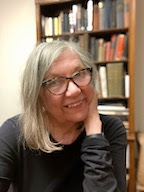
Sheila Packa Poetry Blog: A blog about poetry: figurative language, spirit, intertextual explorations, patterns, punctuation, forms, great writers, quotes, and journey notes. For updates, follow me on Bluesky https://bsky.app/profile/sheilapacka.com
January 9, 2011


December 30, 2010
Ecstatic Poetry
What is ecstatic poetry? For examples of ecstatic poetry, I can name names: Rumi, Kabir, Coleridge, Emily Dickinson, Baudelaire, Rilke, Rimbaud, Ginsberg. It is poetry that is visionary, reveals spiritual wisdom, crosses beyond ordinary boundaries. The self dissolves. The poem is a ladder that the reader climbs. The poem is a lightning bolt.
Rilke's poem, "Archaic Torso of Apollo," (http://www.poets.org/viewmedia.php/prmMID/15814) is an ekphrastic poem, a response to visual art. The poem grasps not just the art but the god in a sudden flash of beauty. I consider it an ecstatic poem; at the end, Rilke writes in the final line: "You must change your life."
In a brilliant flash of light, ecstatic experience changes you. This is often described as an awakening, like in this Rumi poem (translated by Coleman Barks)
The breeze at dawn has secrets to tell you
Don't go back to sleep.
You must ask for what you really want.
Don't go back to sleep.
People are going back and forth across the doorsill
where the two worlds touch.
The door is round and open.
Don't go back to sleep.
An ecstatic poem, in my opinion, is an intersection with the divine. Falling in love is ecstatic; one's vision expands. The poet Anne Carson has an interesting essay about women and ecstatic experience in her book, Decreation. The essay can be found online at this web address: http://muse.jhu.edu/journals/common_knowledge/v008/8.1carson.html
This essay was pivotal for me while I was revising the ecstatic poems in Echo and Lightning. In the poems of Sappho, and in the writings of a 13th century female mystic, and in the writing of Simone Weil, Carson examines the 'dissolving of the self.' I believe it is the point of profound change for an individual, to leave oneself is to let go of the past, to let go of an investment in one's identity, to let go of attempts at control and enter the present moment.
The ecstatic is best expressed in poetry. Poetry has its roots in religious ritual; poetry has the immediacy, metaphoric capacity, and compression that best creates the divine flash.
The poet Federico Garcia Lorca gave a lecture about the Duende, a dark spirit that he called before each poetry reading. It was a spirit close to death and sexuality, he explained, that infused his work with power and beauty. Poetry that can evoke the power of the gods is ecstatic poetry. To read his lecture, click on this link or paste it in your browser:
http://www.poetryintranslation.com/PITBR/Spanish/LorcaDuende.htm
Other resources:
Rilke's poem, "Archaic Torso of Apollo," (http://www.poets.org/viewmedia.php/prmMID/15814) is an ekphrastic poem, a response to visual art. The poem grasps not just the art but the god in a sudden flash of beauty. I consider it an ecstatic poem; at the end, Rilke writes in the final line: "You must change your life."
In a brilliant flash of light, ecstatic experience changes you. This is often described as an awakening, like in this Rumi poem (translated by Coleman Barks)
The breeze at dawn has secrets to tell you
Don't go back to sleep.
You must ask for what you really want.
Don't go back to sleep.
People are going back and forth across the doorsill
where the two worlds touch.
The door is round and open.
Don't go back to sleep.
An ecstatic poem, in my opinion, is an intersection with the divine. Falling in love is ecstatic; one's vision expands. The poet Anne Carson has an interesting essay about women and ecstatic experience in her book, Decreation. The essay can be found online at this web address: http://muse.jhu.edu/journals/common_knowledge/v008/8.1carson.html
This essay was pivotal for me while I was revising the ecstatic poems in Echo and Lightning. In the poems of Sappho, and in the writings of a 13th century female mystic, and in the writing of Simone Weil, Carson examines the 'dissolving of the self.' I believe it is the point of profound change for an individual, to leave oneself is to let go of the past, to let go of an investment in one's identity, to let go of attempts at control and enter the present moment.
The ecstatic is best expressed in poetry. Poetry has its roots in religious ritual; poetry has the immediacy, metaphoric capacity, and compression that best creates the divine flash.
The poet Federico Garcia Lorca gave a lecture about the Duende, a dark spirit that he called before each poetry reading. It was a spirit close to death and sexuality, he explained, that infused his work with power and beauty. Poetry that can evoke the power of the gods is ecstatic poetry. To read his lecture, click on this link or paste it in your browser:
http://www.poetryintranslation.com/PITBR/Spanish/LorcaDuende.htm
Other resources:
- Women In Praise of the Sacred, edited by Jane Hirschfield (Harper Perennial)
- Holy Fire - Nine Visionary Poets and the Quest for Enlightenment, edited by Daniel Halpern (Harper Perennial)
- News of the Universe Poems of Twofold Consciousness, chosen and introduced by Robert Bly (Sierra Books)
- How to Read a Poem and Fall in Love with Poetry, by Edward Hirsch, Harcourt Press
December 29, 2010
New Work
It's a double-edged sword, seeing one's work into print. Simultaneously, the writer must embrace the text with clarity and purpose to achieve the best re-vision (after all, once published, the work enters a fixed state) and also, at the point of the greatest obsession with detail, let go of it.
Putting a manuscript of poems together is a process unique to each writer. It begins for me in disorganization. Because I reside in individual poems that I write, in order to see the poems as a group, I must pull myself up to achieve and see them in a larger perspective. Not easy. I start by sorting the poems into sets and build sequences. This takes time. It does help that I do regular performance, and each time, must create a set list with a beginning, middle and end. The practice of creating a larger story begins in performance, definitely. The poems are like pieces of a mosaic that I've found will create different stories depending on how they are arranged.
I should add a lot of work happened on a subconscious level. I'm often working with dream images, and follow an image in and through collaborative projects, visual art, other poets' work. I write a lot. I write to process my life experience and to develop my imagination. In a relationship break-up, I was thinking about "don't look back" and I wrote the poem, "Salt," about me and Lot's Wife. It is only later that I connect my own poems of experience and imagination with mythic stories.
The new book, Echo and Lightning, came together out of three well developed sequences. The first was a set of love poems I had called "Fearful Journey." The title is from a poem, "Blindfold." It was an erotic poem exploring Hildegard Bingen's concept of erotic justice, published in The Mother Tongue. This poem was triggered by an invitation to participate in an art exhibit at Northern Prints Gallery. The gallery owner and printmaker Cecelia Lieder, who later published my collection of poems The Mother Tongue, invited me to write poems for this theme. After some contemplation, I realized that the image of blindfold was appropriate for both justice and erotic. While writing, I begin in image and follow it. This sequence of poems became the last section of the book.
The first section of the book is concerned with ecstatic experience, intersection with the divine, cleaving. Cataclysmic grief and joy. The set begins in migration and follows the image of flight into the story of Zeus (in the form of the swan) and Leda. These poems were written over a period of a few years. I was curious about mystical stories. I'd found the Gnostic text, Thunder, Perfect Mind. As a piece of writing, it was electric: a female God, the intense combination of opposites. I began contemplating the stories of myth and the Bible: Mary, Mary Magdalene, Lot's Wife. Each story involved a woman's intersection with the divine. What happened to her, what did she give up? Because I'd been reading the cosmic story for a solstice celebration, the story of the universe, I was thinking about the origin of the universe, simultaneous creation and destruction. Finally, the poems followed a sequence of ascension.
The poems in the mid-section of the book I'd recorded on an audio cd with Kathy McTavish. I called the set "Undertow" because the poems were underwater, submerged. It was all subconscious. Curious to me, at first, but then they made sense. I realized these underwater images fit well after the sequence of ascension. It was the form of a wave, climbing and falling. That overall image was important to the book. One doesn't have ascension without descent.
It was a stroke of luck to find the book's cover image, a painting called "Dawn" by my friend from Argentina, Cecilia Ramon. The image perfectly expresses the themes of migration, love, ecstasy, and undertow.
Now, that book is out. I'm working on a new one, Cloud Birds, that will be out in 2011. This one is now under intense scrutiny as I proofread, re-vision, and develop its final form. Once new work is at this stage, it's time to look ahead to the next project.
I'm generating new poems, playing really. I am focused, but one must also take writing lightly as new work starts to percolate. I'm curious and not too attached. I started a twitter account, and have been using it to assign writing prompts. It's a personal challenge to make an assignment for others and then follow the assignment myself. All teachers should take up this practice in order to stay humble. I like to be entering unknown territory, to be exploring images from experience and dream and artistic works I encounter, to discover ways to tap the subconscious mind. Writing isn't just what I do, it's how I live.
Putting a manuscript of poems together is a process unique to each writer. It begins for me in disorganization. Because I reside in individual poems that I write, in order to see the poems as a group, I must pull myself up to achieve and see them in a larger perspective. Not easy. I start by sorting the poems into sets and build sequences. This takes time. It does help that I do regular performance, and each time, must create a set list with a beginning, middle and end. The practice of creating a larger story begins in performance, definitely. The poems are like pieces of a mosaic that I've found will create different stories depending on how they are arranged.
I should add a lot of work happened on a subconscious level. I'm often working with dream images, and follow an image in and through collaborative projects, visual art, other poets' work. I write a lot. I write to process my life experience and to develop my imagination. In a relationship break-up, I was thinking about "don't look back" and I wrote the poem, "Salt," about me and Lot's Wife. It is only later that I connect my own poems of experience and imagination with mythic stories.
The new book, Echo and Lightning, came together out of three well developed sequences. The first was a set of love poems I had called "Fearful Journey." The title is from a poem, "Blindfold." It was an erotic poem exploring Hildegard Bingen's concept of erotic justice, published in The Mother Tongue. This poem was triggered by an invitation to participate in an art exhibit at Northern Prints Gallery. The gallery owner and printmaker Cecelia Lieder, who later published my collection of poems The Mother Tongue, invited me to write poems for this theme. After some contemplation, I realized that the image of blindfold was appropriate for both justice and erotic. While writing, I begin in image and follow it. This sequence of poems became the last section of the book.
The first section of the book is concerned with ecstatic experience, intersection with the divine, cleaving. Cataclysmic grief and joy. The set begins in migration and follows the image of flight into the story of Zeus (in the form of the swan) and Leda. These poems were written over a period of a few years. I was curious about mystical stories. I'd found the Gnostic text, Thunder, Perfect Mind. As a piece of writing, it was electric: a female God, the intense combination of opposites. I began contemplating the stories of myth and the Bible: Mary, Mary Magdalene, Lot's Wife. Each story involved a woman's intersection with the divine. What happened to her, what did she give up? Because I'd been reading the cosmic story for a solstice celebration, the story of the universe, I was thinking about the origin of the universe, simultaneous creation and destruction. Finally, the poems followed a sequence of ascension.
The poems in the mid-section of the book I'd recorded on an audio cd with Kathy McTavish. I called the set "Undertow" because the poems were underwater, submerged. It was all subconscious. Curious to me, at first, but then they made sense. I realized these underwater images fit well after the sequence of ascension. It was the form of a wave, climbing and falling. That overall image was important to the book. One doesn't have ascension without descent.
It was a stroke of luck to find the book's cover image, a painting called "Dawn" by my friend from Argentina, Cecilia Ramon. The image perfectly expresses the themes of migration, love, ecstasy, and undertow.
Now, that book is out. I'm working on a new one, Cloud Birds, that will be out in 2011. This one is now under intense scrutiny as I proofread, re-vision, and develop its final form. Once new work is at this stage, it's time to look ahead to the next project.
I'm generating new poems, playing really. I am focused, but one must also take writing lightly as new work starts to percolate. I'm curious and not too attached. I started a twitter account, and have been using it to assign writing prompts. It's a personal challenge to make an assignment for others and then follow the assignment myself. All teachers should take up this practice in order to stay humble. I like to be entering unknown territory, to be exploring images from experience and dream and artistic works I encounter, to discover ways to tap the subconscious mind. Writing isn't just what I do, it's how I live.
December 9, 2010
The Dragon: Agnes Martin
Creative work can be satisfying, but most often it puts you in touch with the feeling of inadequacy. In fact, most writers will tell you that they love "having written." Afterward. Writing usually presents the challenges of what some people have termed "monkey mind." The mind offers up all sorts of anxieties, fears, distractions, and difficulty. The self is one of the great obstacles in writing.
The visual artist Agnes Martin addressed the feeling of failure in her book Writings (c2005 Hatje Cantz). The following is from a lecture, "On the Perfection Underlying Life," delivered to art students:
In other words, embrace the feeling of inadequacy, defeat and failure and do your work anyway.
The discipline of work allows one to continue despite the feeling of failure. She recommends the Chinese sage Chuang Tau's concept of "free and easy wandering." No attachment. Let yourself wander. Along with this, she recommends solitude and acknowledges that in solitude one encounters both fear and a self-destructiveness she refers to as "the Dragon." As an artist, one must strive to become independent of judgment and familiar with the "ways of the Dragon."
Self knowledge is valuable. If you know how you subvert your own process or create obstacles for success, you will more likely be able to overcome the destructiveness. Agnes Martin didn't think it was possible to actually slay the Dragon. For her, it was more a matter of working while it slept.
Talking to other artists and writers will provide encouragement and support. Also, I learned a good maxim from a writing teacher, Carolyn Forche. She said, "Whatever gets in the way of your work becomes your work." In other words, if you find something interfering, then write about that. It is perhaps one of your important subjects.
Practice open-mindedness. Maybe you want to write about x, y or z but whenever you sit down, you start writing something else. My advice: go with it! Learn to honor the resistance and accept what comes. Artists and writers often believe that we have very little choice when it comes to our material. It is given. Craft and skill come in during the development and final draft.
Samuel Beckett said: "To be an artist is to fail, as no other dare fail... failure is his world and to shrink from it desertion, art and craft, good housekeeping, living.... " Like Agnes Martin, Beckett urges the writer to continue on despite failure. "Ever tried? Ever failed? No matter. Try Again. Fail again. Fail better."
Artistic work is difficult. One needs to suspend judgment of the early stages of a project and manage the interruptions and distractions that arrive. One needs to accept what is given. One needs to develop writing into a discipline. The practice of meditation may help one develop skills to let go of the mind's chatter and be still. Walking usually helps. After reading Agnes Martin, I'm wondering if it might work to create a nice comfortable place for the dragon to sleep. Sometimes it does work to write or draw the image, to make the intangible manifest.
Another teacher, Kate Green, suggested that we write about the Muse. This was a writing assignment: What does the Muse look like? what does the Muse want? Where does the Muse want you to write, what sorts of things should there be around you? In the spirit of "free and easy wandering," you might extend this exploration and find out from the Muse what to do about your personal Dragon.
The visual artist Agnes Martin addressed the feeling of failure in her book Writings (c2005 Hatje Cantz). The following is from a lecture, "On the Perfection Underlying Life," delivered to art students:
"Why do we go everywhere searching out works of art and why do we make works of art. The answer is that we are inspired to do some certain thing and we do do it. The difficulty lies in the fact that it may turn out well or it may not turn out well. If it turns out well, we have a tendency to think that we have successfully followed our inspiration and if it does not turn out well, we have a tendency to think that we have lost our inspiration. But that is not true. There is successful work and work that fails but all of it is inspired. I will speak later about successful works of art, but here I want to speak of failures. Failures that should be discarded and completely cut off.
"I have come especially to talk to those among you who recognize these failures. I want particularly to talk to those who recognize all of their failures and feel inadequate and defeated, to those who feel insufficient--short of what is expected or needed. I would like to explain that these feelings are the natural state of mind of the artist, that a sense of disappointment and defeat is the essential state of mind for creative work."
In other words, embrace the feeling of inadequacy, defeat and failure and do your work anyway.
The discipline of work allows one to continue despite the feeling of failure. She recommends the Chinese sage Chuang Tau's concept of "free and easy wandering." No attachment. Let yourself wander. Along with this, she recommends solitude and acknowledges that in solitude one encounters both fear and a self-destructiveness she refers to as "the Dragon." As an artist, one must strive to become independent of judgment and familiar with the "ways of the Dragon."
Self knowledge is valuable. If you know how you subvert your own process or create obstacles for success, you will more likely be able to overcome the destructiveness. Agnes Martin didn't think it was possible to actually slay the Dragon. For her, it was more a matter of working while it slept.
Talking to other artists and writers will provide encouragement and support. Also, I learned a good maxim from a writing teacher, Carolyn Forche. She said, "Whatever gets in the way of your work becomes your work." In other words, if you find something interfering, then write about that. It is perhaps one of your important subjects.
Practice open-mindedness. Maybe you want to write about x, y or z but whenever you sit down, you start writing something else. My advice: go with it! Learn to honor the resistance and accept what comes. Artists and writers often believe that we have very little choice when it comes to our material. It is given. Craft and skill come in during the development and final draft.
Samuel Beckett said: "To be an artist is to fail, as no other dare fail... failure is his world and to shrink from it desertion, art and craft, good housekeeping, living.... " Like Agnes Martin, Beckett urges the writer to continue on despite failure. "Ever tried? Ever failed? No matter. Try Again. Fail again. Fail better."
Artistic work is difficult. One needs to suspend judgment of the early stages of a project and manage the interruptions and distractions that arrive. One needs to accept what is given. One needs to develop writing into a discipline. The practice of meditation may help one develop skills to let go of the mind's chatter and be still. Walking usually helps. After reading Agnes Martin, I'm wondering if it might work to create a nice comfortable place for the dragon to sleep. Sometimes it does work to write or draw the image, to make the intangible manifest.
Another teacher, Kate Green, suggested that we write about the Muse. This was a writing assignment: What does the Muse look like? what does the Muse want? Where does the Muse want you to write, what sorts of things should there be around you? In the spirit of "free and easy wandering," you might extend this exploration and find out from the Muse what to do about your personal Dragon.
November 28, 2010
How to Teach a Poetry Workshop
Recently, grants have been available for Community Arts Learning. This is a wonderful opportunity for artists/writers and members of the community to develop their skills. The key to successful arts workshops is a lesson plan. Lesson plans are simple, but they will help the artist stay focused and organize the time so that the experience is productive. The younger and larger the group, the more essential is structured time.
Here is a sample lesson plan for poetry workshops for children. This can be adapted for adult learners as well. Children who are 4th grade and younger developmentally may not grasp the metaphor but they can learn to use sound patterns and the five senses.
The Lesson Plan for a Children's Poetry Workshop
Age: grade 4-6 (often it's been about 20+ students)
Time: 1 hour (and it could be 1:15 min)
Goal: Students will practice poetry and learn to use the 5 senses in description and use figurative language.
Materials: the workshop leader should bring good example poems. The writing prompts that you plan should relate to these examples.
It's helpful (preferred but not absolutely necessary) to have another adult in the classroom if you have a large group. This person can assist with some students' needs (esp if there are special needs kids)--a little one to one coaching.
Students should have paper and pencils
Introduction to Poetry:
I begin by asking students to tell me what poetry is. They have interesting answers. Praise any interesting observations. I will talk about 5 minutes about what poems are: they create a picture and sound for the reader. They can be a story, a list, a letter, a blessing, or a memory.
I'll read an example poem and ask the students to tell me what they noticed about it...to reinforce the definition of a poem. We will also notice sound elements: rhyme, alliteration, rhythm, etc. I point out figurative language and define the word metaphor.
Practice Poetry:
The goal is to teach students to use the five senses when they write description and to use figurative language. I approach the project lightly to make it fun. I give them rules: 1. write fast, 2. don't worry about spelling or punctuation 3. write about what is important to you and 4. be specific. Students are writing first drafts. I tell them not to expect it to be perfect. We are just going to play with words. (These rules of flow writing are adapted from Natalie Goldberg's book about generating new material, Writing Down the Bones)
Writing Prompts are then used in the classroom. Each writing exercise is given about 5 minutes for students to write.
Prompt 1. Metaphor: Students will hear an example of a persona poem. (I'll read them a poem I have by John Haines). They will then be asked to choose an animal and write at least 3 descriptive phrases related using as many of the 5 senses as possible. Next step: write the poem. Begins with "I am....." The students will be asked to pretend that they are the animal. They will use the phrases to help them build the poem. We are looking for a poem of at least 8-10 lines.
Prompt 2. Learning how to use specific details. Students will be asked to write a list of short phrases, specific details, about the area around where they live. In can be a backyard or a place that they frequently go to play. Next, students will hear an example of an autobiographical poem called "I Am From" by George Ella Lyon. This poem is a list poem. It begins, "I am from clothespins/ from Clorox and carbon-tetrachloride./ I am from the dirt under the back porch./ I am from the forsythia bush/ the Dutch elm/ whol long gone limbs I remember/ as if they were my own." Students will then use their own details to write an autobiographical list poem of their own.
Prompt 3. Students will use their imagination to write a poem that begins with one of these prompts: (often I decide the prompt during class when I learn about their interests or other classroom projects). I ask them to use a sound element--either rhyme or alliteration.
a journey poem that starts with "If my arms had wings..."
OR a list poem of excuses or reasons that starts "Because" (they are asked to use the word because at least 3 times)
OR a letter poem that is written from a pet or from a favorite object.
Reading Out Loud:
After students do 3 writing exercises. I like to offer them an opportunity to read the new poem to the class. These are all rough drafts, so nobody should expect polished work. It's "work in progress." I give some short instructions about posture and breath for the best projection. Students enjoy sharing their work. I don't force anybody to read. It should always be volunteered.
Whenever a student reads, observe the strengths that they have. "That poem has wonderful vowel sounds," for example. "That poem uses alliteration. That poem is a vivid picture. That poem has a strong beginning or a strong metaphor." This is essential. Avoid negative feedback in a short workshop, it will dampen enthusiasm and cause self consciousness. Avoid laughing at the efforts. If participants feed judged or self-conscious, they will withdraw their willingness to read rough drafts.
Reading the work is a fun closure for the poetry workshop. I help the students read if they need that, and I remind them how to be good listeners. I often get amazing and great poems from the kids.
Feel free to use or adapt my lesson plan to your own needs. Each writer/artist should teach from their own strengths.
Here is a sample lesson plan for poetry workshops for children. This can be adapted for adult learners as well. Children who are 4th grade and younger developmentally may not grasp the metaphor but they can learn to use sound patterns and the five senses.
The Lesson Plan for a Children's Poetry Workshop
Age: grade 4-6 (often it's been about 20+ students)
Time: 1 hour (and it could be 1:15 min)
Goal: Students will practice poetry and learn to use the 5 senses in description and use figurative language.
Materials: the workshop leader should bring good example poems. The writing prompts that you plan should relate to these examples.
It's helpful (preferred but not absolutely necessary) to have another adult in the classroom if you have a large group. This person can assist with some students' needs (esp if there are special needs kids)--a little one to one coaching.
Students should have paper and pencils
Introduction to Poetry:
I begin by asking students to tell me what poetry is. They have interesting answers. Praise any interesting observations. I will talk about 5 minutes about what poems are: they create a picture and sound for the reader. They can be a story, a list, a letter, a blessing, or a memory.
I'll read an example poem and ask the students to tell me what they noticed about it...to reinforce the definition of a poem. We will also notice sound elements: rhyme, alliteration, rhythm, etc. I point out figurative language and define the word metaphor.
Practice Poetry:
The goal is to teach students to use the five senses when they write description and to use figurative language. I approach the project lightly to make it fun. I give them rules: 1. write fast, 2. don't worry about spelling or punctuation 3. write about what is important to you and 4. be specific. Students are writing first drafts. I tell them not to expect it to be perfect. We are just going to play with words. (These rules of flow writing are adapted from Natalie Goldberg's book about generating new material, Writing Down the Bones)
Writing Prompts are then used in the classroom. Each writing exercise is given about 5 minutes for students to write.
Prompt 1. Metaphor: Students will hear an example of a persona poem. (I'll read them a poem I have by John Haines). They will then be asked to choose an animal and write at least 3 descriptive phrases related using as many of the 5 senses as possible. Next step: write the poem. Begins with "I am....." The students will be asked to pretend that they are the animal. They will use the phrases to help them build the poem. We are looking for a poem of at least 8-10 lines.
Prompt 2. Learning how to use specific details. Students will be asked to write a list of short phrases, specific details, about the area around where they live. In can be a backyard or a place that they frequently go to play. Next, students will hear an example of an autobiographical poem called "I Am From" by George Ella Lyon. This poem is a list poem. It begins, "I am from clothespins/ from Clorox and carbon-tetrachloride./ I am from the dirt under the back porch./ I am from the forsythia bush/ the Dutch elm/ whol long gone limbs I remember/ as if they were my own." Students will then use their own details to write an autobiographical list poem of their own.
Prompt 3. Students will use their imagination to write a poem that begins with one of these prompts: (often I decide the prompt during class when I learn about their interests or other classroom projects). I ask them to use a sound element--either rhyme or alliteration.
a journey poem that starts with "If my arms had wings..."
OR a list poem of excuses or reasons that starts "Because" (they are asked to use the word because at least 3 times)
OR a letter poem that is written from a pet or from a favorite object.
Reading Out Loud:
After students do 3 writing exercises. I like to offer them an opportunity to read the new poem to the class. These are all rough drafts, so nobody should expect polished work. It's "work in progress." I give some short instructions about posture and breath for the best projection. Students enjoy sharing their work. I don't force anybody to read. It should always be volunteered.
Whenever a student reads, observe the strengths that they have. "That poem has wonderful vowel sounds," for example. "That poem uses alliteration. That poem is a vivid picture. That poem has a strong beginning or a strong metaphor." This is essential. Avoid negative feedback in a short workshop, it will dampen enthusiasm and cause self consciousness. Avoid laughing at the efforts. If participants feed judged or self-conscious, they will withdraw their willingness to read rough drafts.
Reading the work is a fun closure for the poetry workshop. I help the students read if they need that, and I remind them how to be good listeners. I often get amazing and great poems from the kids.
Feel free to use or adapt my lesson plan to your own needs. Each writer/artist should teach from their own strengths.
November 21, 2010
Poetry & Change
Poetry comes of direction and indirection. In order to write, I need to do a fair amount of staring out the window. It's helpful to do some mindless tasks like cleaning and laundry. Somehow the sound of water running into the washing machine helps me find my way to the page. Dreams help; this morning I climbed out of bed with a phrase delivered to me in my sleep. Some poems I've written began in just such a way. Daydreams, reverie, and music help. Good conversations, reading, and especially walking or yoga help me make the transition from conscious mind to subconscious. Spending time by the lakeshore or near the river, journaling, writing letters. In my studio, I find the process of making a fire in the woodstove very conducive. It is a journey that leads inward.
The process of artistic submersion is similar to the process of planned change. As a writer, I've learned to invite the meditative state that leads into artistic work. In the field of social work, research about the process of change reveals a parallel: a premeditative state, followed by contemplation, preparation, and action. Now, an evidence based practice (one that has been proven to be effective) called motivational interviewing is used to support and encourage the process of change; the social worker affirms the point in the process, no matter what it is, and discusses the process of change and possible scenarios of changing, or not changing. Amplifying ambivalence often leads to taking action. In creative immersion and change, talking about process is so important to help you find your way, your own unique way.
Consider what you do to help you enter into contemplation and preparation. An artist friend of mine has a strong Buddhist practice. Meditation, silence and contemplation of the words and writing of teachers has been very helpful to her. Another friend works in more than one medium; besides writing, she also does visual art and music.
Writer's blocks are perhaps an earlier stage of the process and can be investigated. Perhaps more contemplation or more preparation is needed. A block may represent fear or a resistance to change. The social work response to these two obstacles is acknowledgment and affirmation and then a consideration of how staying stuck affects you in the short and long term. Practicing respect of the internal and external obstacles is a skillful tactic. The use of force doesn't work. Controlling responses don't work. In artistic counseling, Anne Paris, PhD, suggests three solutions; mirroring (finding somebody to reflect on your work with you), eliciting creative work in relation to a hero that you have (another writer or artist), and working with peers. These relationships with others help us stay connected to the source of our own inspiration.
In the action of creating something new, we must stretch and rise in ways not otherwise called for. Consider the language we use for such experiences; we say a person is consumed by their work. At times, I've been consumed by writing and afterwards, I was not the same. Artists are perhaps marked by their changefulness, like Merce Cunningham. We are willing to enter in again and again, to create something new. And of this new beginning, the artist or writer creates an experience with a beginning, middle and end.
Each new work has a different constellation or different set of principles, in order to engage with it, an artist or writer has to let go of the past. What has worked before might not be what works in the new project. Adjustments are needed. Perhaps this is also what Rilke meant in his poem, Archaic Torso of Apollo: "...you must change your life." (To read this poem and poet Mark Doty's critical analysis of it, click on this link http://www.poets.org/viewmedia.php/prmMID/19707.
Besides writing, I work with people who are affected by mental illness and I help facilitate recovery. Once I had the opportunity to attend the Creativity and Madness Conference in Sante Fe, New Mexico. It is a conference that examines the psychology of art and artists. Many artists have transformed very difficult life experience and mental illness into astonishing artistic achievement. (http://www.creativityandmadness.com/)
The artistic process engages us with the process of change in a very intimate and personal way. Not only does creative work relax and help us feel centered, it is a profound act of change in the world. We all know you can't change anybody else; it is possible to change oneself (and that is difficult enough). Creative work allows us to make small alterations in the patterns of the self, allows us to follow an image through to a completed work, and sets in motion a beginning that reaches farther than we realize.
Arts learning is so important. The wisdom we gain from working artistically is valuable. Artists can help others learn how to overcome obstacles, especially the difficult obstacles that one's own self can erect during the process of change. Music programs, theater departments, art departments, and creative writing classes not only help students improve their math scores; they give an individual an important tool that might save him or her, and maybe the world.
Notes:
If you are interested in artistic process, check out this book by Anne Paris, PhD: Standing at Water's Edge: Moving Past Fear, Blocks, and Pitfalls to Discover the Power of Creative Immersion (New World Library, c2008) If you want to know about the change process and motivational interviewing, read Miller, William R. & Rollnick, Stephen. (2 edition) Motivational Interviewing: Preparing People For Change . New York: Guildford Press (2002).
The process of artistic submersion is similar to the process of planned change. As a writer, I've learned to invite the meditative state that leads into artistic work. In the field of social work, research about the process of change reveals a parallel: a premeditative state, followed by contemplation, preparation, and action. Now, an evidence based practice (one that has been proven to be effective) called motivational interviewing is used to support and encourage the process of change; the social worker affirms the point in the process, no matter what it is, and discusses the process of change and possible scenarios of changing, or not changing. Amplifying ambivalence often leads to taking action. In creative immersion and change, talking about process is so important to help you find your way, your own unique way.
Consider what you do to help you enter into contemplation and preparation. An artist friend of mine has a strong Buddhist practice. Meditation, silence and contemplation of the words and writing of teachers has been very helpful to her. Another friend works in more than one medium; besides writing, she also does visual art and music.
Writer's blocks are perhaps an earlier stage of the process and can be investigated. Perhaps more contemplation or more preparation is needed. A block may represent fear or a resistance to change. The social work response to these two obstacles is acknowledgment and affirmation and then a consideration of how staying stuck affects you in the short and long term. Practicing respect of the internal and external obstacles is a skillful tactic. The use of force doesn't work. Controlling responses don't work. In artistic counseling, Anne Paris, PhD, suggests three solutions; mirroring (finding somebody to reflect on your work with you), eliciting creative work in relation to a hero that you have (another writer or artist), and working with peers. These relationships with others help us stay connected to the source of our own inspiration.
In the action of creating something new, we must stretch and rise in ways not otherwise called for. Consider the language we use for such experiences; we say a person is consumed by their work. At times, I've been consumed by writing and afterwards, I was not the same. Artists are perhaps marked by their changefulness, like Merce Cunningham. We are willing to enter in again and again, to create something new. And of this new beginning, the artist or writer creates an experience with a beginning, middle and end.
Each new work has a different constellation or different set of principles, in order to engage with it, an artist or writer has to let go of the past. What has worked before might not be what works in the new project. Adjustments are needed. Perhaps this is also what Rilke meant in his poem, Archaic Torso of Apollo: "...you must change your life." (To read this poem and poet Mark Doty's critical analysis of it, click on this link http://www.poets.org/viewmedia.php/prmMID/19707.
Besides writing, I work with people who are affected by mental illness and I help facilitate recovery. Once I had the opportunity to attend the Creativity and Madness Conference in Sante Fe, New Mexico. It is a conference that examines the psychology of art and artists. Many artists have transformed very difficult life experience and mental illness into astonishing artistic achievement. (http://www.creativityandmadness.com/)
The artistic process engages us with the process of change in a very intimate and personal way. Not only does creative work relax and help us feel centered, it is a profound act of change in the world. We all know you can't change anybody else; it is possible to change oneself (and that is difficult enough). Creative work allows us to make small alterations in the patterns of the self, allows us to follow an image through to a completed work, and sets in motion a beginning that reaches farther than we realize.
Arts learning is so important. The wisdom we gain from working artistically is valuable. Artists can help others learn how to overcome obstacles, especially the difficult obstacles that one's own self can erect during the process of change. Music programs, theater departments, art departments, and creative writing classes not only help students improve their math scores; they give an individual an important tool that might save him or her, and maybe the world.
Notes:
If you are interested in artistic process, check out this book by Anne Paris, PhD: Standing at Water's Edge: Moving Past Fear, Blocks, and Pitfalls to Discover the Power of Creative Immersion (New World Library, c2008) If you want to know about the change process and motivational interviewing, read Miller, William R. & Rollnick, Stephen. (2 edition) Motivational Interviewing: Preparing People For Change . New York: Guildford Press (2002).
November 9, 2010
How to Revise Poems
Re-vision is an opportunity to come to the emerging work with attention and deliberation. The rough draft will reveal things to the attentive writer about how to best develop and hone the poem. No rules are hard and fast; these are simply guidelines. The goal at the end of revision is to have every element of the poem (the voice, the images, the metaphor, the word choice, the punctuation, the line and stanza breaks) all choices that have been made for the best possible effect.
Paul Valery wrote that the language of prose is meant to fall away once the meaning is delivered. In a poem, the language is a physiological device that recreates the breath of the writer in the reader. Each time the poem is read, the experience is created anew and can reveal new meanings.
1. Begin with a strong line. A sense detail or an action is best. It must be arresting in some way: either make it musical or sensual or surprising or make it an action.
2. Poems are a pattern language. Sound patterns or visual patterns are pleasing. Look for ways to enhance the emerging patterns of a first draft. Pay attention to vowel sounds, consonant sounds, almost rhyme, rhyme and rhythm and repetition. The best way to hear this is to read it aloud. Consider the overall shape of the poem. Repeating words greatly emphasizes those words. (So make sure you aren't overusing the pronoun "I" or the word "the.")
3. Focus. If you begin with a metaphor, continue to stay in the metaphor throughout the poem. Avoid simile. It just isn’t as effective. Writing persona poems is good practice for staying inside a metaphor.
4. Make sure that you have employed the five senses. Good poems are rooted in the body. Write from your heart, and write about what is really important to you. You are creating an emotional experience. Longing belongs in a poem, but not preaching.
5. Consider context, juxtapositions, simultaneous occurrences, the landscape. Consider some storytelling conventions, like journey or the rule of 3 or circular forms. Consider mythology and Biblical story. Is your poem somehow similar to a wider cultural story?
6. Use active verbs and SPECIFIC, concrete detail. Vivid description. Avoid the use of the words "is, are, was, were, has, had, have, been, seem, being." In words, create a vivid picture in active voice. Like Mary Oliver says, nouns and verbs are worth 50 cents, adjectives and adverbs are worth far less. They can clutter up the poem, deaden it. Try to build tension into the lines (maybe by the use of opposites or juxtapositions or by the use of an antagonist; consider what the poem is up against or irresistibly drawn to). Evoke a feeling, but don’t tell the reader how to feel.
7. Stanzas are like paragraphs. Stanza breaks offer an opportunity to cross time and space, to free-associate or free-fall, surprise the reader.
8. Line breaks offer an opportunity to make the poem more evocative. See if you can increase the meanings. Sometimes ambiguities enhance the poem. The end word of a line, a stanza, and the entire poem is important.
9. Value the resonating image. Sometimes an image lingers or resonates for a writer. Use
this and keep it central to the poem. Let the poem lead you. Listen to the work. Allow yourself to work intuitively.
10. Often beginning poets can be heavy-handed with the conclusion. Do not summarize what you just said in the poem. Don't tell the reader what to feel. End strong. Think of your last line as a phrase of music.
Paul Valery wrote that the language of prose is meant to fall away once the meaning is delivered. In a poem, the language is a physiological device that recreates the breath of the writer in the reader. Each time the poem is read, the experience is created anew and can reveal new meanings.
1. Begin with a strong line. A sense detail or an action is best. It must be arresting in some way: either make it musical or sensual or surprising or make it an action.
2. Poems are a pattern language. Sound patterns or visual patterns are pleasing. Look for ways to enhance the emerging patterns of a first draft. Pay attention to vowel sounds, consonant sounds, almost rhyme, rhyme and rhythm and repetition. The best way to hear this is to read it aloud. Consider the overall shape of the poem. Repeating words greatly emphasizes those words. (So make sure you aren't overusing the pronoun "I" or the word "the.")
3. Focus. If you begin with a metaphor, continue to stay in the metaphor throughout the poem. Avoid simile. It just isn’t as effective. Writing persona poems is good practice for staying inside a metaphor.
4. Make sure that you have employed the five senses. Good poems are rooted in the body. Write from your heart, and write about what is really important to you. You are creating an emotional experience. Longing belongs in a poem, but not preaching.
5. Consider context, juxtapositions, simultaneous occurrences, the landscape. Consider some storytelling conventions, like journey or the rule of 3 or circular forms. Consider mythology and Biblical story. Is your poem somehow similar to a wider cultural story?
6. Use active verbs and SPECIFIC, concrete detail. Vivid description. Avoid the use of the words "is, are, was, were, has, had, have, been, seem, being." In words, create a vivid picture in active voice. Like Mary Oliver says, nouns and verbs are worth 50 cents, adjectives and adverbs are worth far less. They can clutter up the poem, deaden it. Try to build tension into the lines (maybe by the use of opposites or juxtapositions or by the use of an antagonist; consider what the poem is up against or irresistibly drawn to). Evoke a feeling, but don’t tell the reader how to feel.
7. Stanzas are like paragraphs. Stanza breaks offer an opportunity to cross time and space, to free-associate or free-fall, surprise the reader.
8. Line breaks offer an opportunity to make the poem more evocative. See if you can increase the meanings. Sometimes ambiguities enhance the poem. The end word of a line, a stanza, and the entire poem is important.
9. Value the resonating image. Sometimes an image lingers or resonates for a writer. Use
this and keep it central to the poem. Let the poem lead you. Listen to the work. Allow yourself to work intuitively.
10. Often beginning poets can be heavy-handed with the conclusion. Do not summarize what you just said in the poem. Don't tell the reader what to feel. End strong. Think of your last line as a phrase of music.
October 31, 2010
A Poet's Voice
What do writing teachers mean by "finding your own voice?" More than anything, one realizes the voice. It's unmistakably you--your own words in the way that you would say it. Beginning writers often don't trust their voice, and they try to sound like other writers. It won't work!
Here's an example of a poem with a strong writer's voice:
windows intrude.
As though it is that first winter in Cambridge
when you and I had just moved in.
Now cold borscht alone in a bare kitchen.
What does it mean if I say this years later?
Listen, last night
I am on a crying jag
with my landlord, Mr. Tempesta.
I sneaked in two cats.
He screams NO PETS! NO PETS!
I become my Aunt Virginia,
proud but weak in the head.
I remember Anna Magnani.
I throw a few books. I shout.
He wipes his eyes and opens his hands.
OK OK keep the dirty animals
but no nails in the walls.
We cry together.
I am so nervous, he says.
I want to dig you up and say, look,
it's like the time, remember,
when I ran into our living room naked
to get rid of that fire inspector.
See what you miss by being dead?
Each writer's voice is singular and unique. It's important to preserve it through the drafts of the poem. One's voice is made of the way that you talk, your word choice, the things you notice, the place you live, the intimacies you have. It contains your obsessions and passions and quirks. Love those! Love your voice.
Here's an example of a poem with a strong writer's voice:
Curtains by Ruth Stone
Putting up new curtains, otherwindows intrude.
As though it is that first winter in Cambridge
when you and I had just moved in.
Now cold borscht alone in a bare kitchen.
What does it mean if I say this years later?
Listen, last night
I am on a crying jag
with my landlord, Mr. Tempesta.
I sneaked in two cats.
He screams NO PETS! NO PETS!
I become my Aunt Virginia,
proud but weak in the head.
I remember Anna Magnani.
I throw a few books. I shout.
He wipes his eyes and opens his hands.
OK OK keep the dirty animals
but no nails in the walls.
We cry together.
I am so nervous, he says.
I want to dig you up and say, look,
it's like the time, remember,
when I ran into our living room naked
to get rid of that fire inspector.
See what you miss by being dead?
from Second-Hand Coat (Boston: Godine, c1987)
The voice is so singular, so strong. In the space of just a few lines, we are completely connected. It is intimate, immediate, and sweeps us into her world. A memoir in a few associations. In two lines, we have a history of a marriage and a widowhood. "Now cold borsht alone in a bare kitchen." Stone has nailed the reader with an inescapably vivid detail. The taste is something the reader knows. A stanza break and a question, "What does it mean if I say this years later?" The stanza break here allows the writer and reader to make a transition. What does it mean? I like that the question is not answered in the poem, but the reader is left to draw his or her own conclusions. The next stanza presents a dramatic scene and a memory of another scene. The final question nearly stabs the heart with its poignancy. The title is so well chosen. It begins by putting up curtains, but the shadow meaning of curtains, meaning the end in a drama, also comes in.Each writer's voice is singular and unique. It's important to preserve it through the drafts of the poem. One's voice is made of the way that you talk, your word choice, the things you notice, the place you live, the intimacies you have. It contains your obsessions and passions and quirks. Love those! Love your voice.
October 17, 2010
The Poet's Power
Greeter of Souls
by Deborah Digges
Ponds are spring-fed, lakes run off rivers.
Here souls pass, not one deified,
and sometimes this is terrible to know
three floors below the street, where light drinks the world,
siphoned like music through portals.
How fed, that dark, the octaves framed faceless.
A memory of water.
The trees more beautiful not themselves.
Souls who have passed here, tired brightening.
Dumpsters of linen, empty
gurneys along corridors to parking garages.
Who wonders, is it morning?
Who washes these blankets?
Can I not be the greeter of souls?
What’s to be done with the envelopes of hair?
If the inlets are frozen, can I walk across?
When I look down into myself to see a scattering of birds,
do I put on the new garments?
On which side of the river should I wait?
from Trapeze (Knopf, 2004)
Lately, I've been thinking that poems are made of desire. This one, for instance. yearns with a dark intensity.
It begins in the natural world. After the first line, it falls into another world, the one you might enter after death. She uses the images of a hospital parking garage, a dark recess below healing, or past it. Delightful is her fusion of sense details: "...where light drinks the world,/ siphoned like music through portals./ How fed, that dark, the octaves framed faceless." The alliteration of f sounds, "framed faceless" seem to reinforce the earlier f sound, in "siphoned." There are many f sounds: deified, fed, frozen. The word siphoned is an interesting choice. One thinks of muzak played in elevators, drawn off, stolen from its rightful source. The word means taken away from, and 'taken away from' is the topic at hand. Is it the narrator that is taken away from, or is it the others? The language shifts from literal to figurative and back as she wanders across the line between this world and the next.
She writes from the body: "What's to be done with the envelopes of hair?" Vivid detail. It haunts us. "When I look down into myself to see a scattering of birds,/ do I put on the new garments?" Perhaps the narrator is speaking of her own death. It seems so. She is on a brink, desiring still. "Can I not be the greeter of souls?" This sentence with the word 'not' seems to cast two shadows. "Can I not be....." is a heartbreaking choice of words for this poem. It speaks to the mystery we face, after being, can I not be? "Can't I be" would have more correct grammatically but would not lend the additional meaning. The 'not' reinforces the angst. She is witness to death--others and her own, and she expresses the poignancy and confusion.
Poems like these reach into the subconscious, use both memoir, myth, and music, and release both deep wonder and awareness.
For more information about this poet, click on this link: Deborah Digges
by Deborah Digges
Ponds are spring-fed, lakes run off rivers.
Here souls pass, not one deified,
and sometimes this is terrible to know
three floors below the street, where light drinks the world,
siphoned like music through portals.
How fed, that dark, the octaves framed faceless.
A memory of water.
The trees more beautiful not themselves.
Souls who have passed here, tired brightening.
Dumpsters of linen, empty
gurneys along corridors to parking garages.
Who wonders, is it morning?
Who washes these blankets?
Can I not be the greeter of souls?
What’s to be done with the envelopes of hair?
If the inlets are frozen, can I walk across?
When I look down into myself to see a scattering of birds,
do I put on the new garments?
On which side of the river should I wait?
from Trapeze (Knopf, 2004)
Lately, I've been thinking that poems are made of desire. This one, for instance. yearns with a dark intensity.
It begins in the natural world. After the first line, it falls into another world, the one you might enter after death. She uses the images of a hospital parking garage, a dark recess below healing, or past it. Delightful is her fusion of sense details: "...where light drinks the world,/ siphoned like music through portals./ How fed, that dark, the octaves framed faceless." The alliteration of f sounds, "framed faceless" seem to reinforce the earlier f sound, in "siphoned." There are many f sounds: deified, fed, frozen. The word siphoned is an interesting choice. One thinks of muzak played in elevators, drawn off, stolen from its rightful source. The word means taken away from, and 'taken away from' is the topic at hand. Is it the narrator that is taken away from, or is it the others? The language shifts from literal to figurative and back as she wanders across the line between this world and the next.
She writes from the body: "What's to be done with the envelopes of hair?" Vivid detail. It haunts us. "When I look down into myself to see a scattering of birds,/ do I put on the new garments?" Perhaps the narrator is speaking of her own death. It seems so. She is on a brink, desiring still. "Can I not be the greeter of souls?" This sentence with the word 'not' seems to cast two shadows. "Can I not be....." is a heartbreaking choice of words for this poem. It speaks to the mystery we face, after being, can I not be? "Can't I be" would have more correct grammatically but would not lend the additional meaning. The 'not' reinforces the angst. She is witness to death--others and her own, and she expresses the poignancy and confusion.
Poems like these reach into the subconscious, use both memoir, myth, and music, and release both deep wonder and awareness.
For more information about this poet, click on this link: Deborah Digges
October 4, 2010
The Muse
I like to have two chairs at my desk, one for me and the other for the spirit that joins me at my work. That is how it feels--the work is not just mine, it comes through me; so I must acknowledge this unnamed spiritual help.
When one person, by herself, even in self doubt and confusion, sits down to write, something happens. She listens to herself and this other. A world can rise up out of nothing at all, out of piece of blank paper and a pen, and it can hold such vivid life that it can change everything. Writing can change the writer and it can change the reader.
A writing teacher once suggested a creative visualization in order to create a guide for yourself in your work. I recommend this. Consider who your literary influences are and choose a persona for your own muse. Let your muse help you create the work and present it.
When one person, by herself, even in self doubt and confusion, sits down to write, something happens. She listens to herself and this other. A world can rise up out of nothing at all, out of piece of blank paper and a pen, and it can hold such vivid life that it can change everything. Writing can change the writer and it can change the reader.
A writing teacher once suggested a creative visualization in order to create a guide for yourself in your work. I recommend this. Consider who your literary influences are and choose a persona for your own muse. Let your muse help you create the work and present it.
Subscribe to:
Posts (Atom)