As a poet, I look for the resonating image and pattern. In language, I explore memoir, myth, music, and patterns of the natural world in my quest. My ultimate goal is to break through to a larger vision or break open a deeper emotional landscape. This is what good poems do for the reader and writer; they are like gifts. They open us and provide sustenance for the spirit.
As a person in the role of poet laureate over the next two years, I invite people to join me along this path of sustaining the spirit.
As a teacher and social worker, I know that many people have unique and compelling visions or stories to tell. Not all of these people decide to become writers but nevertheless, they breathe their sparks into writing. Like most creative work, writing can transform the writer. This is why writing is valuable for those in transition or those that are healing. I want to provide encouragement for the community to use poetry for their ceremonies and transitions.
As a person who likes to walk along the trails of our city, following the rivers and creeks, and as a poet who has written many river poems--I am interested in exploring how larger patterns in our ecosystem and world, such as watersheds, erosion or migration can inform an artistic work. Similarly, I am also interested in and want to connect my work with the larger patterns of human experience reflected in our important cultural stories. Jungian psychology, mythology, Biblical story, fairytale, history and other ways that can help connect the individual artistic work to a larger context. In my own family history, immigration of my Finnish grandparents to Minnesota has deeply influenced my poems. My work is also deeply connected to the northern landscape.
As a poet, I like to develop and celebrate art. At their best, literary arts represent both good craft and deep quest. In poetry, the language, history, landscape, and experience emerge for that individual and collectively, for the culture. The poet Linda Hogan once told me, “Whatever you write about makes it stronger.”
A community that honors and celebrates the arts becomes a community of openness and exchange. Unique voices rise that bring images and stories that stir us. The arts foster diversity not uniformity. The community that invests in the activity of art making (and poetry is art) is preserving its culture and promoting creativity. This is why it's a great investment to use taxes to support the arts in our communities. We are all strengthened.
Toward the goal of expanding the audience for poetry and celebrating the unique characteristics of Duluth, I'd like to integrate poetry deeply into our community. The following are some activities that I've proposed. I look forward to collaborating further with the poet laureate committee to adapt them as needed and to have these activities reflect the diversity of our community.
Community Projects:
"Blessings" -- this is community wide project--adults and children—designed to help people in our community to write blessing poems. I'd like to see these blessings given with the bowls at Empty Bowl and at the free Thanksgiving Dinner at the DECC....the best of these should be made into broadsides (collaborating with visual artists) for our area hospice programs, the Women's Shelter, CHUM, the Food Shelf, Detox, and other organizations that assist the homeless or hungry to provide warmth and encouragement. Learning to write a blessing also enhances one's own relationships. We can all provide blessings for weddings, births, deaths, traveling, school or training, military service, medical treatments and healing, and other endeavors. The world will be a much better place if we can find a way to bless rather than blame.
Arbor Day or Earth Day: "Poet Trees": plant a tree and place a poem --either an excerpt of or an entire poem written by a poet in this region on a wooden panel or sign: the harbor - pier or bridge area, Park Point, the Rose Garden (wedding poem here), Munger Trail, Seven Bridges Road, the creeks in Duluth: Miller Creek, Chester Creek, Tischer Creek, Lester River, the Lakewalk. I look forward to developing this idea with area trail enthusiasts, environmentalists and citizens interested in the city parks and trails and the Lake Superior Hiking Trail.
Poetry Readings / Events
Hawk's Ridge fall bird migration: "Migrations" Invite poets to share their work that relates to birds, flight or migration (migration of any kind)...the place that we left, the place that we are going....with a special invitation for poems about or from women in transition....
Grandma's Marathon & or Lake Superior Hiking Trail/ ultra-marathon: "Long Journey" -- poems that relate to the theme of journey (of any kind) or quest, with a special invitation for poems about the body and healing.
Gales of November: "The Body, The Vessel" I would propose a multimedia performance that would feature a handful of poets, musicians, and modern dance that pays homage to the lake, the boats, and our history of staying afloat....
Workshops:
"Blessings: Poems for Commemoration" - I'd like to offer a guideline with a few writing exercises for all interested persons, writers or not, about how to write a blessing poem. This could be posted online for individuals, teachers, group leaders, and others to use. Poems like these are useful for commemorating a dinner or special event such as a wedding, birth, graduation, a long journey, moving into a new house, entering military service or any field of work, relationship transitions, and death. They are valuable for those in crisis. It is a gift of love that family, friends and others will appreciate.
"Getting Out There" a day long workshop presented by me and a few other poets on publication and alternative modes of poetry presentation: UTube, blogs, MP3 files, chapbooks and collaborations.
"Poetry and Quest" -- Poetry is both craft and quest. Many workshops and classes focus on improving craft--word choice, lines, stanza, meter, rhythm and sound. These are important. This workshop focuses on another part of the poet's job: quest. Participants will write about their own individual motives and goals in their writing. We will examine aspects of "voice" and pattern. This is not meant to be a comprehensive examination of archetypes, but as a way for poets to consider their larger themes. I will present some thoughts about archetypal patterns in relationship to writing, revision, and manuscript development.
The Quest --King Arthur
The Fall and Ascent--The Bible
Trading with the Gods--Greek Mythology
Spells and Tasks--fairy tales
Guidance on the Journey--Tarot, Runes, I-Ching
Carl Jung--Dreams, Archetypes and Jungian Psychology
Nature--migration, flow, wilderness, the elements
Please share your thoughts with me. I’d love to hear your feedback. And if you are a member of the Duluth area and want to participate, please send me an email at sheila@sheilapacka.com
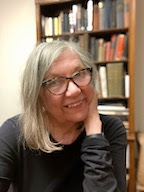
Sheila Packa Poetry Blog: A blog about poetry: figurative language, spirit, intertextual explorations, patterns, punctuation, forms, great writers, quotes, and journey notes. For updates, follow me on Bluesky https://bsky.app/profile/sheilapacka.com
April 22, 2010


April 18, 2010
Blessings
Creative work is a flow experience. In flow, a writer has deep focus and attentiveness. It feels outside of time. Hours can go by without notice. Of course, it is sometimes difficult to get across the threshold. Distractions abound. It's important to allow yourself enough unscheduled time to daydream, muse, and then fall in.
Lewis Hyde, author of THE GIFT, takes the idea of flow a bit farther. He urges artists and writers to understand the psychic rules of flow. In order to continue to receive, one must continue to give. It is like a river. It is like pot-latch. The giving of gifts to others not only nurtures and supports them; the giving allows one to empty oneself in order to receive. We should not be attached to things, and we should not be so attached to our work that we can not let it go into the world.
I wrote this poem (from THE MOTHER TONGUE):
JOY
to reach down this far
releases me
the place inside
has been broken open
by necessity
I don't know what I've lost
I don't know that I have lost
I'm broken open
the floor that made me contain
allowed me to fill, be filled
is gone
I am without bottom
without a way to hold
all the things coming into me
they fall from me
I am the opening
the sluice gate
am swept with the force
yet hold open
what I pray for is endless
is the constant source
the river never running dry
Some people have asked me if the poem is about death. Perhaps it is. My father died the year that I wrote it. Like most people, I appreciate the effect of change. You gain people, places, things but also along the way, you lose people, places, things. At times, it is excruciating. I named the poem, Joy; my mother gave me the name Joy as my middle name. Anguished awe. Painful ecstasy.
Creative work is good work. We write things, we put them out there. The work might change in this process; it might change us; it might change someone else. We don't know. It perhaps is not of concern; what matters is that we give of ourselves.
The simultaneous experience of receiving while losing, the feeling of love and grief at the same, is echoed in cosmology. The universe began with simultaneous creation and destruction. We have both light and dark matter. So it is not a question of either/or; we have both love and grief. Perhaps the real question is how does one direct one's own abilities--which force will you feed? What is your quest? What forces rise up from your ancestral roots, what growth can you accomplish, what have you come to say?
I found this Pueblo Blessing:
Hold on to what is good even if it is a handful of earth.
Hold on to what you believe even if it is a tree which stands by itself.
Hold on to what you must do even if it is a long way from here.
Hold on to life even when it is easier letting go.
Hold on to my hand even when I have gone away from you.
- Pueblo Blessing
Lewis Hyde, author of THE GIFT, takes the idea of flow a bit farther. He urges artists and writers to understand the psychic rules of flow. In order to continue to receive, one must continue to give. It is like a river. It is like pot-latch. The giving of gifts to others not only nurtures and supports them; the giving allows one to empty oneself in order to receive. We should not be attached to things, and we should not be so attached to our work that we can not let it go into the world.
I wrote this poem (from THE MOTHER TONGUE):
JOY
to reach down this far
releases me
the place inside
has been broken open
by necessity
I don't know what I've lost
I don't know that I have lost
I'm broken open
the floor that made me contain
allowed me to fill, be filled
is gone
I am without bottom
without a way to hold
all the things coming into me
they fall from me
I am the opening
the sluice gate
am swept with the force
yet hold open
what I pray for is endless
is the constant source
the river never running dry
Some people have asked me if the poem is about death. Perhaps it is. My father died the year that I wrote it. Like most people, I appreciate the effect of change. You gain people, places, things but also along the way, you lose people, places, things. At times, it is excruciating. I named the poem, Joy; my mother gave me the name Joy as my middle name. Anguished awe. Painful ecstasy.
Creative work is good work. We write things, we put them out there. The work might change in this process; it might change us; it might change someone else. We don't know. It perhaps is not of concern; what matters is that we give of ourselves.
The simultaneous experience of receiving while losing, the feeling of love and grief at the same, is echoed in cosmology. The universe began with simultaneous creation and destruction. We have both light and dark matter. So it is not a question of either/or; we have both love and grief. Perhaps the real question is how does one direct one's own abilities--which force will you feed? What is your quest? What forces rise up from your ancestral roots, what growth can you accomplish, what have you come to say?
I found this Pueblo Blessing:
Hold on to what is good even if it is a handful of earth.
Hold on to what you believe even if it is a tree which stands by itself.
Hold on to what you must do even if it is a long way from here.
Hold on to life even when it is easier letting go.
Hold on to my hand even when I have gone away from you.
- Pueblo Blessing
April 13, 2010
Synesthesia & Art Fusion: Cloud Birds
Read a Book Review, "Not Forgotten: A Poem by Lois After Mark" Midlife at the Oasis. Web. July 8, 2011. http://midlifeattheoasis.com/soul/not-forgotten-a-poem-by-sheila-packa/
Godard the French film maker said of his work that it was "as if I wanted to write a sociological essay in the form of a novel, and all I had to do it with was notes of music." Poetry and film are related genres: both employ image, word, music. They operate the same way. I like poetry that cross pollinates with painting, sculpture, photography, music, composition, film, theater, dance. Even better to combine it with other ways of knowing: science, navigation, philosophy, history, religion, alchemy. Poetry is a form of waking.
I think of it as paradox, the combination of opposites. Not dialectic, but ecstatic. Not static, but in motion.
Poetry is a live painting for the ear, or music made by taste and touch that reaches you deep inside. It's time travel by smell. It tells you about yourself by water or wind or stone or flames. If it's a pattern, if it's a ritual, if it's a dance. It will sing to you, unsettle you, bring you back to yourself, change your life. And all you have to do it with is the alphabet and empty space.
Cloud Birds has three sections: Bear, Wing, Cloud.
Bear, the first section, contains twenty-one love poems to bears. I'd had a bear phobia since childhood. My father, who obviously was worried about me wandering in the forest by myself, warned me to stay near the house "or the bears would eat me." Parents don't usually use this method of childrearing, but he grew up on a farm. They had sheep, and often bears preyed on the lambs. So perhaps his fear was grounded in that experience. Nevertheless, the effect had been paralyzing. One of the poems in the section was dedicated to Ana Mendieta, the environmental artist who had mysteriously fallen from her balcony window in New York City. Her husband was charged with the crime, but he was acquitted. This was an ekphrastic poem, written because the cover image by Cecilia Ramón was in homage to Ana Mendieta.
When I moved to the house in the country in 2007, I had seven intersections with bears. In the city while I was driving in the city of Duluth, on Superior Street at the Tischer Creek Bridge near 34th Avenue East. One peered in my studio window at home while I was working at my computer. I saw two crossing the freeway, and a week later, meandering on the Homestead Road. At the cabin, Kathy and I went for a walk on the Olsen Road near Thunder Bay. In the mud, I saw the distinct prints of a bear claw. Fresh! Then, the footprints wandered off the road and disappeared into the bush. Uneasily, I looked behind and the bear was following me. On another day, we encountered one again. This time, it stood up on two legs and stared at us. We waved our arms and shouted. The bear was curious. It got back on all fours and paced back and forth. We didn't dare walk forward, and it didn't want to leave. Minutes passed. Not a car drove down the road. My legs were shaking. I noticed that no one was home at the neighbor's house, and maybe the bear was bound for this place, because a chicken coop was in the yard. I found some scrap metal in the yard, luckily. I banged the rings of an old kitchen stove, and finally the bear bolted across the field.
I decided to let my anxiety feed my writing and was inspired by Pablo Neruda's Twenty Love Poems and one poems of Despair. Kathy had suggested my obsessions with bears, my hyper-vigilance, was perhaps related to my Finnish heritage. Were they not bear people in the Kalevala? Aren't they magical? So that began this series, and it became a meditation about fear and an exploration of the wilderness and secret life, and then suddenly it was about women and intimacy. The bear poems were a ritual act, a Kalevalian effort to break the spell of my fears.
The next section of the book, Wing, was a series of poems that were about fear, women walking through violence, and my relationship with my father. The poem about the man who lived in a tree was a story I'd heard in Finland from my second cousin Mikko Himanka. We were touring the family cemetery plot, and I'd seen the tombstone of the Man Who Lived in a Tree. Mikko explained he had been in America to work in an iron mine, but he had contracted miner's lung, and he came back home to die. After his experience of years working in the underground mine, he preferred to sit in a tree instead of anywhere else, and this is how he had become a legend.
The third section of the book, Cloud, was about moving through love relationships, about break-ups and migrations. Two Worlds is the title of one of the poems. When a love affair is over, it feels like falling out of the world. Of course, when one falls out of the world, one falls into another one. It triggered meditations on Persephone. This mythic story of a daughter who fell into the underworld fascinates me. Isn't this migration? Walking through hell, or walking through violence, wasn't just something I'd witnessed in other relationships. I'd had to do that myself. It was a personal experience.
So much of what I've been through in life gets worked through artistically. Before I can really articulate it, I must find images. I'd been reading the collection of Finnish women poets, Enchanting Beasts. The beast I was determined to enchant was not a bear actually, but fear.
Read a Book Review, "Not Forgotten: A Poem by Lois After Mark" Midlife at the Oasis. Web. July 8, 2011. http://midlifeattheoasis.com/soul/not-forgotten-a-poem-by-sheila-packa/
Godard the French film maker said of his work that it was "as if I wanted to write a sociological essay in the form of a novel, and all I had to do it with was notes of music." Poetry and film are related genres: both employ image, word, music. They operate the same way. I like poetry that cross pollinates with painting, sculpture, photography, music, composition, film, theater, dance. Even better to combine it with other ways of knowing: science, navigation, philosophy, history, religion, alchemy. Poetry is a form of waking.
I think of it as paradox, the combination of opposites. Not dialectic, but ecstatic. Not static, but in motion.
Poetry is a live painting for the ear, or music made by taste and touch that reaches you deep inside. It's time travel by smell. It tells you about yourself by water or wind or stone or flames. If it's a pattern, if it's a ritual, if it's a dance. It will sing to you, unsettle you, bring you back to yourself, change your life. And all you have to do it with is the alphabet and empty space.
Cloud Birds has three sections: Bear, Wing, Cloud.
Bear, the first section, contains twenty-one love poems to bears. I'd had a bear phobia since childhood. My father, who obviously was worried about me wandering in the forest by myself, warned me to stay near the house "or the bears would eat me." Parents don't usually use this method of childrearing, but he grew up on a farm. They had sheep, and often bears preyed on the lambs. So perhaps his fear was grounded in that experience. Nevertheless, the effect had been paralyzing. One of the poems in the section was dedicated to Ana Mendieta, the environmental artist who had mysteriously fallen from her balcony window in New York City. Her husband was charged with the crime, but he was acquitted. This was an ekphrastic poem, written because the cover image by Cecilia Ramón was in homage to Ana Mendieta.
When I moved to the house in the country in 2007, I had seven intersections with bears. In the city while I was driving in the city of Duluth, on Superior Street at the Tischer Creek Bridge near 34th Avenue East. One peered in my studio window at home while I was working at my computer. I saw two crossing the freeway, and a week later, meandering on the Homestead Road. At the cabin, Kathy and I went for a walk on the Olsen Road near Thunder Bay. In the mud, I saw the distinct prints of a bear claw. Fresh! Then, the footprints wandered off the road and disappeared into the bush. Uneasily, I looked behind and the bear was following me. On another day, we encountered one again. This time, it stood up on two legs and stared at us. We waved our arms and shouted. The bear was curious. It got back on all fours and paced back and forth. We didn't dare walk forward, and it didn't want to leave. Minutes passed. Not a car drove down the road. My legs were shaking. I noticed that no one was home at the neighbor's house, and maybe the bear was bound for this place, because a chicken coop was in the yard. I found some scrap metal in the yard, luckily. I banged the rings of an old kitchen stove, and finally the bear bolted across the field.
I decided to let my anxiety feed my writing and was inspired by Pablo Neruda's Twenty Love Poems and one poems of Despair. Kathy had suggested my obsessions with bears, my hyper-vigilance, was perhaps related to my Finnish heritage. Were they not bear people in the Kalevala? Aren't they magical? So that began this series, and it became a meditation about fear and an exploration of the wilderness and secret life, and then suddenly it was about women and intimacy. The bear poems were a ritual act, a Kalevalian effort to break the spell of my fears.
The next section of the book, Wing, was a series of poems that were about fear, women walking through violence, and my relationship with my father. The poem about the man who lived in a tree was a story I'd heard in Finland from my second cousin Mikko Himanka. We were touring the family cemetery plot, and I'd seen the tombstone of the Man Who Lived in a Tree. Mikko explained he had been in America to work in an iron mine, but he had contracted miner's lung, and he came back home to die. After his experience of years working in the underground mine, he preferred to sit in a tree instead of anywhere else, and this is how he had become a legend.
The third section of the book, Cloud, was about moving through love relationships, about break-ups and migrations. Two Worlds is the title of one of the poems. When a love affair is over, it feels like falling out of the world. Of course, when one falls out of the world, one falls into another one. It triggered meditations on Persephone. This mythic story of a daughter who fell into the underworld fascinates me. Isn't this migration? Walking through hell, or walking through violence, wasn't just something I'd witnessed in other relationships. I'd had to do that myself. It was a personal experience.
So much of what I've been through in life gets worked through artistically. Before I can really articulate it, I must find images. I'd been reading the collection of Finnish women poets, Enchanting Beasts. The beast I was determined to enchant was not a bear actually, but fear.
Read a Book Review, "Not Forgotten: A Poem by Lois After Mark" Midlife at the Oasis. Web. July 8, 2011. http://midlifeattheoasis.com/soul/not-forgotten-a-poem-by-sheila-packa/
March 12, 2010
Why I Write
I write because I was born into two languages: Finnish and English. Both sets of my grandparents were Finnish immigrants and they learned very little English. I write because there was so much they couldn't say. I write about migration of many kinds. Birds, grandmothers, desire. My grandmothers' lives were very difficult. They both gave birth to several children, ten in my mother's family and eight in my father's. There wasn't enough food sometimes, there wasn't enough of anything. I write because I could not bear my mother's secrets. I write out of a need to dance.
As a little girl, I was located in between lakes, near burial mounds of the Ojibwe, between iron and taconite mines, between Finnish and English, between two sisters, on a small farm with a few horses, a few cows, chickens, dogs, cats, and a garden. Each evening, when the sun set behind the pines, it ignited the water with its fire, and the shining broke through the stand of trees like glitter. Mornings, I heard a sound in the morning unlike any other. It was more of an echo than a sound. It was more of a calling than an echo. Maybe I was used to unknown words; for some reason, I called it "warding." I thought it was the sound of the sun coming up but I later found out that it was the train hauling iron ore from the mine. The sound was the sound of wheels on a track. The very earth was being moved away.
I write because there is so much that the earth can't say. I write out of restlessness and grief. I write out of awe. I write because the world presses itself upon me: iron, rivers, birds, trees, lakes, light. I migrate.
Poems are a doorway in ordinary experience to a place that you haven't seen before. It's where you live. Poetry dislocates you in a familiar way. It is a staunch for old wounds. Poetry uses the same language that dreams use, only it isn't a dream. Poetry uses the language to get around the language toward the silence of a river. Beneath your feet, the river erodes the banks, takes you in like it takes in the sand and the roots and the light. All in.
As a little girl, I was located in between lakes, near burial mounds of the Ojibwe, between iron and taconite mines, between Finnish and English, between two sisters, on a small farm with a few horses, a few cows, chickens, dogs, cats, and a garden. Each evening, when the sun set behind the pines, it ignited the water with its fire, and the shining broke through the stand of trees like glitter. Mornings, I heard a sound in the morning unlike any other. It was more of an echo than a sound. It was more of a calling than an echo. Maybe I was used to unknown words; for some reason, I called it "warding." I thought it was the sound of the sun coming up but I later found out that it was the train hauling iron ore from the mine. The sound was the sound of wheels on a track. The very earth was being moved away.
I write because there is so much that the earth can't say. I write out of restlessness and grief. I write out of awe. I write because the world presses itself upon me: iron, rivers, birds, trees, lakes, light. I migrate.
Poems are a doorway in ordinary experience to a place that you haven't seen before. It's where you live. Poetry dislocates you in a familiar way. It is a staunch for old wounds. Poetry uses the same language that dreams use, only it isn't a dream. Poetry uses the language to get around the language toward the silence of a river. Beneath your feet, the river erodes the banks, takes you in like it takes in the sand and the roots and the light. All in.
March 11, 2010
sending poems out
Poets and Writers Magazine has a great website. Check it out to find a database of literary magazines and contest information. These listings will help you decide where and when to send poems or stories:
http://www.pw.org
The Academy of American Poets has a great website of poets, poems, bios and articles about poetry.
http://www.poets.org
A website that might help you keep track of your submissions: http://www.duotrope.com
http://www.pw.org
The Academy of American Poets has a great website of poets, poems, bios and articles about poetry.
http://www.poets.org
A website that might help you keep track of your submissions: http://www.duotrope.com
February 23, 2010
Marianne Moore: Piercing Glances

It comes to this: of whatever sort it is,
it must be "Lit with piercing glances into the life of things";
it must acknowledge the spiritual forces which have made it.
--Marianne Moore
from the poem "When I Buy Pictures"
Those Various Scalpels
Those
various sounds, consistently indistinct, like intermingled echoes
struck from thin glasses successively at random—
the inflection disguised: your hair, the tails of two
fighting-cocks head to head in stone—
like sculptured scimitars repeating the curve of your
ears in reverse order:
your eyes,
flowers of ice and snow
This poem is an example of "visceral poetry." If you read the novel Savage Detectives by Roberto Bolanos, in the opening pages the poet narrator joins the 'school of visceral poets.' He declares not to know what it means, but nevertheless, he's in. All poetry benefits from visceral details, physical details. This poem by Marianne Moore employs the sound sense, the visual, and the tactile. The word scalpel has a visceral image of cutting the flesh.
See more of the poem at
http://www.poetryfoundation.org/poem/182479
Biographical Information:
https://www.poets.org/poetsorg/poet/marianne-moore
February 21, 2010
The Quest: What Can't be Taught in a Writer's Workshop
It’s true, poetry workshops can be helpful. I've been to workshops that I've enjoyed. I've led workshops. At some point, it is always necessary to invest time in solitude. Recently, I ran across this interview with Gregory Orr, excerpted here:
"To me poetry is both Quest and Craft. The quest aspect: what poetry means to you as an individual who has decided to orient her life in relation to this thing called 'poetry'—no one can really solve that for you. You search for guides and poetic forebears, but it's a personal search and struggle. Workshops necessarily stress craft, they can do only so much in relation to quest. But craft is easier than quest and less lonely. You can learn craft; you can improve, you can utilize your intelligence to master it. Why not call poetry Craft and forget Quest, or give the quest aspect short-shrift? That's the temptation that workshops breed. We know that. I guess the main defense would be to be forewarned. To tell yourself, "yes, this workshop response matters, but what is it that I personally need to learn or understand that poetry is trying to teach me?"
The full interview is at http://www1.american.edu/cas/lit/folio/spring2004inter.html
Gregory Orr makes an important point. When workshops or writers groups meet, we talk about craft but quest is also equally important. While another writing group member might offer a good suggestion, you can’t “go that way.” The suggestion might not fit the need because of the self’s deeper quest.
It takes a long time to master craft. Orr offers an interesting question: what is your poetry trying to teach you?
Sometimes, we are so close to our own work that we can’t see it objectively. There are things that you can do to step back from the mirror. Literature is a coin of two sides, writing and reading. The work that you are drawn to reading again and again contains a key to your own writing. Notice what you are reading and why you like to read it. Consider the kinds of poems (written by other poets) that you love. What kind of quest do these poems reveal? What are the life questions? Your own fascinations and obsessions reveal things about you. Another way to gain some distance is to ask a friend to make some observations of your work. This time, don’t ask for feedback about craft, but do ask for reflections about quest related to a specific group of poems that you wrote. Expect an interesting conversation.
This is not about writing “wisdom poems.” In a quest, the answers are hard won and long in coming, if they come at all. The issues are deep and deeply troubling; the best that one can do is to name the question. Think of Chiron, the wounded healer. Think of the Odyssey and King Arthur. Think of Lord of the Rings. These great stories illuminate a path for your own work.
"To me poetry is both Quest and Craft. The quest aspect: what poetry means to you as an individual who has decided to orient her life in relation to this thing called 'poetry'—no one can really solve that for you. You search for guides and poetic forebears, but it's a personal search and struggle. Workshops necessarily stress craft, they can do only so much in relation to quest. But craft is easier than quest and less lonely. You can learn craft; you can improve, you can utilize your intelligence to master it. Why not call poetry Craft and forget Quest, or give the quest aspect short-shrift? That's the temptation that workshops breed. We know that. I guess the main defense would be to be forewarned. To tell yourself, "yes, this workshop response matters, but what is it that I personally need to learn or understand that poetry is trying to teach me?"
The full interview is at http://www1.american.edu/cas/lit/folio/spring2004inter.html
Gregory Orr makes an important point. When workshops or writers groups meet, we talk about craft but quest is also equally important. While another writing group member might offer a good suggestion, you can’t “go that way.” The suggestion might not fit the need because of the self’s deeper quest.
It takes a long time to master craft. Orr offers an interesting question: what is your poetry trying to teach you?
Sometimes, we are so close to our own work that we can’t see it objectively. There are things that you can do to step back from the mirror. Literature is a coin of two sides, writing and reading. The work that you are drawn to reading again and again contains a key to your own writing. Notice what you are reading and why you like to read it. Consider the kinds of poems (written by other poets) that you love. What kind of quest do these poems reveal? What are the life questions? Your own fascinations and obsessions reveal things about you. Another way to gain some distance is to ask a friend to make some observations of your work. This time, don’t ask for feedback about craft, but do ask for reflections about quest related to a specific group of poems that you wrote. Expect an interesting conversation.
This is not about writing “wisdom poems.” In a quest, the answers are hard won and long in coming, if they come at all. The issues are deep and deeply troubling; the best that one can do is to name the question. Think of Chiron, the wounded healer. Think of the Odyssey and King Arthur. Think of Lord of the Rings. These great stories illuminate a path for your own work.
January 29, 2010
Pablo Neruda: Toward an Impure Poetry
Pablo Neruda: "It is good, at certain hours of the day and night, to look closely at the world of objects at rest. Wheels that have crossed long, dusty distances with their mineral and vegetable burdens, sacks from the coal bins, barrels, and baskets, handles and hafts for the carpenter's tool chest. From them flow the contacts of man with the earth, like a text for all troubled lyricists. The used surfaces of things, the wear that the hands give to things, the air, tragic at times, pathetic at others, of such things - all lend a curious attractiveness to the reality of the world that should not be underprized.
In them one sees the confused impurity of the human condition, the massing of things, the use and disuse of substances, footprints and fingerprints, the abiding presence of the human engulfing all artifacts, inside and out.
Let that be the poetry we search for: worn with the hand's obligations, as by acids, steeped in sweat and in smoke, smelling of lilies and urine, spattered diversely by the trades that we live by, inside the law or beyond it.
A poetry impure as the clothing we wear, or our bodies, soup-stained, soiled with our shameful behavior, our wrinkles and vigils and dreams, observations and prophecies, declarations of loathing and love, idylls and beasts, the shocks of encounter, political loyalties, denial and doubts, affirmations and taxes.
The holy canons of madrigals, the mandates of touch, smell, taste, sight, hearing, the passion for justice, sexual desire, the sea sounding-willfully rejecting and accepting nothing: the deep penetration of things in the transports of love, a consummate poetry soiled by the pigeon's claw, ice-marked and tooth-marked, bitten delicately with our sweatdrops and usage, perhaps. Till the instrument so restlessly played yields us the comfort of its surfaces, the woods show the knottiest suavities shaped by the pride of the tool. Blossom and water and wheat kernel share one precious consistency: the sumptuous appeal of the tactile.
Let no one forget them. Melancholy, old mawkishness impure and unflawed, fruits of a fabulous species lost to the memory, cast away in a frenzy's abandonment-moonlight, the swan in the gathering darkness, all hackneyed endearments: surely that is the poet's concern, essential and absolute.
Those who shun the "bad taste" of things will fall flat on the ice."
In them one sees the confused impurity of the human condition, the massing of things, the use and disuse of substances, footprints and fingerprints, the abiding presence of the human engulfing all artifacts, inside and out.
Let that be the poetry we search for: worn with the hand's obligations, as by acids, steeped in sweat and in smoke, smelling of lilies and urine, spattered diversely by the trades that we live by, inside the law or beyond it.
A poetry impure as the clothing we wear, or our bodies, soup-stained, soiled with our shameful behavior, our wrinkles and vigils and dreams, observations and prophecies, declarations of loathing and love, idylls and beasts, the shocks of encounter, political loyalties, denial and doubts, affirmations and taxes.
The holy canons of madrigals, the mandates of touch, smell, taste, sight, hearing, the passion for justice, sexual desire, the sea sounding-willfully rejecting and accepting nothing: the deep penetration of things in the transports of love, a consummate poetry soiled by the pigeon's claw, ice-marked and tooth-marked, bitten delicately with our sweatdrops and usage, perhaps. Till the instrument so restlessly played yields us the comfort of its surfaces, the woods show the knottiest suavities shaped by the pride of the tool. Blossom and water and wheat kernel share one precious consistency: the sumptuous appeal of the tactile.
Let no one forget them. Melancholy, old mawkishness impure and unflawed, fruits of a fabulous species lost to the memory, cast away in a frenzy's abandonment-moonlight, the swan in the gathering darkness, all hackneyed endearments: surely that is the poet's concern, essential and absolute.
Those who shun the "bad taste" of things will fall flat on the ice."
January 11, 2010
Immersion
The new performance work that I do with cellist Kathy McTavish falls between genres (see samples http://www.cellodreams.com/music02.html). It isn't song lyric and it isn't linear. It isn't narrative but it does rely on narrative structures, some related to myth. The cello, freestyle, improvisional, experimental sound, pulls you into the subconscious. I begin with submersion.
Roberto Bolano's novel, The Savage Detectives, begins with the narrator's statement that he joined the school of 'visceral realists.' Next paragraph, he says he isn't sure what that means. Nevertheless, he's in it and the novel unfolds from there. I too search for the word that can define this writing.
The sources of my work are diverse--first, Finnish folk literature. The Kalevala was an oral tradition: a creation story told (in rhapsodic meter) while playing the folk instrument, the kantela. The epic is pre-Christian and contains many things, the creation story of the universe, charms, magic spells, stories of the magic singer, North Farm, weddings, feasts. In the beginning, the Kalevala portrays the world as all water, without shore.
Second, dream is a source. The work I've been doing isn't exactly surreal. It's isn't exactly magical realism. I've found a new term: irreal. Irreal describes the work of Franz Kafka. It puts you in another world and speaks to you of life. It isn't a term that is used very much, but it does help describe the other world of 'undertow,' our new work in progress.
I do like the words of Rene Magritte, "...If 'dreams' are concerned in this context, they are very different from those we have while sleeping. It is question of self-willed 'dreams'...which are not intended to make you sleep but wake you up." Some of the writers I have long admired: Clarice Lispector (Hour of the Star, Family Ties, Foreign Legion, The Passion According to GH), Jorge Luis Borges (Dream Tigers, Ficciones, Labyrinths), Eduardo Galeano (Memory of Fire), Arguedas (Deep Rivers). Nightwood by Djuna Barnes. Ava and Aureole by Carol Maso. These are stories of longing, mystical and somehow the author dislocates the reader in a most satisfying way. They are definitely not plot driven, and not even especially character driven, but perhaps soul driven.
Third, my source is music and art, especially abstract expressionism and conceptual art. I find that the other art genres can trigger my own work. The language is musical, with internal rhyme, assonance and consonance. Other things feed my work: fear (what Kathy calls "trembling before God") or existentialist anguish and / or spiritual crisis that comes from life: the loss of loved ones, disaster, precipitous change. The writing grapples with that. In revision, I have reached into myths (Leda & the Swan, Orpheus and Euridyce), Biblical story, Tarot, and other art (the visual art of Hyman Bloom) and literature (the writing of mystics). It is ethereal but completely rooted in the body, and visceral, but in the other world. A touch sidereal, surreal, magically real, irreal. For Bolanos, definition is only the beginning. The writing of Nelson Goodman (Ways of Worldmaking) says, "never mind mind...."
Roberto Bolano's novel, The Savage Detectives, begins with the narrator's statement that he joined the school of 'visceral realists.' Next paragraph, he says he isn't sure what that means. Nevertheless, he's in it and the novel unfolds from there. I too search for the word that can define this writing.
The sources of my work are diverse--first, Finnish folk literature. The Kalevala was an oral tradition: a creation story told (in rhapsodic meter) while playing the folk instrument, the kantela. The epic is pre-Christian and contains many things, the creation story of the universe, charms, magic spells, stories of the magic singer, North Farm, weddings, feasts. In the beginning, the Kalevala portrays the world as all water, without shore.
Second, dream is a source. The work I've been doing isn't exactly surreal. It's isn't exactly magical realism. I've found a new term: irreal. Irreal describes the work of Franz Kafka. It puts you in another world and speaks to you of life. It isn't a term that is used very much, but it does help describe the other world of 'undertow,' our new work in progress.
I do like the words of Rene Magritte, "...If 'dreams' are concerned in this context, they are very different from those we have while sleeping. It is question of self-willed 'dreams'...which are not intended to make you sleep but wake you up." Some of the writers I have long admired: Clarice Lispector (Hour of the Star, Family Ties, Foreign Legion, The Passion According to GH), Jorge Luis Borges (Dream Tigers, Ficciones, Labyrinths), Eduardo Galeano (Memory of Fire), Arguedas (Deep Rivers). Nightwood by Djuna Barnes. Ava and Aureole by Carol Maso. These are stories of longing, mystical and somehow the author dislocates the reader in a most satisfying way. They are definitely not plot driven, and not even especially character driven, but perhaps soul driven.
Third, my source is music and art, especially abstract expressionism and conceptual art. I find that the other art genres can trigger my own work. The language is musical, with internal rhyme, assonance and consonance. Other things feed my work: fear (what Kathy calls "trembling before God") or existentialist anguish and / or spiritual crisis that comes from life: the loss of loved ones, disaster, precipitous change. The writing grapples with that. In revision, I have reached into myths (Leda & the Swan, Orpheus and Euridyce), Biblical story, Tarot, and other art (the visual art of Hyman Bloom) and literature (the writing of mystics). It is ethereal but completely rooted in the body, and visceral, but in the other world. A touch sidereal, surreal, magically real, irreal. For Bolanos, definition is only the beginning. The writing of Nelson Goodman (Ways of Worldmaking) says, "never mind mind...."
January 4, 2010
Poetry and Spiritual Practice: Work in Progress
This is what you shall do: Love the earth and sun and the animals, despise riches, give alms to every one that asks, stand up for the stupid and crazy, devote your income and labor to others, hate tyrants, argue not concerning God, have patience and indulgence toward the people, take off your hat to nothing known or unknown or to any man or number of men, go freely with powerful uneducated persons and with the young and with the mothers of families, read these leaves in the open air every season of every year of your life, re-examine all you have been told at school or church or in any book, dismiss whatever insults your own soul; and your very flesh shall be a great poem and have the richest fluency not only in its words but in the silent lines of its lips and face and between the lashes of your eyes and in every motion and joint of your body… . from Preface to Leaves of Grass by Walt Whitman (1855)
Is writing a spiritual practice? Maybe you believe in God or maybe you don't. To me, spirituality means "spirit mutuality." This mutuality of spirit can be found in relationship with others, with animals, with things. I seek this mutuality. Regardless of one’s beliefs or lack of them, each usually finds oneself in need of healing one’s own spirit; not only that, each of us is needed to help heal the world, to somehow address violence, abuse, exploitation, environmental damage, war, and suffering.
Writing, among other things, can heal the spirit and contribute positively to the world. This is also true of making art, music and other creative pursuits. I’ve found parallels between poetry and spirituality in my years of writing practice. I speak from the perspective of a poet and the tradition of Unitarian Universalism. Obviously, writing and art-making provide a ritual, meditative process. Creative work (or play) allows one to stay or become receptive, open, and interactive. It’s more than that, however. Poems often employ paradox, metaphor and other devices. Anne Carson writes this:
My religion makes no sense
and does not help me
therefore I pursue it.
To me, this expresses how the unanswerable questions, often addressed by religion, offer the poet a quest. The answers are likely personal, idiosyncratic, or even of temporary use, but the continual seeking is highly worthwhile.
In our world, the forces of creation and destruction exist in a dynamic, ebbing and flowing. I draw this as an image of a sphere deliberately to avoid either/or thinking. Creative work can confront the destructive, draw from the destructive, or assemble what has been destroyed into something new. In this sphere, the activity of creating, or the struggle to create, is useful to others. Creative work may, like many of our things, last longer than we do. Art is the one of the few things that we have left from cultures long gone. Poetry is, as Wislawa Szymborska says, “The revenge of the mortal hand.”
Spirit / Object
Original art, said Walter Benjamin, has an “aura” or a sense of being. It calls to us, we respond. I consider this response to be a spiritual response. I’ve been moved by many kinds of art and much poetry. Even the arrangements of stones called Inuksuit seem to embody a being. Poems have been called “tensile beings” or “perceptual objects.” Often they capture the contradictions or opposing forces (like paradox or opposites). They have a unique tension that makes them remarkable. Consider this excerpt of the poem “If the Owl Calls Again” by John Haines:
at dusk
from the island in the river
and it’s not too cold,
I’ll wait for the moon
to rise,
then take wing and glide
to meet him.
We will not speak,
but hooded against the frost
soar above
the alder flats, searching
with tawny eyes.
And then we’ll sit
in the shadowy spruce
and pick the bones
of careless mice….
Spirit can be many things, including one’s soul, one’s mood, the thing that animates the living being. It also suggests spirits, the supernatural perhaps. Ghosts, God, gods. The word spiritual has its roots in Middle English, Middle French, and Late Latin. From Latin, the word relates to “breathing, of wind, from spiritus.” (Merriam Webster) This last definition is much more attractive to me, and seems to suggest a much needed spaciousness.
The French poet Paul Valery said the difference between prose and poetry is physiological. Poems shape our breath and sound. “In…prose, the form in not preserved, does not outlive understanding, but dissolves in the light, for it has acted, it has made itself understood, it has lived.” He says, “But the poem, on the contrary, does not die for having been of use; it is purposely made to be reborn from its ashes and perpetually to become what it has been.” The body--the five senses and the breath—give poetry its life.
Poems are spirit / objects. They are made of sound and breath and truly good poems seem to have life—they bring us an experience, a body experience, and spirit or light. I listened to a talk by Gladys Naybenayash, a Native American teacher and a poet. “Somehow in all my poems, some spirits come in there....” she said. “I write about a bear and the spirit of the bear comes.”
Flow/ Resistance
Flow and resistance is another concept that is useful in the consideration of writing or spirituality. Simone Weil said, “Prayer is absolute unmixed attention.” Regular writing practice provides flow experience. What is it like? It gives you a sense of alertness without tension in your body, of being outside of time and open to a trusted source.
Poetry can slow or stop time. Poems may or may not be linear. Associations, often characteristic of poems, can bound over time and location with Seven League boots.
Writing is not necessarily easy. When we sit down to write, we battle endless distractions. Our families interrupt us. The phone rings. Our pets whimper for attention. Even without those, noises intrude, or our own impulses to surf the internet, clean the dust out of the corners, or fidget about doing meaningless tasks. Even when a writer gets past the “entry” phase, writing has its challenges. The edit phase is essential. We get too flowery, or abstract, or trivial and risk losing interest of the reader. Writers and nonwriters alike struggle to find the right words to say when we need to say them. Abstract ideas get in our way sometimes. A poet needs to break down the abstract into things more concrete.
Language can be an obstacle, but so is silence. How much have we lost by silences? Too often the price is far higher than we ever would think. Intolerable oppression operates well when people keep silence.
Language and silence also exist in equal and opposing forces. Image offers a way out. Image is much more easily transmitted, translated, and understood. It is the image that makes writing vivid.
Resistance: obstacles and challenges can reveal so much about our own needs and that of the work. Notice and honor the resistance! Consider the possible reasons for it. One might be taking the poem in the wrong direction. One might have another obstacle that has not yet been addressed. One might need to shift position, or approach, or change altogether.
Ambiguity/ Certainty
I use a phrase when I teach, and I tell students to “listen to the work.” This means that the poet attends to the words on the page to see the developing patterns, simply noticing what has been written and enhance the interesting aspects. Details are key elements in any creative work. Notice what has emerged, what is unexpected or surprising. In other words, pay deep attention. Allow the image or the pattern to lead you.
Questions that can be asked of poems: who is speaking? to whom is the poem addressed? This answer yields interesting things about the connections poets make. The poet may assume a mask, or may address reader as if the reader had a mask. Helen Vendler has examined the poetry of George Herbert, Walt Whitman and John Ashberry in regards to whom their poems are addressed. Herbert spoke to God, Whitman to the future reader, and Ashberry, a painter from the past. Each of these poets established a relationship of intimacy that transcended ordinary time and place.
Listen to this poem by Lisel Mueller, “‘Night Song”:
Among rocks, I am the loose one,
among arrows, I am the heart,
among daughters, I am the recluse,
among sons, the one who dies young.
Among answers, I am the question,
between lovers, I am the sword,
among scars, I am the fresh wound,
among confetti, the black flag.
Among shoes, I am the one with the pebble,
among days, the one that never comes,
among the bones you find on the beach
the one that sings was mine.
Poetry focuses on image and sound. It allows or wants a pattern of some kind. If you are writing poetry, you must search for this, and allow the form and the pattern to emerge organically, to grow as the work grows, not to be imposed on, but to be watered, fed, and given all the right conditions so that it grows strong. And so I suggest this approach to your own spiritual work (play). Do not use force or impose your will. Practice receptivity, openness, question your assumptions.
Ambiguity is one of the most pleasing aspects of poems. It occurs in a number of places in a poem—it could be in the use of space, a line break, a type of punctuation, a sound, or the use of a homonym. This quality allows you to return again and again to a poem and come away with new meaning each time.
Mary Oliver says that poetry is writing that casts more than one shadow.
Some people do not tolerate ambiguity well. It makes us uncomfortable and sometimes, we like to have certainty. I must also say that absolutes also can occur in poetry, for instance, in the use of particular form like a sonnet or a villanelle. Sometimes, bringing the poem into the constraints and limits of a form enlarges the poem. Sometimes it does not. One needs to experiment and evaluate, and then listen to the work.
Writing poems becomes intuitive, but I value critical thinking. This also exists as a dynamic, a sphere of thinking, critical evaluation, intuition, and perhaps another element that I would say joins the working artist, you or me. Magic, some might say, or the Muse: it is a spirit of creation. I can’t name what that element is. A sense of being joined is a powerful, spiritual experience.
Vision/ Revision
And last, I believe in another creative dynamic, vision/revision. To each person, something is revealed. None of us can see the whole at any time. We see some things, and infer that there is more that we cannot see. It is important to speak about one’s own vision. Listen to others’ visions. Form a writers group where you can read your own and listen to others’ work. Read other texts. I believe in the path of dialogue and in the beauty of an open mind. Don’t be afraid to change. Revision reflects a deepening understanding, more breadth, an acknowledgement that what we think of as truth is not fixed, but changing.
Thomas Moore, in the book Original Self, writes:
“The soul has its own set of rules, which are not the same as those
of life…the events of the soul are cyclic and repetitive. Familiar themes come round and round. The past is more important than the future. The
living and the dead have equal roles. Emotions and the sense of
meaning are paramount. Pleasures are deep, and pain can reach
the very foundations of our existence.”
To give an image to this idea, consider the lines from Ranier Maria Rilke:
I live my life in widening circles
that reach out across the world.
I may not complete this last one
but I give myself to it.
Use writing practice to engage with your own life’s questions. Stephen Mitchell suggests improvising new versions of the prayers you spoke as a child. Spiritual practice calls us to the same deep listening to our experience and the world around us. I invite you to explore these in writing and to find the images that speak to you. Write about devotions or symbols that are meaningful. Consider the language of spirituality: transfiguration, crucifixion, miracles. Enter into these with your own images. The word artist has always been associated with freedom and unconventional thinking. So be an artist.
Writing discipline, like other disciplines, offers the opportunity for “absolute, unmixed attention” (called prayer), processes of creation (rituals) and connection with the self and the world (the work in progress). The four spiritual dynamics, spirit/object, resistance/flow, ambiguity/certainty, and vision/revision, can bring healing. Using these dynamics with your material--that which is given to you--helps you engage in an interaction or exchange. The last dynamic, vision / revision, provides an opportunity to reframe experience, to identify a cultural, historical and even mythic pattern. In the Art of Possibility, Rosamunde and Benjamin Zander write: “Art, after all, is about rearranging us, creating surprising juxtapositions, emotional openings, startling presences, flight paths to the eternal.”
Bibliography:
Allen, Pat B. Art Is a Spiritual Path. Shambala, Boston, MA, c2005.
Benjamin, Walter. “The Work of Art in the Age of Mechanical Reproduction.”
c1936. Retrieved 04/07/2006. http://www.marxists.org/reference/subject/philosphy/works/ge/benjamin.htm
Carson, Anne. Glass, Irony, and God. New Directions. New York. c1995.
Moore, Thomas. Original Self: Living with Paradox and Originality. HarperCollins Publishers, Inc. c2000.
Mayes, Frances. The Discovery of Poetry: A Field Guide to Reading and Writing Poems, Harcourt Publishers, New York, c2001.
Mitchell, Stephen. The Enlightened Mind: An Anthology of Sacred Prose,
HarperCollins, New York, c1991.
Mueller, Lisel. The Need to Hold Still. Louisiana State University Press. c1980.
Oliver, Mary. The Poetry Handbook. Houghton Mifflin Company, New York. c
Rilke, Ranier Maria. The Selected Poems of Rainer Maria Rilke, translated by Robert Bly, HarperCollins Publishers, Inc. c1981.
Taylor, Dennis. "The Need for a Religious Literary Criticism." Religion and The Arts Journal. Boston College. c2006. Retrieved April 5, 2006.
http://www.bc.edu/publications/relarts/supplements/excerpts/v1-1taylor2/
Valery, Paul. The Art of Poetry. Denise Folliot, translator. Vintage Books, Random House, New York, First Vintage Edition 1961, c1958 Bollingen Foundation.
Vendler, Helen. Invisible Listeners: Lyric Intimacy in Herbert, Whitman and Ashberry. Princeton University Press, Princeton, NJ. c2005.
Zander, Rosamund Stone and Benjamin Zander. The Art of Possibility: Transforming Professional and Personal Life. Penguin Books, New York, c2000.
Is writing a spiritual practice? Maybe you believe in God or maybe you don't. To me, spirituality means "spirit mutuality." This mutuality of spirit can be found in relationship with others, with animals, with things. I seek this mutuality. Regardless of one’s beliefs or lack of them, each usually finds oneself in need of healing one’s own spirit; not only that, each of us is needed to help heal the world, to somehow address violence, abuse, exploitation, environmental damage, war, and suffering.
Writing, among other things, can heal the spirit and contribute positively to the world. This is also true of making art, music and other creative pursuits. I’ve found parallels between poetry and spirituality in my years of writing practice. I speak from the perspective of a poet and the tradition of Unitarian Universalism. Obviously, writing and art-making provide a ritual, meditative process. Creative work (or play) allows one to stay or become receptive, open, and interactive. It’s more than that, however. Poems often employ paradox, metaphor and other devices. Anne Carson writes this:
My religion makes no sense
and does not help me
therefore I pursue it.
To me, this expresses how the unanswerable questions, often addressed by religion, offer the poet a quest. The answers are likely personal, idiosyncratic, or even of temporary use, but the continual seeking is highly worthwhile.
In our world, the forces of creation and destruction exist in a dynamic, ebbing and flowing. I draw this as an image of a sphere deliberately to avoid either/or thinking. Creative work can confront the destructive, draw from the destructive, or assemble what has been destroyed into something new. In this sphere, the activity of creating, or the struggle to create, is useful to others. Creative work may, like many of our things, last longer than we do. Art is the one of the few things that we have left from cultures long gone. Poetry is, as Wislawa Szymborska says, “The revenge of the mortal hand.”
Spirit / Object
Original art, said Walter Benjamin, has an “aura” or a sense of being. It calls to us, we respond. I consider this response to be a spiritual response. I’ve been moved by many kinds of art and much poetry. Even the arrangements of stones called Inuksuit seem to embody a being. Poems have been called “tensile beings” or “perceptual objects.” Often they capture the contradictions or opposing forces (like paradox or opposites). They have a unique tension that makes them remarkable. Consider this excerpt of the poem “If the Owl Calls Again” by John Haines:
at dusk
from the island in the river
and it’s not too cold,
I’ll wait for the moon
to rise,
then take wing and glide
to meet him.
We will not speak,
but hooded against the frost
soar above
the alder flats, searching
with tawny eyes.
And then we’ll sit
in the shadowy spruce
and pick the bones
of careless mice….
Spirit can be many things, including one’s soul, one’s mood, the thing that animates the living being. It also suggests spirits, the supernatural perhaps. Ghosts, God, gods. The word spiritual has its roots in Middle English, Middle French, and Late Latin. From Latin, the word relates to “breathing, of wind, from spiritus.” (Merriam Webster) This last definition is much more attractive to me, and seems to suggest a much needed spaciousness.
The French poet Paul Valery said the difference between prose and poetry is physiological. Poems shape our breath and sound. “In…prose, the form in not preserved, does not outlive understanding, but dissolves in the light, for it has acted, it has made itself understood, it has lived.” He says, “But the poem, on the contrary, does not die for having been of use; it is purposely made to be reborn from its ashes and perpetually to become what it has been.” The body--the five senses and the breath—give poetry its life.
Poems are spirit / objects. They are made of sound and breath and truly good poems seem to have life—they bring us an experience, a body experience, and spirit or light. I listened to a talk by Gladys Naybenayash, a Native American teacher and a poet. “Somehow in all my poems, some spirits come in there....” she said. “I write about a bear and the spirit of the bear comes.”
Flow/ Resistance
Flow and resistance is another concept that is useful in the consideration of writing or spirituality. Simone Weil said, “Prayer is absolute unmixed attention.” Regular writing practice provides flow experience. What is it like? It gives you a sense of alertness without tension in your body, of being outside of time and open to a trusted source.
Poetry can slow or stop time. Poems may or may not be linear. Associations, often characteristic of poems, can bound over time and location with Seven League boots.
Writing is not necessarily easy. When we sit down to write, we battle endless distractions. Our families interrupt us. The phone rings. Our pets whimper for attention. Even without those, noises intrude, or our own impulses to surf the internet, clean the dust out of the corners, or fidget about doing meaningless tasks. Even when a writer gets past the “entry” phase, writing has its challenges. The edit phase is essential. We get too flowery, or abstract, or trivial and risk losing interest of the reader. Writers and nonwriters alike struggle to find the right words to say when we need to say them. Abstract ideas get in our way sometimes. A poet needs to break down the abstract into things more concrete.
Language can be an obstacle, but so is silence. How much have we lost by silences? Too often the price is far higher than we ever would think. Intolerable oppression operates well when people keep silence.
Language and silence also exist in equal and opposing forces. Image offers a way out. Image is much more easily transmitted, translated, and understood. It is the image that makes writing vivid.
Resistance: obstacles and challenges can reveal so much about our own needs and that of the work. Notice and honor the resistance! Consider the possible reasons for it. One might be taking the poem in the wrong direction. One might have another obstacle that has not yet been addressed. One might need to shift position, or approach, or change altogether.
Ambiguity/ Certainty
I use a phrase when I teach, and I tell students to “listen to the work.” This means that the poet attends to the words on the page to see the developing patterns, simply noticing what has been written and enhance the interesting aspects. Details are key elements in any creative work. Notice what has emerged, what is unexpected or surprising. In other words, pay deep attention. Allow the image or the pattern to lead you.
Questions that can be asked of poems: who is speaking? to whom is the poem addressed? This answer yields interesting things about the connections poets make. The poet may assume a mask, or may address reader as if the reader had a mask. Helen Vendler has examined the poetry of George Herbert, Walt Whitman and John Ashberry in regards to whom their poems are addressed. Herbert spoke to God, Whitman to the future reader, and Ashberry, a painter from the past. Each of these poets established a relationship of intimacy that transcended ordinary time and place.
Listen to this poem by Lisel Mueller, “‘Night Song”:
Among rocks, I am the loose one,
among arrows, I am the heart,
among daughters, I am the recluse,
among sons, the one who dies young.
Among answers, I am the question,
between lovers, I am the sword,
among scars, I am the fresh wound,
among confetti, the black flag.
Among shoes, I am the one with the pebble,
among days, the one that never comes,
among the bones you find on the beach
the one that sings was mine.
Poetry focuses on image and sound. It allows or wants a pattern of some kind. If you are writing poetry, you must search for this, and allow the form and the pattern to emerge organically, to grow as the work grows, not to be imposed on, but to be watered, fed, and given all the right conditions so that it grows strong. And so I suggest this approach to your own spiritual work (play). Do not use force or impose your will. Practice receptivity, openness, question your assumptions.
Ambiguity is one of the most pleasing aspects of poems. It occurs in a number of places in a poem—it could be in the use of space, a line break, a type of punctuation, a sound, or the use of a homonym. This quality allows you to return again and again to a poem and come away with new meaning each time.
Mary Oliver says that poetry is writing that casts more than one shadow.
Some people do not tolerate ambiguity well. It makes us uncomfortable and sometimes, we like to have certainty. I must also say that absolutes also can occur in poetry, for instance, in the use of particular form like a sonnet or a villanelle. Sometimes, bringing the poem into the constraints and limits of a form enlarges the poem. Sometimes it does not. One needs to experiment and evaluate, and then listen to the work.
Writing poems becomes intuitive, but I value critical thinking. This also exists as a dynamic, a sphere of thinking, critical evaluation, intuition, and perhaps another element that I would say joins the working artist, you or me. Magic, some might say, or the Muse: it is a spirit of creation. I can’t name what that element is. A sense of being joined is a powerful, spiritual experience.
Vision/ Revision
And last, I believe in another creative dynamic, vision/revision. To each person, something is revealed. None of us can see the whole at any time. We see some things, and infer that there is more that we cannot see. It is important to speak about one’s own vision. Listen to others’ visions. Form a writers group where you can read your own and listen to others’ work. Read other texts. I believe in the path of dialogue and in the beauty of an open mind. Don’t be afraid to change. Revision reflects a deepening understanding, more breadth, an acknowledgement that what we think of as truth is not fixed, but changing.
Thomas Moore, in the book Original Self, writes:
“The soul has its own set of rules, which are not the same as those
of life…the events of the soul are cyclic and repetitive. Familiar themes come round and round. The past is more important than the future. The
living and the dead have equal roles. Emotions and the sense of
meaning are paramount. Pleasures are deep, and pain can reach
the very foundations of our existence.”
To give an image to this idea, consider the lines from Ranier Maria Rilke:
I live my life in widening circles
that reach out across the world.
I may not complete this last one
but I give myself to it.
Use writing practice to engage with your own life’s questions. Stephen Mitchell suggests improvising new versions of the prayers you spoke as a child. Spiritual practice calls us to the same deep listening to our experience and the world around us. I invite you to explore these in writing and to find the images that speak to you. Write about devotions or symbols that are meaningful. Consider the language of spirituality: transfiguration, crucifixion, miracles. Enter into these with your own images. The word artist has always been associated with freedom and unconventional thinking. So be an artist.
Writing discipline, like other disciplines, offers the opportunity for “absolute, unmixed attention” (called prayer), processes of creation (rituals) and connection with the self and the world (the work in progress). The four spiritual dynamics, spirit/object, resistance/flow, ambiguity/certainty, and vision/revision, can bring healing. Using these dynamics with your material--that which is given to you--helps you engage in an interaction or exchange. The last dynamic, vision / revision, provides an opportunity to reframe experience, to identify a cultural, historical and even mythic pattern. In the Art of Possibility, Rosamunde and Benjamin Zander write: “Art, after all, is about rearranging us, creating surprising juxtapositions, emotional openings, startling presences, flight paths to the eternal.”
Bibliography:
Allen, Pat B. Art Is a Spiritual Path. Shambala, Boston, MA, c2005.
Benjamin, Walter. “The Work of Art in the Age of Mechanical Reproduction.”
c1936. Retrieved 04/07/2006. http://www.marxists.org/reference/subject/philosphy/works/ge/benjamin.htm
Carson, Anne. Glass, Irony, and God. New Directions. New York. c1995.
Moore, Thomas. Original Self: Living with Paradox and Originality. HarperCollins Publishers, Inc. c2000.
Mayes, Frances. The Discovery of Poetry: A Field Guide to Reading and Writing Poems, Harcourt Publishers, New York, c2001.
Mitchell, Stephen. The Enlightened Mind: An Anthology of Sacred Prose,
HarperCollins, New York, c1991.
Mueller, Lisel. The Need to Hold Still. Louisiana State University Press. c1980.
Oliver, Mary. The Poetry Handbook. Houghton Mifflin Company, New York. c
Rilke, Ranier Maria. The Selected Poems of Rainer Maria Rilke, translated by Robert Bly, HarperCollins Publishers, Inc. c1981.
Taylor, Dennis. "The Need for a Religious Literary Criticism." Religion and The Arts Journal. Boston College. c2006. Retrieved April 5, 2006.
http://www.bc.edu/publications/relarts/supplements/excerpts/v1-1taylor2/
Valery, Paul. The Art of Poetry. Denise Folliot, translator. Vintage Books, Random House, New York, First Vintage Edition 1961, c1958 Bollingen Foundation.
Vendler, Helen. Invisible Listeners: Lyric Intimacy in Herbert, Whitman and Ashberry. Princeton University Press, Princeton, NJ. c2005.
Zander, Rosamund Stone and Benjamin Zander. The Art of Possibility: Transforming Professional and Personal Life. Penguin Books, New York, c2000.
Subscribe to:
Posts (Atom)