Showing posts with label structure. Show all posts

July 8, 2016

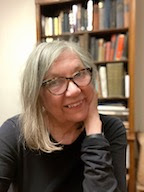
The Poetic Process of Molly Peacock


Creative work develops in such interesting ways, in a combination of both freedom and constraint. In a Brief Guide to Oulipu on poets.org, the reader can consider ways to create literature using structural constraints:
Although poetry and mathematics often seem to be incompatible areas of study, the philosophy of OULIPO seeks to connect them. Founded in 1960 by French mathematician Francois de Lionnais and writer Raymond Queneau, Ouvroir de Litterature Potentielle (OULIPO), or Workshop of Potential Literature, investigates the possibilities of verse written under a system of structural constraints. Lionnais and Quenuau believed in the profound potential of a poem produced within a framework or formula and that, if done in a playful posture, the outcomes could be endless.
Molly Peacock has spoken about the evolution of her book: Alphabetique: 26 Characteristic Fictions.  I find it fascinating to consider her project from its inception to the finished form.  In an interview by Laura Bast (https://maisonneuve.org/post/2015/01/22/mollypeacock/), Ms Peacock says:
A dear friend of mine, Phillis Levin, had given an assignment to her students to write a poem with an ambiguous pronoun, where you may not know who or what is behind this pronoun, and your reader certainly doesn’t. So I thought, I’m going to try this. When I started it, I was thinking about the idea that things only mean if they come into language. As a child I thought, “I have thoughts in my head. But I can’t put them into words.” I think that is the essence of poetry. A poem is about the things you don’t have words for.
In a blog post, Molly Peacock wrote
As a writer in my seventh decade, I’ve been shocked at the twists and turns my own creative life has taken. Alphabetique began as a book of poems, then transmogrified into twenty-six brief imaginary biographical tales of those shapes we call letters.
In another interview in Duende Literary Magazine, she says:
My poems reveal themselves both in an inchoate idea and in a design, or a form.  I seem to create a kind of mental playing ground before the poem can develop.  I didn’t know how “The Poet” would evolve, except that I had set myself the assignment of writing a prose poem for each letter of the alphabet, and for using as much alliteration as I could without destroying the sense of the story. “P” was for poet, but I didn’t want to convey that autobiographically. Instead, I wanted to make a statement about all of poetry, but to take the grandness of that enterprise and make it fun, too.  I thought of the first poems that influenced me as a girl:  poems by Basho, Buson, Issa and Shiki.  Their haiku on the page had always looked to me like lily pads on a pond. The point of view of a young man in a far-off time seized me.  He wore a kimono.  (I always write poems early in the morning, often in my kimono-like bathrobe.) Could I actually write both the story and the poems of this young man?  By the pond, and with a desire to include that delicious word “petrichor,” the poem was launched.
Book reviewer Steven W. Beattie writes:
Raymond Queneau, Georges Perec, and the other Oulipo writers, united by what Daniel Levin Becker calls “strict technical constraints or elaborate architectural designs,” have had a largely unacknowledged effect on Canadian writing in the 21st century. Their influence is most apparent in the realm of poetry: the key Canadian Oulipo text is Christian Bök’s Eunoia, which won the 2002 Griffin Poetry Prize. Bök’s volume – a series of sections each employing only a single vowel – recalls Perec’s novel La Disparition, written entirely without the use of the letter “e.” 
The success of Bök’s experiment – Eunoia is one of the bestselling works of poetry this country has seen in the new millennium – has led to a proliferation of conceptual poetic works that employ Oulipo-like constraints, but this phenomenon has not really made inroads into prose. It is fitting, then, that Molly Peacock, a memoirist and author of the well-received 2010 non-fiction hybrid The Paper Garden: Mrs. Delany Begins Her Life’s Work at 72, is also a poet. Peacock’s latest work, the intriguing and beautifully produced Alphabetique: 26 Characteristic Fictions, while not as rigorously constrained as Bök, recalls the Oulipians in its premise and execution. 
As the title suggests, the book comprises 26 vignettes, each centred on a character named for a single letter in the alphabet.
While the Oulipo techniques might sound too artificial or esoteric, the work of Molly Peacock provides an example of its possibilities and pleasures.

To buy her books, visit her website: http://mollypeacock.org/

May 24, 2016

Casting More Than One Shadow

Mary Oliver has described poetry as writing that casts more than one shadow.  By this phrase, she refers to the way that poems can yield more than one meaning. Recently, I found a corollary regarding short stories by Ricardo Piglia.

A short story [cuento] always tell two stories [historias].  In the classic short story, there is a visible story that has another secret story embedded inside of it. At the end, the secret story comes to the surface, producing an effect of surprise.  The two stories often operate with two different "systems of casuality."  The key elements function for both the presenting and the secret story.  The modern short story, according to Piglia, "abandons the surprise ending and the closed structure; it works the tension between the two stories without ever resolving it, telling "two stories as if they were one."  

Piglia, Ricardo.  "Theses on the Short Story."  New Left Review 70. 2011.  https://newleftreview.org/II/70/ricardo-piglia-theses-on-the-short-story

March 16, 2015

Aristotle and Ovid

New work is underway, and I search for new forms. The greatest influences on literature are Aristotle and Ovid.  They offer two different methods of story-telling.

Aristotle in Poetics focused his attention on these elements: plot, character, thought, diction, song, spectacle, and catharsis.  This design usually features a compelling narrative focused on the intense desires of a main character.  Sparknotes contains an analysis of Aristotle's Poetics:
Plot, derived from the word muthos (the root word for myth, Greek) applied to any art form, including music or sculpture. The muthos of a piece of art is its general structure and organization. It means not the sequence of events so much as the logical relationships that exist between events. The best kind of plot of muthos contains surprises, those that fit logically into the sequence of events. The best kinds of surprises are brought about by "peripeteia," or reversal of fortune, and "anagnorisis," or discovery.
In addition, I particularly value the following thoughts from Poetics by Aristotle:
Every word is either current, or strange, or metaphorical, or ornamental,
or newly-coined, or lengthened, or contracted, or altered. 
...the poet should prefer probable impossibilities to improbable possibilities.
...magnitude in the sense of the astronomical...brightness or power...  
On the other hand, Ovid's Metamorphoses has also greatly influenced literature and the arts. Larry A. Brown writes: "...there is no central hero, thus no simple Aristotelian unity to the work. So what binds this poem together, making it more than a random collection of stories? We might first consider three superficial strategies of unity within the poem:
  • All of Ovid's tales involve metamorphosis. But some stories (see Phaethon, Pentheus, Heracles) only have metamorphosis tacked on as an incidental element, almost as an afterthought. Ovid is more interested in metamorphosis as a universal principle which explains the nature of the world: Troy falls, Rome rises. Nothing is permanent.
  • Chronological progression: Ovid begins his poem with the story of creation and the flood, and ends in his own day with Augustus on the throne. However, chronology becomes unimportant in the vast middle section of work, as seen by the numerous anachronisms throughout (see notes on Callisto, Atlas, Cycnus stories for examples).
  • Transitional links: Ovid continually surprises us, as we never know where he's going next. He changes strategies using several techniques
Ovid presents a much more associational form, a theme with variations: "gods acting like humans (section I), to humans suffering at the hands of gods (II), to humans suffering at the hands of humans (III), to humans becoming gods (IV)," according to Brown.

Of the two styles of storytelling, I find myself more often prone to Ovid that Aristotle.  My work has been always focused on changes, including Migrations, the anthology of Lake Superior area writers that I collected.  Poetry is often associational.  But as I work on my new play, I can see the strengths of Aristotle's approach, and so I aim to incorporate structural elements of both.

Work Cited:

Aristotle.  Poetics. Written 350 B.C.E.  (full text) The Internet Classics Archive. MIT.  Web Retrieved http://classics.mit.edu/Aristotle/poetics.htm

Brown, Larry A. Ovid’s Metamorphoses. Web. Retrieved 16 March 2015. http://larryavisbrown.homestead.com/files/xeno.ovid1.htm 

Philosophy Study Guides. Aristotle. Poetics. 384-322 B.C.   SparkNotes. Web. Retrieved 16 March 2015.  http://www.sparknotes.com/philosophy/aristotle/section11.rhtml