Showing posts with label change and poetry. Show all posts

April 11, 2026

League of Minnesota Poets: Thawlight


The 2026 conference of the Minnesota League of Poets took place in Ely, Minnesota on April 10 & 11.  The theme is "Thawlight," a word invented by poet Amanda Bailey to signify the change from the winter cold that put our animals in hibernation and our trees on hold. The season is turning toward spring with melting of ice and snow, greening of fields, leaves emerging on the trees, and songbirds returning. It's like dawn, she said. A creative time.  

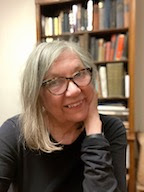
I hope my keynote address inspires poets to think of ways to tap into the power of changes, like the way a polliwog transforms into a frog or an egg hatches and the bird starts to fly.  I want to acknowledge and borrow the forces of change, the elements, and the mythic stories, folk tales, fairy tales, and creation stories. I want all of our imaginations and music to flourish.  Poetry plays in all the fields of art and thought, and it can change the world.  


March 6, 2023

Spark Catchers: Lemn Sissay and Amanda Gorman

There are poets writing history and writing poems drawn from history. Eavan Boland once said that a poem will revivify an event. She cautioned against revivifying trauma, because it will make that event re-traumatize. Boland is a political poet. In Ireland, where she was born, writing about the land is a political act.  Paul Valery, a French poet, said that a poem is like a small engine that recreates meaning each time it is read.  Therefore, a poem that celebrates the strength, resilience, ingenuity and power of a survivor and changemaker will inspire us.  Here are two examples: 


Lemn Sissay's poem "Spark Catchers" was commissioned to become part of the 2012 Olympic Park in London, UK. The poem is engraved at the site, and it marks a historic event in 1888, a strike by women who worked at the Bryant and May Match Factory.  Sparks in match factory posed a threat to life and work, and this poem describes the spark-catcher who helped the women survive the exploitation and danger in the factory and whose story now inspires solidarity and the power of women to create change. His poem has also been the basis of a music composition by Hannah Kendall.   "Spark Catchers" translates the words into notes and textures of music and it continues to share the light to concert audiences across the world. Listen to it here: https://youtu.be/CbpauBt9Tag
This piece of music has been performed by several orchestras world-wide, and it continues to share the light.   

Spark Catchers by Lemn Sissay

Tide twists on the Thames and lifts the Lea to the brim of Bow
Where shoals of sirens work by way of the waves.
At the fire factory the fortress of flames

In tidal shifts East London Lampades made
Millions of matches that lit candles for the well-to-do
And the ne’er-do-well to do alike. Strike.

The greatest threat to their lives was
The sulferuous spite filled spit of diablo
The molten madness of a spark

They became spark catchers and on the word “strike”
a parched arched woman would dive
With hand outstretched to catch the light.

And Land like a crouching tiger with fist high
Holding the malevolent flare tight
‘til it became an ash dot in the palm. Strike.

The women applauded the magnificent grace
The skill it took, the pirouette in mid air
The precision, perfection and the peace.

Beneath stars by the bending bridge of Bow
In the silver sheen of a phosphorous moon
They practised Spark Catching.

“The fist the earth the spark it’s core
The fist the body the spark it’s heart”
The Matchmakers march. Strike.

Lampades The Torch bearers
The Catchers of light.
Sparks fly Matchmakers strike.

In another poem by Lemn Sessay, "Making a Difference," again he demonstrates how effective poetry is to create social change.  A composer, Hannah Kendall, read this poem and used it as the basis for a musical composition for orchestra.  


In the rhythms of Lemn Sissay, an accomplished poet of London, I heard a similar beat and internal rhyme here in the United States by the poet Amanda Gorman. She too is a spark-catcher -- one who by speaking out calls for change, creates change.  This poem, "The Hill We Climb" was performed by Gorman at the inauguration of President Joe Biden.  The poem is also in Amanda Gorman's book of the same title.   

Compare the two, and be inspired to write a poem about a historic event.  


November 22, 2016

Wislawa Szymborska

If history has taught us anything, it is that civil liberty and democracy can change in one day. Polarizing political campaigns turn into extremism.  Slogans and rhetoric can mask many things. People need to stand with the victims of violence and prejudice. Everybody needs to be treated with dignity and respect. We must stand together for justice and peace. 

HATRED 
The Polish poet Wislawa Szymborska translated by Stanislaw Baranczak and Clare Cavanagh

See how efficient it still is,
how it keeps itself in shape—
our century’s hatred.
How easily it vaults the tallest obstacles.
How rapidly it pounces, tracks us down.

It’s not like other feelings.
At once both older and younger.
It gives birth itself to the reasons
that give it life.
When it sleeps, it’s never eternal rest.
And sleeplessness won’t sap its strength; it feeds it.

One religion or another –
whatever gets it ready, in position.
One fatherland or another –
whatever helps it get a running start.
Justice also works well at the outset
until hate gets its own momentum going.
Hatred. Hatred.
Its face twisted in a grimace
of erotic ecstasy.

Oh these other feelings,
listless weaklings.
Since when does brotherhood
draw crowds?
Has compassion
ever finished first?
Does doubt ever really rouse the rabble?
Only hatred has just what it takes.

Gifted, diligent, hard-working.
Need we mention all the songs it has composed?
All the pages it has added to our history books?
All the human carpets it has spread
over countless city squares and football fields?

Let’s face it:
it knows how to make beauty.
The splendid fire-glow in midnight skies.
Magnificent bursting bombs in rosy dawns.
You can’t deny the inspiring pathos of ruins
and a certain bawdy humor to be found
in the sturdy column jutting from their midst.

Hatred is a master of contrast-
between explosions and dead quiet,
red blood and white snow.
Above all, it never tires
of its leitmotif – the impeccable executioner
towering over its soiled victim.

It’s always ready for new challenges.
If it has to wait awhile, it will.
They say it’s blind. Blind?
It has a sniper’s keen sight
and gazes unflinchingly at the future
as only it can.

February 26, 2016

Creating a Just World: Poetry & Social Change


Can poetry instigate change? Yes it can, in many ways. Here are some excerpts of poems from poets whose work has had political influence. Some of these poems are visionary, some are poems of grief, and some are satire. At the workshop, using prompts and guided writing exercises, participants will explore their own concerns and vision for a better world.  Che Guevarra said, “At the risk of seeming ridiculous, let me say that the true revolutionary is guided by great feelings of love. It is impossible to think of a genuine revolutionary lacking this quality.”

Pablo Neruda

Neruda wrote poems that were political in order to trigger social change.  He also wrote love poems and poems of all kinds.
...
He or she who does not turn things topsy-turvy,
who is unhappy at work,
who does not risk certainty for uncertainty,
to thus follow a dream,
those who do not forego sound advice at least once in their lives,
die slowly. 
He who does not travel, who does not read,
who does not listen to music,
who does not find grace in himself,
she who does not find grace in herself,
dies slowly.
…
Let's try and avoid death in small doses,
reminding oneself that being alive requires an effort far greater than the simple fact of breathing.
...

Allen Ginsberg

Ginsberg addresses America in this poem (anaphora: the list structure with a repeated beginning word). His perspective was from a radical, gay poet. Often the "you" in his work was a large audience.

(1956)
...
America stop pushing I know what I’m doing.
America the plum blossoms are falling.
I haven’t read the newspapers for months, everyday somebody goes on trial for murder.
America I feel sentimental about the Wobblies.
America I used to be a communist when I was a kid I’m not sorry.
I smoke marijuana every chance I get.
I sit in my house for days on end and stare at the roses in the closet.
…
I have mystical visions and cosmic vibrations.
America I still haven’t told you what you did to Uncle Max after he came over from Russia.
I’m addressing you.
…
America I’m putting my queer shoulder to the wheel.

Sonja Sanchez

This elegy pays homage to Malcolm X.
do not speak to me of martyrdom,
of men who die to be remembered
on some parish day.
i don’t believe in dying
though, I too shall die.
and violets like castanets
will echo me,
yet this man,
this dreamer,
thick lipped with words
will never speak again
and in each winter
when the cold air cracks
with frost I’ll breathe
his breath and mourn
my gunfilled nights.
he was the sun that tagged
the western sky and
melted tiger-scholars
while they searched for stripes.
...


Patricia Lockwood

In satire, Lockwood takes on the culture and women's issues.
...
Can rape jokes be funny at all, is the question.
Can any part of the rape joke be funny. The part where it ends—haha, just kidding! Though you did dream of killing the rape joke for years, spilling all of its blood out, and telling it that way.
The rape joke cries out for the right to be told.
The rape joke is that this is just how it happened.
The rape joke is that the next day he gave you Pet Sounds. No really. Pet Sounds. He said he was sorry and then he gave you Pet Sounds. Come on, that’s a little bit funny.
Admit it.

To see full text: Rape Joke by Patricia Lockwood

These poets are but a small sample of poets who seek to make a difference in the world, to bring about peace and justice. Poet Stacy Ann Chin created a No H8 project with her young daughter. Speaking about raising her daughter Zuri, Stacey Ann Chin said,
“I want her to know that what she believes, what she says and what she does matters in terms of what the world will look like tomorrow. Protest is everywhere and protest itself is not violent in nature — it is being involved in a conversation," says Chin. "I want my kid involved in those conversations, and I want her to know she is extraordinarily powerful. What better way to feel powerful than to be involved with an ongoing conversation about what’s going to happen with the world?” 

Poets bring an extraordinary attention to language and sound.  Who else can better articulate the vision of a better world?

To read an interesting essay about the function of poetry, see http://www.poetryfoundation.org/poetrymagazine/article/178919

Here are the names of a few poets of note who have worked to build a better world:

Claudia Rankine http://claudiarankine.com/
Amiri Baraka see https://www.poets.org/poetsorg/poet/amiri-baraka
Margaret Randall http://www.margaretrandall.org/
Muriel Rukeyser  see: http://the-toast.net/2013/11/01/muriel-rukeyser/


March 20, 2011

Poetry & Change: Journaling, Pablo Neruda, and the Past

Journal writing and memoir provide a starting point for poems.  Journals especially are excellent places to generate poems and to grapple with changes that life brings.  Poems are especially built for grappling, and the poem by Neruda, "Past,"  shows us how well it can be done.  

Ira Progoff, author of At a Journal Workshop and founder of the Intensive Journal® process offers an in-depth and interesting method to explore life experience.   His technique of a multi-sectioned journal that records steppingstones, intersections, dreams, daily writing, and dialogues (with body, self, others and even society concepts or norms) offers a helpful tool to navigate life.  Not only does it increase awareness, it aids in decision-making.  I like what he says about phases in life:

"...many people are able to live through two or three distinct cycles of life. In each of these, there are a different person with different values and lifestyles. To be able to look forward to such successive developments opens a large potential not only for the later years of one's life but for the fullness of meaning in a human existence as a whole.  The main difficulty lies in the period of transition between two major units in a person's life.  When the old period has ended and a new period has not yet been substantially established, the emotional burdens of anxiety and self-doubt may be heavy to bear.  That is the time when it is especially important to have a progressive and organic method for enabling the perspectives of one's life to reshape themselves."  (p 115)

Progoff also refers to the writer and public statesman, Dag Hammarskjold.  He kept a journal that was eventually published, titled Markings.   The term 'marking' he borrowed from his habit of walking mountain trails.  Marks upon the trail help us find our way and avoid difficult spots. The term is evocative; I like to use it when I teach writing.  We are marked by different things, good and bad; those things shape us.  These are places that we should go to when we sit down to write. 

I would add that writing is an excellent way of coping. It is quiet and similar to meditation; it relaxes the body at the same time that it gives the mind a place for preoccupations and concerns.  Not only that, it costs next to nothing.  All that is needed is a notebook and pen.  For people who don't have a safe place to keep a journal, the internet offers a password protected online storage of files (see http://www.google/docs  and http://www.zoho.com).  To anybody who wants to begin journaling, I suggest short writing exercises that focus on particular details:  a pair of shoes, a hand tool, or a particular person.   When journal exercises delve into such exact details of one's own particular life, over-generalization and sentimentality is nicely sidestepped.

Another way to approach journaling or writing exercises is to focus on images.  An image, often the foundation of a poem, is vivid and powerful. It transcends languages and offers immediacy.

However, writing is more than a repository of memory or experience; it is also a tool of the mind and gives us a method to get past both memory and experience.  It is not about "dumping."  Even among friends, dumping all the negative experience can burden others.  A journal offers the ability to contain difficult experience.  Once written, we can stand back and observe our own experience. Writing allows writers to discover insights and shape the story, a profound and necessary step in taking control of one's life.

This brings me to consider the poem by Pablo Neruda, "Past."   The poem begins:
"We have to discard the past" and this is followed by image after image of demolition and construction.  It ends in this way:

"Now the heavy eyelid
covers the light of the eye
and what was once living
now no longer lives;
what we were, we are not.
And with words, although the letters
still have transparency and sound,
they change, and in the mouth changes;
the same mouth is now another mouth;
they change, lips, skin, circulation;
another being has occupied our skeleton;
what once was in us now is not.
It has gone, but if the call, we reply;
'I am here,' knowing that we are not,
that what once was, was and is lost,
is lost in the past, and now will not return." 

(click here to read the entire text: http://www.poetry-chaikhana.com/N/NerudaPablo/Past.htm)
This poem captures the anguish and loss; it holds the contradiction of saying we must 'discard the past' and the impossibility of doing so.   It is an example of the way that a poem, in very few words, goes right to the crux.  It may have begun in a journal, I don't know.  But out of the images he draws from, he pushes out into the deep heart of experience: it is always and forever changing.

Poetry is particularly an effective way to express this truth--any moment that we write about is a moment we can not hold. It slips away, becomes something else and so do we.  By writing, we can bring it close, see it and feel it, even though it has changed and perhaps changed us.  Poetry offers an intimacy that is hard to describe or experience anywhere else, it is a body experience but it happens in language.

What is it about the language of poetry that makes it so powerful?       

More than any other type of writing, poetry is shaped. Memoir also is a shaped form.  A memoir might capture a segment of someone's life, and it might select certain experiences.  An artist's memoir, for example, might contain only the experiences that were formative to that person and his or her art.

Poetry focuses on image and provides patterns of sound and form that make it memorable.  Neruda's poem relies on the construction and demolition.  "We go on throwing down/ first, broken tiles,/then pompous doors."   The word doors becomes not just wooden panels that allow entrance and exit in a building, but entrance and exit to other states of mind by use of the word "pompous."   It conveys memory, image, story, but also casts many shadows, as Mary Oliver says. It offers multiple meanings and it does this with the choice of words and their placement.  A line break is a way to nuance a sentence or phrase, to pause in a certain place and thereby add more meaning.  Neruda repeats words within the poem:  "There is nothing, there is always nothing" and "It was all alive,/ alive, alive, alive/ like a scarlet fish..."   Repetition and variation within a poem also create meaning in a way similar to waves on a lake, a score of music, a cloud of birds.   

Does poetry change the writer or reader?  The reader most certainly can be changed by reading, the reader takes the poem inside of his or her breath, and can be in-spired, a profound exercise in empathy. I think it does change the writer; as the writer becomes more and more adept at craft and learns how to ply the language more skillfully, he or she is changed.  As one writes, one begins to observe more, listen more, and consider more. 
Success as a writer might or might not bring positive changes; but I do think writing itself brings the ability to find context and to connect to others.

Revision is a necessary part of writing.  In revision, we develop an initial image or pattern to its fullest and strengthen the context and connections.  Revision is also necessary in life; we may not be able to change the events or incidents that mark us, but we can change what they mean for ourselves and others.   

Perhaps like Neruda, we would be able to hold the contradictions.   F. Scott Fitzgerald, in his great essay, "The Crack Up,"  wrote, "the test of a first-rate intelligence is the ability to hold two opposed ideas in the mind at the same time, and still retain the ability to function."  This is what writing and especially poetry offers. 


Progoff, Ira.  At a Journal Workshop.  c1975.  Dialogue House Library, New York, NY.