
Showing posts with label meena alexander. Show all posts

September 16, 2022

What Use is Poetry?


In Meena Alexander's poem “Question Time,” she writes, “What use is poetry?” and “We have poetry so we do not die of history.” Poetry can provide a documentary, an artistic investigation at the same time that poetry can become an ode sung to the beauty and resilience of the landscape and its people. The landscape of northern Minnesota is unique because the Northern Continental Divide crosses the Laurentian Divide, creating three watersheds. Water flows north to Hudson Bay, south to the Mississippi, and east to the Great Lakes and St. Lawrence River/Seaway. In this water-rich place, mining of iron ore and taconite has removed billions of tons of earth. This region is now at risk of copper sulfide mining.  

The poems in my book explore displacements of many kinds: of land, people, language, and wildlife. Poems document events such as floods and erosions, flights of birds and snail trails, mine pits and lakes, laborers and excavations for the removal of minerals. Poems go in, under and through waterways, in boats, into memory and history. 

The title poem of Surface Displacements is a long poem that gathers images of displacement, waterways, and brief narratives of immigrants crossing by water and land. One can’t help being aware of people who are displaced: immigrants fleeing war, violence, climate conditions, or otherwise untenable situations. Or not just immigrants, homeless people who wander the streets of every community. There are many reasons that they are there: poverty, trauma, mental disorders, and/or addictions, Battered women often must flee their homes in order to find safety. Teenagers sometimes find themselves on the streets as runaways from family violence or dysfunction. The migration of people is as steady as the migration of birds. 

Poetry is a language inside the language. In a poem in next to no time, years can collapse. Whole eras can elide into a few lines, or one moment can be forever held still. Poetry has underwater currents or forces. Muriel Rukeyser says “poetry can extend the document” in a footnote to her poems in “The Book of the Dead,” a section of her 1938 book titled U.S. 1. It is about the Hawks Nest Tunnel disaster in Gauley Bridge, West Virginia, which killed at least 476 coal miners, mostly African American migrant workers, between 1930 and 1935. Her poems incorporate archival material about the mining disaster with lyric intensity. The title alludes to the Egyptian Book of the Dead and the Mayan Book of the Dead, evoking the power and weight of those ancient funerary texts. In this way, the form of a poem along with its sound patterns, images, associations, and metaphors can bring together the said and unsaid. On a page, a poem has empty spaces that can be understood like the negative space in a drawing. Stanza breaks might be viewed as bends or turns in a river. Line endings in a poem form a shoreline to launch from and land upon, an empty and wave-washed beach, an edge where we can hold the losses and make new paths, where we search and find things new.
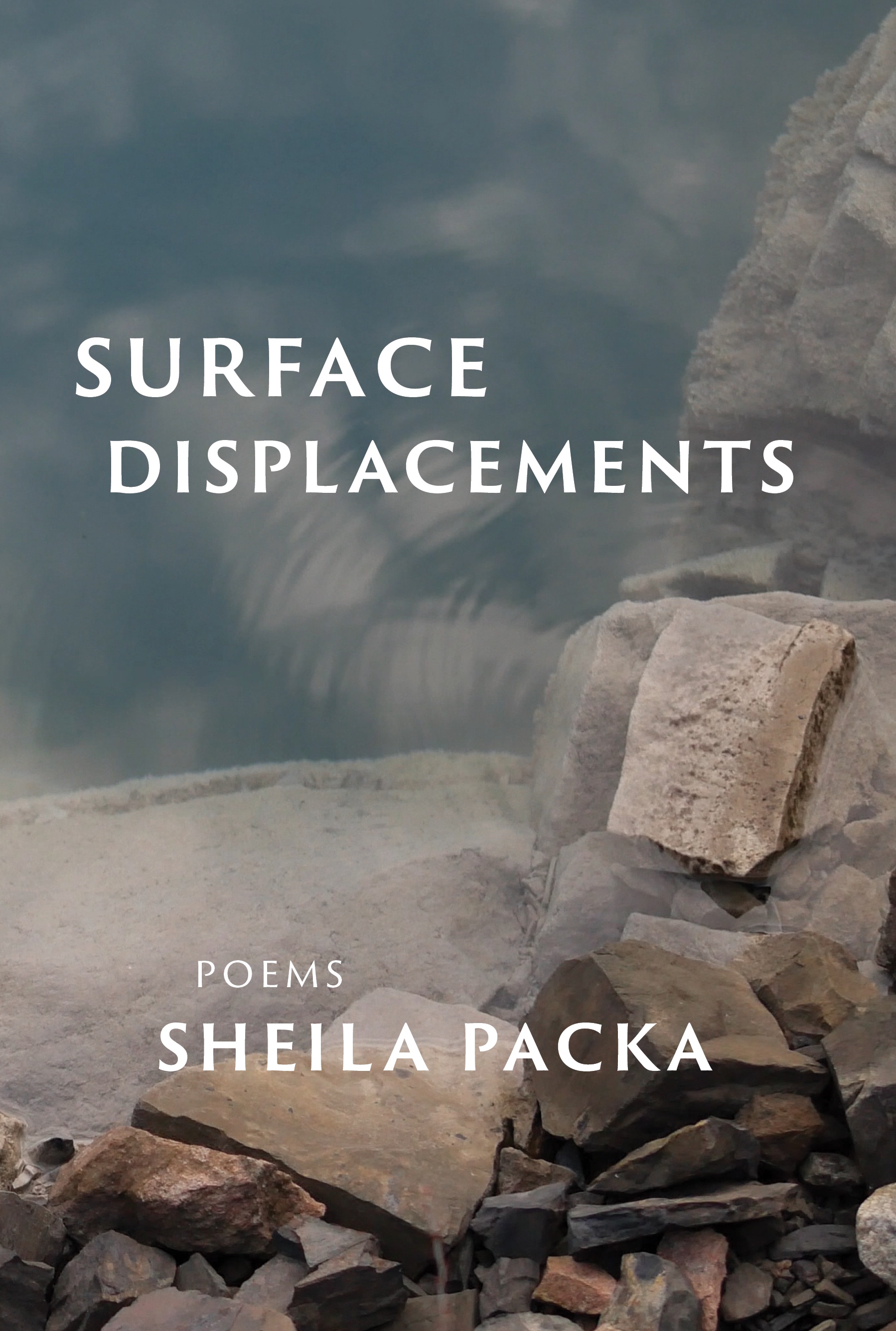


See more about the book at www.wildwoodriver.com

May 7, 2019

Writing about Place


Meena Alexander said, "Poetry and place—if poetry is the music of survival, place is the instrument on which that music is played, the gourd, the strings, the fret."

In poetry and prose, place is critically important. In her book "On Writing," Eudora Welty wrote:
Place, to the writer at work, is seen in a frame. Not an empty frame, a brimming one. Point of view is a sort of burning-glass, a product of personal experience and time; it is burnished with feelings and sensibilities, charged from moment to moment with the sun-points of imagination. It is an instrument — one of intensification; it acts, it behaves, it is temperamental. … The writer must accurately choose, combine, superimpose upon, blot out, shake up, alter the outside world for one absolute purpose, the good of his story. To do this, he is always seeing double, two pictures at once in his frame, his and the world’s, a fact that he constantly comprehends; and he works best in a state of constant and subtle and unfooled reference between the two. It is his clear intention — his passion, I should say — to make the reader see only one of the pictures — the author’s — under the pleasing illusion that it is the world’s; this enormity is the accomplishment of a good story. I think it likely that at the moment of the writer’s highest awareness of, and responsiveness to, the “real” world, his imagination’s choice (and miles away it may be from actuality) comes closest to being infallible for his purpose. For the spirit of things is what is sought. No blur of inexactness, no cloud of vagueness, is allowable in good writing; from the first seeing to the last putting down, there must be steady lucidity and uncompromise of purpose.

In an essay poet Meena Alexander wrote:
While poetry is bound to the sensorium, to the sensual powers of bodily being, to memory that draws its power from feelings heightened by the senses, it is also bound to place. It is in place that we locate ourselves, mark ourselves in relation with others; it is in place that we survive. But what becomes of the past when place is torn away, when the sensorium is radically displaced, and when exile or dislocation marks out the limits of existence?

January 17, 2015

Poetic Space


Can the unexplainable be explained?  Sometimes poetry is defined as the saying of the unsayable.  How? Poetry is powerful because of a union of image and sound and a strange combination of the seen and unseen. When we love a poem, it is because of its resonance or reverberation, a concept examined in The Poetics of Space.

 "A poem possesses us entirely," Gaston Bachelard says.  He says that the poetic image takes root in the reader.  His book is ostensibly about architecture but uses poetry as its metaphor, and in doing so, creates a wonderfully resonant approach to both.

Meena Alexander evokes this resonance. "Poetry and place—if poetry is the music of survival, place is the instrument on which that music is played, the gourd, the strings, the fret." I especially appreciate her thoughts about the importance of place or landscape.

Gaston Bachelard writes that poems awaken our being with their mysterious blend of knowing and not knowing.  A good poem is perpetually new. It has a quality that evokes new meaning every time it is read. "Forces are manifest in poems that do not pass through the circuits of knowledge."  (xxiii) He talks of the passions that perturb poetry, or disturb.

Similarly, Muriel Rukeyser identified poetry as an energy that passes from the writer to the reader. She also viewed a poem as a "theater."  A theatrical space is one that is open to and resonant with image, voice, and action.  The image and reverberation of a poem has the ability to "touch the depths before stirring the surface," according to Bachelard. This is the most poetic explanation of poetry that I've read, and it confirms my theory that poetry dissolves some sort of boundary, and in doing so, it is spirit speaking to spirit.

Literally, poetry has empty space. Lines break before the end of the page, and stanza breaks leave gaps between lines. Patterns are more apparent.  This empty space gestures toward another kind of empty space inside or beyond.  "As essential portion of any artist's labor is not creation so much as invocation. Part of the work cannot be made, it must be received; and we cannot have this gift except, perhaps, by supplication, by courting, by creating within ourselves that 'begging bowl' to which the gift is drawn," says Lewis Hyde in The Gift. Creating gaps or empty spaces in poetry can develop a dialectic or field of meaning.

Bachelard says, "poetry puts language into a state of emergence."  What are these forces? I'm not sure, but I do recognize them when they happen. "If I read a book and it makes my whole body so cold no fire can warm me I know that is poetry. If I feel physically as if the top of my head were taken off, I know that is poetry. These are the only way I know it. Is there any other way?” asks Emily Dickinson.  I think she must be referring to the physicality, the five senses, and friction. It must be music, myth, memory, and deep patterns in the landscape. We resonate, reverberate, and emerge anew.

February 13, 2012

The Question: What Use Is Poetry?

"We have poetry so we do not die of history," says Meena Alexander in this poem.  She also said, "Poetry and place—if poetry is the music of survival, place is the instrument on which that music is played, the gourd, the strings, the fret."


QUESTION TIME by Meena Alexander
 
...

Hand raised in a crowded room --
What use is poetry?

Above us, lights flickered,
Something wrong with the wiring.

I turned and saw the moon whirl in water
The Rockies struck with a mauve light,

Sea creatures cut into sky foliage.
In the shadow of a shrub once you and I

Brushed lips and thighs,
Dreamt of a past that frees its prisoners.

Standing apart I looked at her and said:
We have poetry

So we do not die of history.
And I had no idea what I meant.


(Published in the journal Black Renaissance/Noire, 2010)
 
In the following essay, Meena Alexander examines her influences. She grew up in India, was reared in Sudan, and is a scholar in English literature. She finds her home in the polyglot of her languages. 

excerpt:

"The first border we cross is that of the body. I put out my hands and touch the stone, the tree, the surface of the mirror and what I mark is the rim of the body, the fleeting surfaces of the world, what we might choose to call the real, irreparably marked by the notations of the body, the unique impress I take of things and the mark I make, however ephemeral in the arrangements of sense. Yet this touching and tasting that my body allows me in the world it creates so I can live, is always rendered up in a density of location, a necessary otherness. My private body, this nest of flesh and blood and bone is already marked and set in place by the temporal passages of a world I have little control over, by others who do not know me, and have never heard of me, and might wish never to do so.
...
"I think of Simone Weil and her notion of decreation - a stripping down of the self, an emptying out, essential to a burning interior life, no thing there, just a waiting on nothingness, a radical act of attentiveness. There is much in her notion that we can learn from as we try to conceive of the imagination, the image making power which works through a febrile openness to emptiness. It is only by stripping ourselves of what we thought we were that the panoply of circumstance the poem sets up, its minute theatre of sense can achieve itself. And only then is poetry permitted its seemingly serendipitous alignment with the haunting we call history."

Read the full essay
Meena Alexander, "The Question of Home"
http://www.poets.org/viewmedia.php/prmMID/19032


For more information about Meena Alexander, visit her website http://www.meenaalexander.com/