Playwrights' Center's Director of Fellowships Lynde Rosario sits down with multiple-award-winning playwright and MacArthur-certified genius Sarah Ruhl for a conversation that is as electrifying as it is wide-ranging. Topics include: collaborations, caregiving, perseverance, pandemics, politics, poetics, the epic and the domestic, finding a home in the arts, and the beautiful present of the theater as the key to its future. If you’ve ever wished for a seat at the table with incredible artists in passionate discussion, this series is your seat.
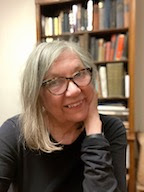
Sheila Packa Poetry Blog: A blog about poetry: figurative language, spirit, intertextual explorations, patterns, punctuation, forms, great writers, quotes, and journey notes. For updates, follow me on Bluesky https://bsky.app/profile/sheilapacka.com
Showing posts with label Sarah Ruhl. Show all posts
Showing posts with label Sarah Ruhl. Show all posts
November 7, 2024
Artist Conversations: Sarah Ruhl
"Certain words, when you put them together, create a kind of melody...." says Sarah Ruhl, playwright, writer, and writer.
SARAH RUHL is an award-winning American playwright, author, essayist, and professor. Her plays include Eurydice; In the Next Room, or the vibrator play (Pulitzer Prize finalist, 2010); The Clean House (Pulitzer Prize finalist 2005, Susan Smith Blackburn Prize 2004); Passion Play (PEN American Award); Orlando; and Letters from Max (based on her book with poet Max Ritvo). Her plays have been produced on Broadway and across the country as well as internationally, and translated into fourteen languages. Her books include Smile: The Story of a Face, and 100 Essays I Don’t Have Time to Write. She is the recipient of a Whiting Writers Award, a PEN Center Award for mid-career playwrights, a Steinberg Distinguished Playwright Award, and a MacArthur “genius award” Fellowship. She teaches at the Yale School of Drama and lives in Brooklyn with her family.


April 5, 2020
Just Write

On April 8 at 5:30 pm the Poetry Book Club will be discussing 44 Poems for You by Sarah Ruhl (Copper Canyon Press.) This month, we will meet on Zoom. If you are interested in joining the group send me a DM on Facebook.
Sarah Ruhl (playwright, essayist, and poet) wrote:
Sarah Ruhl (playwright, essayist, and poet) wrote:
The injunction to write becomes more crucial now than ever—it might save our culture from mendacity, it might banish boredom and existential dread, it might save our human spirit from isolation. Because existential dread occasionally inhibits the impulse to write, I am keeping an on-going list of reasons to keep writing that I hope you’ll add to:
Write for God. The cave. The envelope.
Write for your mother. Your father.
(Whether they are alive or dead.)
Write for the home-bound.
Write for the weary nurse.
Write for your friend who is sick.
Write for the future. Write for the past. Write for the present, but sideways.
Write for the theater-going politicians and judges. That is to say, write for Ruth Bader Ginsberg.
Write for the ancient ones who go to the theater and immediately slip into a deep sleep.
Write for the critics who haven’t even been born.
Write for the child who saw cruelty.
Write for those dispossessed of language.
Write for the actors who paint houses so they can still be in plays.
Write for the actors who can’t be in plays right now, who are waiting for the theaters to reopen.
Write for your daughter. Write for your son.
If they don’t exist write for the dream of them.
Write for your uncle to weep, your aunt to laugh.
your baby-sitter to cover her face with recognition.
Write for the accountants whose eyes are too tired at night for numbers.
for the farmers who grow your corn.
Write for all the retired librarians like Pat Watkins from Madison, Wisconsin who once wrote you a letter about your play.
Write for your teachers. Write for every single hour they left off writing their own sentences so that they could read yours.
Write to thank the books you love.
Write for the church you walked past with a sign that read:
THEATER AT SACRAMENT
And you mis-read it as: THEATER AS SACRAMENT.
Write for yourself.
Write for God. The cave. And the envelope.
And when you are not writing for the inward, for the cave, for the envelope:
Write for each other.
Thank you.
See her complete keynote address at https://www.vanityfair.com/style/2020/03/whiting-award-2020-sarah-ruhl-keynote
Sarah Ruhl website: http://www.sarahruhlplaywright.com/index
November 22, 2014
Three Dimensional Poetry

In the last year, I've been revising a collection of short stories and this last month, I wrote a play. It's been like riding two horses, using the language as a poet and exploring narratives based on Minnesota's history. Several poets have written plays: William Shakespeare, Alfred Tennyson, Robert Browning, WB Yeats, Lorcas, Langston Hughes, TS Eliot, Rita Dove, and many others. So of course I have excellent role models in past and in contemporary literary circles.
John Lahr of the New Yorker interviewed Sarah Ruhl, poet turned playwright. He writes:
Ruhl began her career as a poet—her first book, Death in Another Country, a collection of verse, was published when she was twenty—and she sees her plays as “three-dimensional poems.” Ruhl’s characters occupy, she has said, “the real world and also a suspended state.” ... She wants to project the delights of pretense, “the interplay between the actual and the magical.”
Her literary volte-face was due in part to her confusion about the confessional “I” of her poetic voice, which she felt had been exhausted in mourning her father. In “Dream,” for instance, she wrote, “I wake this morning and gather a mouthful of dirt— / words—with a teaspoon, that you may speak to me again.” “I didn’t know what a poem should be anymore,” she said. “Plays provided a way to open up content and have many voices. I felt that onstage one could speak lyrically and with emotion, and that the actor was longing for that kind of speech, whereas in poetic discourse emotion was in some circles becoming embarrassing.”Poetry is the genre known for its compression, imagery, and patterned language (which also can occur in plays and other genres), but poetry is not known for its characters, plot or dialogue. It's possible to never have to grapple with these elements at all. When I began writing Night Train Red Dust, the narratives swept me along and I enjoyed the opportunity to explore other voices beside my own. The book began to feel like a fully developed world to me; it connects to landscape and community. This year, my writing explores more narratives of this place--northern Minnesota. When Night Train Red Dust was published, I felt as if I'd only begun. The poetic "I" in this book encompasses many, and I have found that writing a play provides a natural and logical step of exploring more voices.
Another poet who explores all the genres is Anne Carson. In Decreation, she brings together poetry, essays, a screenplay, an opera libretto, an oratorio ("Lots of Guns: An Oratorio for Five Voices") and a documentary written as a film's shot list. Of her original works, she told Sam Anderson of the New York Times:
We have a kind of inertia, sitting and listening. But it’s really important to get somehow into the mind and make it move somewhere it has never moved before. That happens partly because the material is mysterious or unknown but mostly because of the way you push the material around from word to word in a sentence. And it’s that that I’m more interested in doing, generally, than mystifying by having unexpected content or bizarre forms. It’s more like: Given whatever material we’re going to talk about, and we all know what it is, how can we move within it in a way we’ve never moved before, mentally? That seems like the most exciting thing to do with your head. I think it’s a weakness to fall back into merely mystifying the audience, which anybody can do.Reading Anne Carson's work is exhilarating. I feel the release of any genre-related stops. Why not use whatever works? Why not find energy in juxtaposing stories and forms of any kind? Why not think outside the box? We see this sort of playfulness in many writers, for example, Lydia Davis (fiction). With a draft of my new stories and play in hand, I now plow into this landscape to listen and develop the rhythms, characters, and plot.
I like Carson's objective of making the mind move. But it's not exactly how I would describe my own aims. Exploring change and desire, my work arises from the landscape. Mesabi means the "giant in the earth." The term has been interpreted to refer the economic power of the ore, but I think the capitalists have ignored the spiritual meaning. The earth--a spiritual power? Mainstream culture seems not to recognize such a thing, and yet people who go to the Boundary Waters or spend time along the shore of Lake Superior and its forests know what I mean. As a writer, I want to acknowledge and honor this sense of landscape.
As far as the writing, there is definitely a feeling that I've released this stream, and it keeps pouring. Maybe the poems have just gotten much bigger--and they have grown into essays and stories and drama--more three dimensional.
Subscribe to:
Posts (Atom)