The Kalevala, a series of poems originally performed in the oral tradition, inspired Akseli Gallen-Kallela.
November 10, 2022
Ekphrasis: Poems in the Art Community
October 18, 2022
Finnish Poet Risto Rasa and an American Documentary Film by Matt Carlson
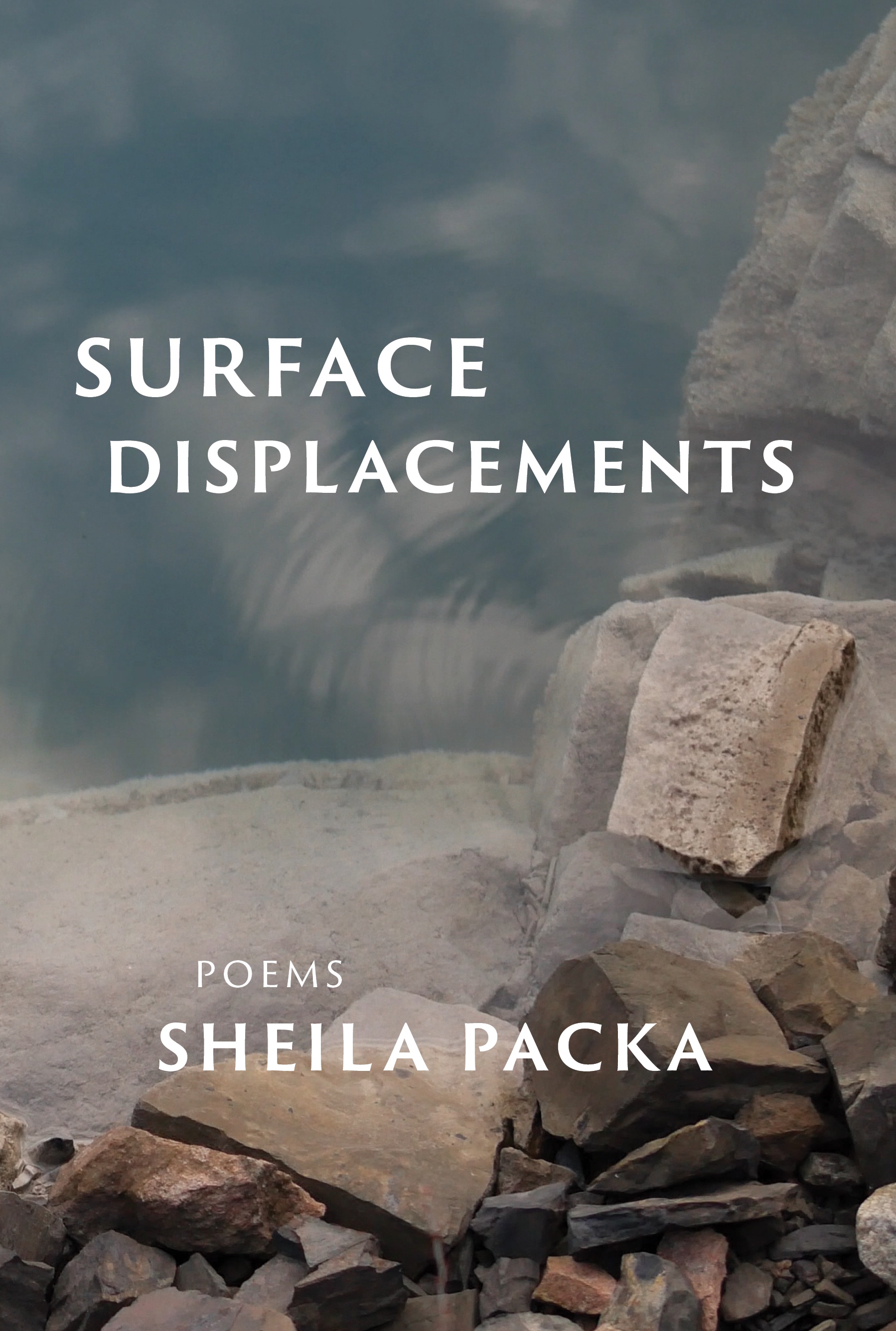
I discovered a poem by Risto Rasa during the writing of Surface Displacements. This poem, written in Finnish and published in his book Tuhat Purjetta (trans.: A Thousand Sails) inspired me.
Niin kuin aalto uittaa aallon
yli valtameren,
niin selviydymme mekin toinen toisiamme tukien.
It has been translated like this: Just as one wave carries another / across the ocean / so we too survive, one supporting another. In the translation, the use of the English verb 'carry' is an excellent choice that conveys the intention of the poet.
Rasa used the verb uittaa which means 'to float.' It comes from the verb uida, to swim. It could be said this way: "just as a wave floats another wave over the ocean.... so we too will survive by supporting each other."
It is interesting to me, as a learner of the Finnish language, that 'to carry' in the Finnish language is "kaantaa" and 'to translate' is "kääntää." It is spelled nearly the same, but the vowel changes from a to ä.
Risto Rasa has said that in translation, no poem is exactly the same. Something will be lost. This might be true. It is impossible to carry the definition of a Finnish word into the English language without dropping some of historic or cultural associations.
A filmmaker Matt Carlson created a touching documentary of Risto Rasa: Sielumaisema: The Risto Rasa Project. He has not lost very much about this poet and his work, even though he relied on a translator to interview Rasa. The film has deepened my appreciation of this poet. One realizes how important it is to reveal the poet's landscape and his voice. I recommend that you watch this wonderful film: https://vimeo.com/372123395
October 13, 2022
Poet Laureate Reading featuring Sheila Packa & Ellie Schoenfeld and new poets
Poets Laureate Sheila Packa & Ellie Schoefeld will read along with notable poets Dani Pieratos & Tina Wiggins Wussow.
Organized by David Beard, professor of rhetoric at UMD, Department of English, Linguistic and Writing Studies, this is the third of reading that featured poet laureates of Duluth. In addition, each poet laureate has invited a young poet to join the reading. The mission of the poet laureate program is to promote poetry and expand the reading audience.
October 7, 2022
October 4, 2022
Confluences: Writing, Composing, and Making Art from (or based on) Art: Artists' Talk & Poetry Videos!
November 6, 2022 at 3 pm at the Nordic Center, 23 North Lake Avenue, Duluth, MN Book Celebration & Reception
Sheila Packa is a fiscal year 2022 recipient of a Creative Support for Individuals grant from the Minnesota State Arts Board. This activity is made possible by the voters of Minnesota thanks to a legislative appropriation from the MSAB arts and cultural heritage fund. This event also has been made possible by past grants from the Finlandia Foundation National and the Arrowhead Regional Arts Council.
For the preservation of wilderness and among many searching for home, this poet travels through mining excavations and waterways vulnerable to environmental contamination and climate change in Minnesota, where the Northern Continental Divide crosses the Laurentian Divide and creates three watersheds that flow into the Mississippi River, the Great Lakes, and Hudson Bay. These images capture the beauty of the north, and these stories, historical and contemporary, honor the resilience of people who arrive or are displaced, whose language is replaced by another language, and who find a fluid space full of risk and possibility.
September 16, 2022
What Use is Poetry?
QUILT: Read Between the Lines
In some ways, writing a book of poems is similar to making quilts. Often I write poems in response to visual art or music. These are called ekphrastic poems. Lately, I've been honored to learn others are using my poems to create music and visual art. The composer Wendy Durrwachter recently received a grant to create a piece of music based on the title poem of my book, Surface Displacements.
The quilt artist Leslie Hughes created this piece of art after reading my book, Surface Displacements. Hughes' quilt is hand stitched and titled "Read Between the Lines." To thank her, I sent her a poem Quilt, published in The Mother Tongue.
QUILT by Sheila Packa
stitched into the fabric
so many women
cutting scraps into corners
into houses into entire lives
held with thread
pulled by the sharp needle
one eye
closing on the world
the way it was
the way it is
with an underside
a pattern not completed
fraying yet being mended
by hands
always being useful
washing, pressing out
the wrinkles
finding what shapes
will fit together
gathering into circles
to fasten the layers
over the hard frame
talking secrets
over the design
the thimbles click
the knots are tied
July 29, 2022
Upcoming Readings - Fall 2022
October 19, 2022, Wednesday, 6:00 pm. Poet Laureate Reading at the University of Minnesota Duluth, Kathryn A. Martin Library, featuring Sheila Packa and Dani Pieratos. Ellie Schoenfeld and Tina Higgins Wussow.
October 27, 2022, Thursday, 7:00 pm, Quaker Meeting House, Duluth, Minnesota. Bart Sutter and Sheila Packa poetry reading. Piano by David From. Reception to follow.
November 6, 2022, Sunday, 3:00 pm. Nordic Center, Lake Avenue, Duluth, MN. Book launch! Sheila Packa reading from her new book, Surface Displacements, along with an art installation. Art talk: Confluences: Writing, Composing, Making Art from Art by poet Sheila Packa, composers Sara Pajunen, Wendy Durrwachter & Kathy McTavish, & quilt artist Leslie Hughes.
November 9, 2022, Wednesday, 5:00 pm, Fond du Lac Tribal and Community College, Cloquet, Minnesota. Sheila Packa, reading from new book, Surface Displacements. Reception at 4:30 pm. This event at 5 pm can also be viewed live on Zoom. Here is the link: https://minnstate.zoom.us/j/4618587742
The Craft of Writing
The Craft of Writing, a conference sponsored by Wisconsin Writers Association, is happening on September 30 and Oct. 1, 2022 at Barkers Island Inn & Conference Center in Superior, Wisconsin. I'm on a panel "Tips and Tricks for Writing Across Genres" with four other great writers: Jan Jensen (fiction), Christy Wopat (nonfiction/memoir), Dale Botten (screenwriting), and Chris Monroe (children's book author/illustrator. There are also wonderful presentations and opportunities to meet people and talk about the craft of writing.
June 5, 2022
Talking About A Poem
So, how does one read a poem? I like to look at the beginning line and the end line to see where the poet enters and where the poet leaves.
In this wonderful poem by Adam Zagajewski, the opening line immediately has a narrator ("I"), action, and setting. The I might be the poet himself, or it might be a persona that the poet has created for this narrative. Ambiguity in a poem is common. It allows the reader to find more than one meaning. "I" could even refer to the reader.
Then, the pronoun "you" refers to the souls of the dead. The poem appears to be addressed to the souls. The narrator asks "where are you?" It is an existential moment, definitely. After the question, the forest images predominate. Using figurative language, the narrator says, "I heard the green leaves dream./ I heard the dream of the bark from which/ boats, ships and sails will arise." Figures of speech, or figurative language, is characteristic of many poems. Metaphors use one thing to explain something else. Imaginative images and scenes like this give the reader a vision of time and beautiful transformations. Then the birds come in "on the balconies of branches," each singing a unique song "...not asking for anything, with no bitterness or regret,/" Here the birds are described in human terms.
Next, a turn. A leap. In a sonnet, this shift is called a volta. I like to think of this moment as similar to a bend in the river that brings you to a new vista. It brings us to the ending: "I realized you are in singing..." The ending line has a new pronoun, not "I" or not "you" which have occurred in the earlier lines, but "we." The word signals a shift. Now the narrator and souls are drawn together as a we, or perhaps it's the narrator and audience or readers that are drawn together. It's a satisfying answer to the initial question.
Repeated words, phrases or images are important. Rhythm and sound are important, because all of this forms a kind of music. In this poem, it is a call and response form. "Where are you? ....Where are you?" and "I heard... I heard..." and then, "...you (souls of the dead) are in singing,/ unseizable as music, indifferent as/ musical notes, distant from us/ as we are from ourselves."
Unseizable. A lovely word and a lovely rhythm in this phrase. Notice the line breaks. A line break does create a sort of pause, a hesitation, and here the line break that occurs after "distant from us" (of course, the birds are distant because they are far above and of course souls of the dead are far) does something new. There is a subtle shift, for the next line reads "as we are from ourselves." Now that's surprising. The poet is saying that we don't know ourselves, that we have parts of our being we cannot easily reach, and perhaps we cannot ever reach. The ambiguity expands meaning. He might mean himself, he might mean the reader.
A poem like this captures a moment, a place, and a person who has longing. It speaks of spiritual truths to the reader: we have loss, a connection to the souls of the dead. We have lost loved ones, friends, people in our community, and we have also been aware of an internal loss, the inability to know our own self, our connection to our own being. The phrase "Where are you?" now takes on this new meaning.
In just a few lines on the page, this poem says so much concisely. The words and images have beauty. One poet said that poems are made of forces. If so, what are the forces operating inside this poem? There are no definitive answers, no right interpretation or wrong interpretation, only things to ponder. There are impressions. Resonances. Echoes. There is breath. There is light and music.
To find out more about this poet, go to https://poets.org/poet/adam-zagajewski


%20copy.png)